Friday, 20 May 2022

Goodreads feminist reviews - Doctor Who audiodramas: The Blazing Hour

 Audio: The Blazing Hour, a Big Finish audiodrama from the 2021 Main Range series, featuring the Fifth Doctor and Turlough.

5/5. Goodreads review also here.  

 This story is a really good take on criticizing capitalism, colonialism and corrupt politicians. Peter Davison and Mark Strickson as Five and Turlough are on top form, with a great dynamic going on, and it's very refreshing that all the supporting cast are poc, with several female characters in varied roles as prime ministers, politicians, scientists and activists.

Representation matters 😃!

+1 In stark contrast to "Kerblam!" (welp), this story handles the criticism of a ruthless capitalist human colony system extremely well throughout. The story also includes a fleshed-out range of greymoral politician and corporate characters ranging from the overtly corrupt, to the incompetent and careless about life, to the more honourable. Unlike "Kerblam!", however, despite the existing 3D characterizations and greymorality amongst the cast, the story criticizes the more corrupt politician and corporate archetypes consistently when it's due, even though they may end up choosing a slightly less amoral and profit-exclusive action from time to time thanks to the influence of the Doctor and (mainly) their own self-survival selfish mindsets. 

For example, when an amoral and corrupt politician decides to sacrifice herself to help save the day, the Doctor, and especially Turlough, highlight the fact that her motivations where still mainly money and profit and her former problematic behaviour was not completely swept under the rug just for a 'redemption in death' trope, which was also refreshing. Meanwhile, anti-capitalist activists who also died in this story and showcased a much more moral and kind mindset throughout the plot's conflict were completely ignored by the final Prime Minister's official eulogy, as Turlough bitterly commented on. This kind of discourse was honestly sorely missed in "Kerblam!", which instead chose to coddle the capitalist higher-ups for making the slightest effort towards a potentially better (but for whom?) system.

I love Thirteen and the Fam, but Kerblam!'s way of tackling capitalism was not it

+1 The topic of profit over human (and alien native) life is repeteadly highlighted amid the social criticism themes of this story, and colonialism and classism are also strongly featured throughout. It's very refreshing that the most honourable politician characters happen to be members of the native species of the colonized planet, and activists against the capitalist system are also given positive characterizations.

+1 The story heavily tackles how a capitalist, colonialist and classist system can often put lives at risk by prioritizing profit, and the plot revolves around a catastrophic accident in an energy plant catalized by the corporate leaders in spite of the misgivings and warnings of the lead scientist of the project. While some have interpreted this plot as an anti-nuclear energy metaphor (the story uses "time energy" xD, but it's a valid comparison), Mark Strickson and the cast in general have spoken in the behind the scenes tracks about environmental factors and the need for green energy, speaking favourably about nuclear power as well. This story was indeed inspired by accidents such as Chernobyl, but, instead of being an anti-nuclear energy story, I personally interpret it as a criticism of how incompetent and amoral corporates in a capitalist society are quickly prone to putting lives in danger by throwing caution and safety to the wind and prioritizing profit, disregardless of the type of energy that the power plant may be using.

The Blazing Hour's excellent supporting cast. From top to bottom, left to right: Lynsey Murrell, Donna Berlin, Rakle Ayola, and Raj Ghatak.

+1 As mentioned above, the diversity representation among the cast is excellent, with a 100% poc supporting cast and women in many different roles, from the lead scientist to the president of the colony, several politicians and a member of the activist groups opposing the capitalist system. The fact that all the supporting cast are either of black or South Asian ethnicity, and that there are so many female characters in varied roles, puts a quick end to any possibility of negative stereotypes associated to either gender or race, in regards to the role, integrity values and personality of each character. As such, we have black actresses in positive roles of a competent and intelligent scientist or a brave activist (both roles very nicely played by Lynsey Murrell), not just as a moderately incompetent prime minister (Donna Berlin) or an amoral, self-serving politician (an excellent Rakle Ayola). Women also take a clear centre stage among the supporting cast, with only two distinct male characters, an incompetent corporate boss and a more principled native local leader, played by the same actor (Raj Ghatak). The voice work and variety of accents used by the supporting cast is so good you don't even realize many play at least two characters because all voices are so distinct.


+1 I also really liked the dynamic of Five and Turlough in this story. This is from the time at the end of Season 21 when they are having adventures alone, and in these audios with them you can clearly see that the bond between them has deepened, with Five being outright distraught and grieving for more than one episode when he is told that Turlough has allegedly died in the explosion caused by the accident, one of these scenes also acting as an additional stab in the feels with the reference to the companions he has formerly lost in this incarnation - most notably, Adric 😭 (a great characterization that is a refreshing change in contrast to the horrid treatment of Turlough's graphic torture and assault and the infuriating resulting emotional disconnect from the Doctor in books such as The King of Terror 😣 Although the Doctor isn't always the best when it comes to comforting and communicating with their companions when they are grieving, traumatized or struggling with mental health, truth be told :S - Tegan really needed that closure scene in Power of the Doctor 😭. So yeah, I really appreciated that Five was much more open emotionally in this respect throughout this audio).

Look at all the wholesome!

 +1 Turlough's dynamic with activist Fionn is also excellent, showing a partnership between a woman and a man that is refreshingly devoid of any sexism (or romance, for a change), and filled with mutual respect. It reminded me a bit of Turlough's dynamic with Norna on 'Frontios' quite a bit, although this one is more fleshed out.

+1 And as final related notes, I also liked the fact that when Turlough's legs get injured by the explosion and Fionn gets him a wheelchair to be able to get out of the building, she asks if he has a problem with it, and he remarks that not at all, as 'some of the best people use wheelchairs', and he's rather more worried about the fact that Fionn would have to wheel him around among the wreckage. 

 I also loved Turlough's characterization in this story, and you can really see his growth. Having evolved from his prior self-survival priorities (stemming greatly from his background and former trauma), he retains his sarcasm and more acerbic wit, but also showcases a greater willingness to make things right and take an active stand in trying to solve the situation, even though he still tends to berate himself for being a coward (which he honestly isn't, hot take. Like the Third Doctor said, bravery isn't about not being afraid, it's about being afraid and doing what you must in spite of it). Also, seeing as he originally comes from a high-class aristocratic family on his planet Trion, I also really liked to see how often and how intensely he criticized the self-serving attitude of the corrupt politician and corporate characters throughout the story, condemning that their one and only motivation seems to be only profit, money and power.

Goodreads reviews - Doctor Who audiodramas: Gardens of the Dead


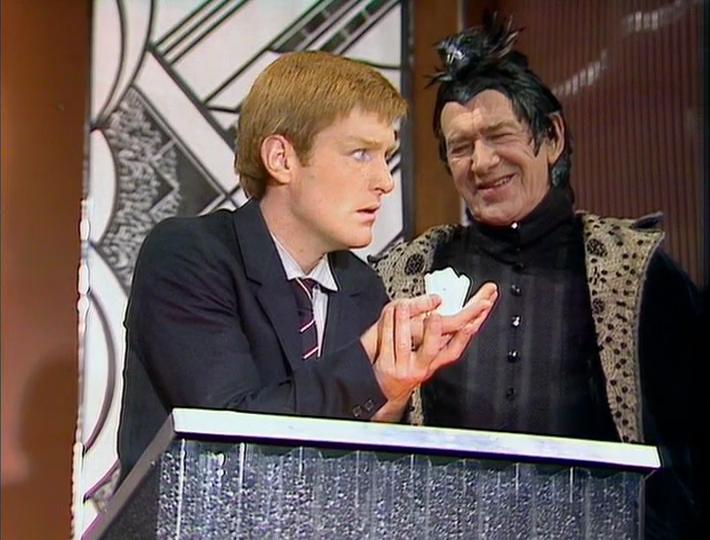
The Black Guardian manipulates Turlough (still from Season 20)
 

Audio: Gardens of the Dead, a Big Finish short trip written by Jenny T. Colgan and performed by Mark Strickson

4.5/5. Goodreads review also here

An entertaining half-hour featuring a Fifth Doctor story with Turlough, Nyssa and Tegan, from Turlough's point of view. Some thoughts -


+1 Turlough is one of the most morally ambiguous Doctor Who companions, forced and controlled by the Black Guardian to kill the Doctor, in a similar way to River Song's arc in S6 of New!Who (minus the romance, although plenty of people ship Five and Turlough, and the latter is definitely very easily read as queer-coded and might very well have developed a crush on the Doctor during his time on the TARDIS). When I first wrote this short review a few years ago, I hadn't watched anything about Vislor Turlough apart from some references and clips, but I still liked his characterization in this story. He shows anguish at the thought of killing the Doctor, tries to resist the Black Guardian's control and ends up helping to save the Doctor - and also Nyssa - from the story's alien menace instead of leaving them to die. As for now, I've already watched near all of Five's run with Turlough, and yep, I really like the complexity of his character and arc, and disagree with the apparent common dislike of this companion, to be honest - Nope, must protect Turlough and all of Five's companions at all costs xD

+1 Nyssa has a more contemplative role than a proactive one in this story, although she also saves Turlough from the alien menace of the story at an earlier part of the story.

The dynamic between Turlough and Nyssa, the least explored onscreen, is at the centre of this story
 

-1 Tegan, however, doesn't do that much in this story. Nor did the Doctor, for that matter, as it's a story more focused on Turlough and Nyssa, but ah well, it's a shame when Tegan (female companions in general) is underused in the stories, because she's everything (and having to do it in stiletto heels 24/7, no less, because the costume designers be hating her 😬).

+1 Typical Whovian anti-violence themes: The TARDIS team (mainly Nyssa and Turlough) save the day first with a water bottle and then with a garden hose from the TARDIS, which is pretty epic xD 👌

-1 I didn't quite like how Strickson mimicked Tegan's voice, and there's only so many times I can hear references to Tegan's 'annoying Australian shouting' without being rather annoyed about it myself 😒 (no one disrespects Tegan in this house xD). And although there's no outright sexist content in the dialogue, I can also see this linked too easily to sexist and simplistic stereotypes, such as 'assertive woman who likes to keep in control of her life'='annoying woman who shouts and complains about things'. Usually opposed to the idea of the 'nicer, sweeter, and usually more passive and dumb woman' - I guess some people may associate this with Nyssa in contrast to Tegan, although she's anything but passive or stupid. 

 +1 As well as including Turlough's reflections on his thraldom with the Black Guardian and his times with the TARDIS team, the theme of the story is contemplative and melancholy, focusing on the people the TARDIS team has lost in their lives, and it was a lovely nostalgic touch to the action of the story.

The Classic Who Season 20 TARDIS team

Friday, 22 April 2022

Goodreads feminist reviews - Doctor Strange and Philosophy


Book: Doctor Strange and Philosophy: The Other Book of Forbidden Knowledge (2018), ed. Mark D. White


3.5-4/5. Goodreads review also here.

 This is an anthology of 22 essays having to do with the crossover of philosophy and Doctor Strange (including themes from both the 2016 movie and the comics). As with any book which contains a number of essays written by different authors, some of the essays in this book I quite liked, others I liked, others were more meh, and some I actively disliked. 

Philosophy is also a hit and miss subject for me depending on the specific branch and how it's approached - I tend to really like ethics, and also prefer the more scientific areas of philosophical study (such as speculative physics or various themes in metaphysics), but there's a number of other topics - and specifically also the manner in which they are generally expressed - which are quite liable to either frustrate or bore me in various degrees - an important factor as to why is that I may have a pet peeve about random white dudes stating subjective thoughts, opinions and beliefs as absolute Truths, as philosophers often do :S xD

But anyway xD, some thoughts about the book (warning, LONG xD) -

Both a meme and a great study of ethics 

+1 Like I mentioned above, in this book I especially enjoyed the essays which discussed ethics (virtue ethics, deontology and consequentialism, in this case), as well as those delving into scientific matters and speculative physics. I particularly liked one essay which discussed quantum mechanics and the MCU Multiverse, and another one which considered what the plot of the 2016 Doctor Strange movie can tell us about the scientific method, regarding how new empirical evidence can lead to new theories and scientific approaches in our understanding of the world (couple of quotes below).


+1 Another essay I really enjoyed, written by one of the three female contributors of this book (note on that below), tackles gender and race biases in both philosophy and superhero comics - both worlds historically majorly male and white -, and the ways in which the Doctor Strange movie subverts some of these biases (such as making the Ancient One - an authority and knowledge figure - female, or greatly improving the role and status of Wong as a Master sorcerer in contrast to his role as the manservant of Strange in the comics). The essay also tackles the problem of whitewashing in movies (while I adore Tilda Swinton both in general and as the Ancient One, and I love that they chose to make the Ancient One female, I also think that they could just as easily have chosen a female actress of Asian descent, with no problematic stereotypes involved). Overall, this essay was a great feminist and intersectional read (couple of excerpts below).

 "What if it's a woman? You know, why can't it be? You know already the idea that the Ancient One is the head of all sorcerers; now that person is also a woman. I'm already interested, and I'm already feeling liberated from the chains of cliché." (The Art of Doctor Strange)

Tilda Swinton's Ancient One in the MCU

-1 Unfortunately, gender bias in philosophy and the comic book world, as criticized in this essay, is fully present in this book as well, ironically. Out of 22 essays, it seems that only three were written by women, and if I remember correctly, only one female philosopher is mentioned in the whole book :S

More women than 14%? Yes xD

+1 A couple of other essays also accurately commented on how Nietzche was an infamous misogynist and Heidegger supported Nazi mindsets, comments which I appreciated because we need to hold historical figures accountable for their problematic aspects.

-1 Something which I lacked in an essay tackling St Augustine, another infamous misogynist who was quite pedestalized in an essay which discussed more religious interpretations :S - I also fully disagreed with that essay's idea that the journey and character development of Strange mirrored 'St' Augustine's life, but ah well xD.

Please, but "St" women-should-not-be-educated Augustine wishes he were this cool. Also, Strange did appreciably grow out of his initial male entitlement, can Augustine say the same? No.
 

-1 And regarding social activism topics, I also have to say that I deeply disliked one essay which had the baffling objective of convincing the reader that the servile role of Wong in the comics as the personal manservant of Strange, in itself an issue deeply steeped in classism and a racialized context, is not wrong or problematic at all and actually empowers the character of Wong! We can encounter deep and meaningful friendships when a master/servant dynamic is also (regrettably) involved, such as Frodo and Sam from The Lord of the Rings. *But* the fact that this kind of dynamic might evolve to develop a meaningful interaction does not mean that we should not also be fully critical of the power dynamic and the classism and racialized/gendered aspects of a master/servant relationship in the first place.

MCU's Strange and Wong be like wtf

This particular essay I found deeply offensive in its endeavour to claim that it's actually servitude which gives Wong's life meaning and boosts his self-confidence and self empowerment (wtf), and that both parts of the master/servant dynamic get benefits out of the arrangement. It's a neoliberal-oriented 'choice' approach that ultimately completely glosses over the fact that it's a classist and racist system which has made Wong into Strange's servant in the comics, same as his father was the servant of the Ancient One, and his father before him, and so on. If we take this 'choice' approach and make minimal parallels with say, oppressed women in a patriarchal society, or enslaved black people in the USA, I think it becomes clear enough how offensive and illogical this interpretation is - the ludicrous idea that oppression and a servile function to the privileged groups actually gives your life meaning and that you reap ample positive benefits out of a deeply unequal power dynamic.

Wong is certainly Strange's friend in the MCU, but he's also been a Master Sorcerer in his own right from the beginning, and the actual Sorcerer Supreme since the Blip. So yasss.

Thank Agamotto that the role of Wong was vastly improved in the MCU. I can't help but wonder whether the author of this essay would think that now Wong's life does not have meaning because he's a powerful Master sorcerer in his own right, and is now the actual Sorcerer Supreme. Heh.

"From the comic books, Wong came across quite like a manservant or sidekick. I think with our version, we're happily putting that to bed and updating his story for a modern audience. (...) He is someone who is very serious about his job. He's very otherwordly, wise (...) There's a quiet confidence to Wong. He's stoic. He's foerever watching and loyal. I think he comes from a long line of that." (Benedict Wong, The Art of Doctor Strange)

-1 And now comes the big topic. While there were at least three essays in the book which tackled this matter more accurately, or at least following the reasoning I would have chosen, there is a discourse which I kept finding in several other essays which frustrated me time and time again. According to all these essays, the scientific aspect of Doctor Strange, initially a brilliant neurosurgeon, is something which went hand in hand with his arrogance, narcissism and materialistic view of the world. This materialism and his scientific aspect, as linked to the mechanistic current ('we are made of matter, and nothing more'), would be then opposed to the greater empathy, integrity and altruism that Strange shows as the movie progresses, which these essays repeteadly linked to his newfound 'enlightenment' and 'interest in spirituality', and the broadening of his mind.

Nope, Strange is still all about the science and the knowledge, his improving his attitude and his ethics has nothing to do with embracing the study of magic, which he approaches in a similar way as his former medicine studies, anyway.

While some of the points and philosophical stances described in these essays were interesting from a purely philosophical point of view, it's a huge misconstruction to say that science equals a lack of altruism or a greater materialistic and shallow mindset (wtf), and that it's an 'interest in spirituality' which makes someone more altruistic and empathetic. That's just both offensive and factually wrong. Like the Ancient One tells Strange, it's 'arrogance and fear' and his narcissism which have kept him from expanding his mind, not his interest in empirical science.

Why do people keep associating science with a lack of empathy or a more materialistic view of the world, wtf. Doctor Strange keeps a scientific mindset all the time, it's his entitlement and narcissism which get better disregardless of that!


'Which is?' 'It's not about you'.
 

 And even though the 2016 movie's director, Scott Derrickson, also commented on this inaccurate correlation between 'selfishness and skepticism' and 'altruism and spiritual enlightement' as Strange's journey (for example, in the art book), in my opinion the movie itself does a great job in addressing Strange's journey from narcissism, selfishness and materialism to a more altruistic, accountable and ethical mindset, yes, but it's not necessarily linked with a journey of 'spiritual enlightement', or 'from skepticism to mysticism', more than a combination of changing his entitled and arrogant attitude and becoming 'more self-reflective' as a result of suffering 'personal loss and trauma', as Derrickson also comments on, and widening his understanding of the universe by considering areas of study that he was unaware of. But in the MCU and Marvel comics universe, magic and the Multiverse are real and liable to be studied in an empirical fashion - just like science is.

Thus, it's also a huge false equivalence to link the evolution of Doctor Strange as a sorcerer to the potential higher merits of real world spirituality (and pseudoscience) as opposed to empirical science. The essays seemed to repeteadly link Strange's scathing remarks about the unscientific nature of chakras or acupuncture (I mean, both things *are* objectively pseudoscience) with a narrow-minded view of the world which needed to be expanded. Being open-minded is the actual point of scientific curiosity, skepticism, and the scientific method, and that is exactly what Doctor Strange does - When shown actual empirical evidence that the Multiverse exists, and seeing that in the Marvel universe it is actually possible to draw energy from other dimensions to create 'magic' (thus linking magic way more to technology and science than spirituality), he just expands his view of the universe when shown that there's more to what he had learned, and includes the study of magic to his existing knowledge (excerpts below from the essay about the scientific method I also mentioned earlier in this review).

Strange does not ditch modern medicine to embrace acupuncture, chakras and spirituality. He actually studies and performs magic following a very similar method to the science and technology we're more accustomed to, and he's shown actual empirical evidence and contrasted information about it.

Hell yeah to the scientific method

 In our real world, however, the theory addressing the existence of a Multiverse is an actual field of study in speculative physics, yes (and other essay in this book talks about this in the context of cosmology and quantum mechanics), but it *is* speculative. And spirituality, while valid on its own, simply and objectively cannot replace science if what we seek is the empirical understanding of the universe. Strange's Sorcerer path *is* undeniably heavily inspired and linked with Eastern martial arts and spirituality, both in aesthetics and ethos, but the way he studies and harnesses magic is rather more in line with science and technology than with actual spirituality as we would understand it in the real world (as is also the way with many MCU perceptions of magic as science and technology 'not yet understood', as also portrayed in the Thor movies). Overall, the whole discourse when these particular essays (and there were a few :S) tackled this topic was a huge false equivalence fest.

-1 I also disliked the way that a couple of essays seemed to need to add the disclaimer that 'religion and science are not incompatible, in fact they are fully compatible because I will now give you some examples of historical scientists who also believed in God or were interested in spirituality or alchemy'. Obviously, individual people are entitled to their personal spiritual or religious beliefs (as long as they don't try to impose those beliefs on anyone else or enforce inequality against oppressed groups, which is the flavour of criticism I go for when I say I'm critical of religion). But the issue regarding the science-vs-religion discussion often doesn't have to do with individual beliefs, it has to do with the fact that enforced religious systems have historically hindered or prohibited science systematically, by imposing unscientific mythological concepts as Truths, and literally persecuting and murdering people who offered advances in science instead of abiding with those religious 'truths' as to the nature of the universe (and also persecuting religious beliefs which deviate from the systemic dogma). The fact that Newton believed in God (totally fine, but irrelevant in this discussion), or that Descartes (rather unscientifically) claimed that God is an innate proof of our reasoning nature (which let's be real, it's a bit wtf xD) are really neither here not there regarding this issue :S

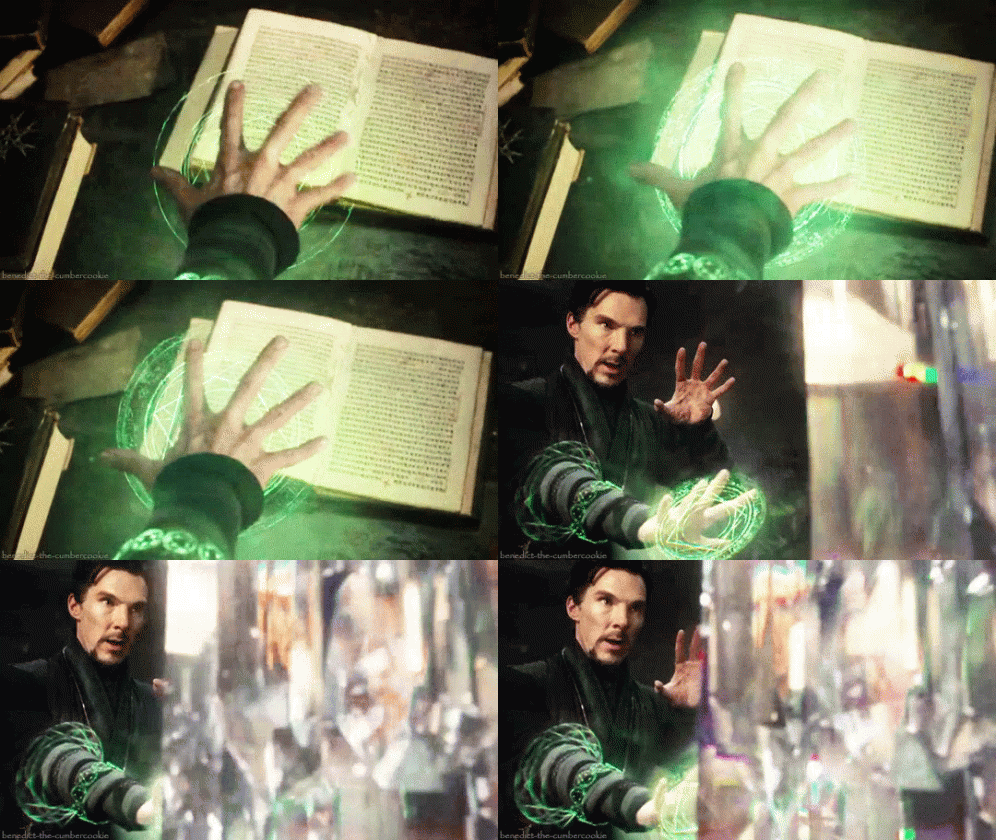
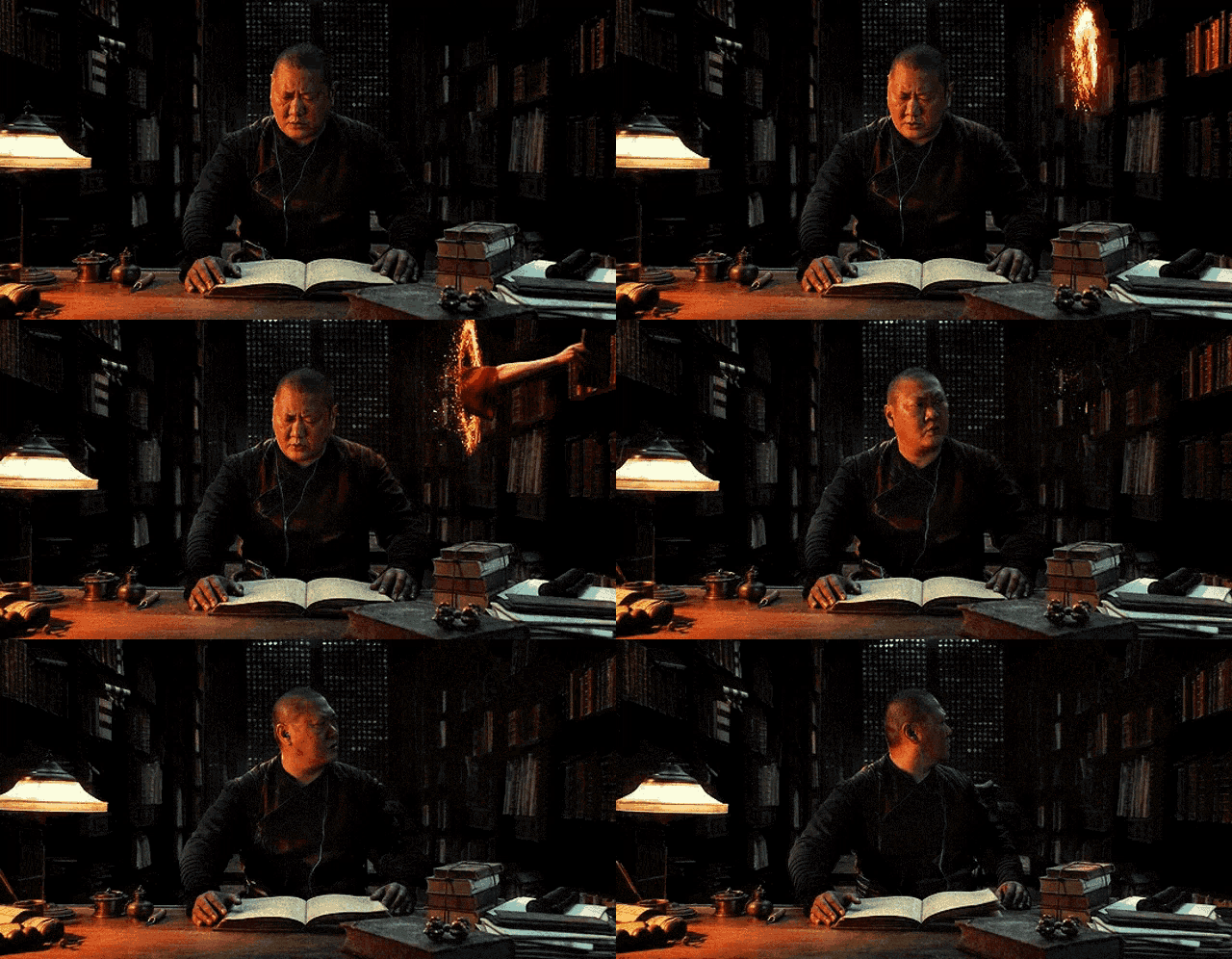
Anyway, have another gif about sorcerers and books xD
 
+1 While discussing the influence of the pacifist-oriented ethics of Eastern martial arts on Strange's ethos as a sorcerer as well as a surgeon, there's a reference and quote to the 1970s series 'Kung Fu', which I really like, so kudos for that!


- And finally, this is more an anecdotic discussion than something I liked or didn't like - There's one essay which discussed mind-body dualism as illustrated in Doctor Strange by the astral bodies. However, the author seemed to keep trying to rationalize the way astral bodies were portrayed in the movie, not just comparing them to philosophical theories of dualism as an interesting exercise, but actually trying to find logical consistency between them, as if the portrayal in the movie would either confirm or discredit said theories of dualism.

The Ancient One show Strange his astral form

While the astral bodies in Doctor Strange are clearly inspired both by spirituality currents and by various philosophical explorations about mind-body dualism, as a fantasy and sci-fi movie it doesn't need to be fully consistent with all these currents, nor do we really need to judge the accuracy of the depiction of Strange's astral body and its properties in regards to what philosophy has had to say about dualism - especially considering that dualism is, as of now, mostly devoid of any empirical scientific proof! The exercise of questioning how Strange's astral body is or isn't consistent with existing philosophical theories of dualism and transference between the mind and the body is certainly interesting for purely academic purposes, but the way the author seemed to be actually thorough and serious about how a fantasy and sci-fi movie with astral bodies confirmed or denied real life philosophical theories of dualism both puzzled and amused me xD

Monday, 28 March 2022

Goodreads feminist reviews - The Cinderella Complex

'Cinderella Complex', PilarErika (also IG)

 Book: The Cinderella Complex: Women's Hidden Fear of Independence (1981), by Colette Dowling

  3.5/5. Goodreads review also here.

  Pro: Feminist self-help book about harmful emotional dependence, and gender roles in heteronormative unhealthy relationships - still relevant today 


This is a feminist self-help book which helps women become more conscious about the 'Cinderella Complex': The way societal upbringing and patriarchal gender roles make women experiment both problematic emotional (and financial) dependence and a deep fear of independence. I think these issues are really important and not discussed often enough, because emotional (and also financial) dependence in relationships still affect many women today. 

Some people have remarked that this book is somewhat 'obsolete' when it comes to unequal heternormative relationships with traditional gender roles because it was written in the early 80s and refers to the 60s and 70s - But I think that it is unfortunately not 'obsolete' at all. Emotional dependence is a real problem that is still affecting many, many women today, and it's still very much alive and perpetuated 'thanks' to traditional (and very problematic) children's fairytales and the media in general (the glorification of emotional dependence and the concept of romantic love as seen through a patriarchal lens in songs, books and movies, for example). 

I totally recommend that everyone read books such as this one, because it makes both women and men think about the harm that patriarchy and gender roles have done and still do to women, and how many relationships today between women and men are deeply influenced by traditional gender roles and power dynamics, strengthened both by male privilege and the brainwashing of the media regarding romantic love and relationships.

Con: Non-intersectional

 This book focuses primarily on white, American middle-class heteronormative women, though. The emotional dependence issue can still be very relevant to all women, I think, disregardless of other factors, but it's worth mentioning that it's not a very intersectional book in that respect, and that not all women would be able to get out of harmful relationships or get their 'freedom' (financial independence, jobs, education, etc) with the ease that the author sometimes describes.

 It's not just about becoming conscious of the way society has trained women to be afraid of independence - Privilege and position in society are as important when it comes to 'springing free'. It can already be quite hard for white, cishet middle-class women to get away from an abusive relationship, or to be able to become financially independent if they're trapped in a marriage where the husband holds all the financial power and likes to stay that way. It's way harder to do so if you add race, class, sexual orientation or gender identity to the equation. Being conscious of the psychological problems which make women dependent is very important, but in many cases it's not enough to actually be able to 'spring free', unfortunately.

It's mostly a problem of omission, seeing as the author does focus on her experience and women with similar upbringings, but the book does have a couple of cringeworthy vocally anti-intersectional moments as well. There's a point when the author states that getting household help would help (middle-class) women get more independence - while throwing lower-class (who are often poc) women under the bus 😕. There's also another anti-sisterhood cringeworthy moment with the mention of two women who, apparently as a way to become 'less afraid of independence', decide to have affairs with married men. Which is never cool in my book and also a bit hypocritical, considering it throws other potentially dependent and miserable (house)wives under the bus as well :/.

Other remarks 

I'd also like to mention that, while I agree with the fact that, as a result of patriarchal upbringing, many women actually contribute to the loss of self-confidence and independence they experience, the author sometimes seems to paint husbands/partners in too good a light, being stifled by their wives/partners' emotional and financial dependence, and actually encouraging them to get jobs/activities and/or become less dependent in other ways. It's regrettably very true that women often bring the dependent dynamic to the equation because of their upbringing and the media they consume, but men are also brought up in a society where male privilege and gender roles where they are expected to be the more active and dominant partner are everywhere, and thus are key to the problem as well, and more so than women. 

And while the author does also mention oppressive husbands and men who hold all the financial and executive power, she never seems to focus on the fact that many men promote this system and seem to be pretty happy with the arrangement, never actually encouraging any of the women in their family to gain any independence whatsoever. The system does benefit them in so many more ways than the trifling bother of having an emotional dependent girlfriend or wife, after all, so an important percentage of them are pretty much OK with it all :S 

The book also seems to assume that women end up in relationships, be they emotionally dependent or not, omitting the cases of women who actually prefer just casual encounters or who are just not interested in relationships. Once again, this is written from the author's experience and point of view, and so she does focus on the effects that heteronormative/allosexual/amatonormative relationships have on women. But sometimes one can get the impression that a relationship is still a given step in a woman's life, instead of just critisizing the fact that most women always feel they have to go for that because they've been taught to be dependent on a man and to seek for someone to save them. It's true that a woman can 100% be in a relationship while 'loving herself' and not losing her independence, but choosing to stay without one in a 100% happy way is another possibility that, as I recall, is not mentioned in this book.

These comments aside, I wholeheartedly recommend everyone reading this book, because emotional and financial dependence is a deeply problematic issue that, as a result of our upbringing, can become very subtle and hard to be concious of, and it severely affects women's happiness, freedom and wellbeing.

-Some quotes (these are screenshots from Goodreads, quotes added by me) with great points on female socialization, gender roles and imposter syndrome. Click on individual pics for a larger size!


Thursday, 17 March 2022

Tolkien talks - Rompiendo roles de género: Galadriel / Breaking gender roles: Galadriel


(English version, Spanish below) For this past International Women's Day the Onóressë feminist group of the Spanish Tolkien Society (STE) organized a Twitch live that focused on women from Tolkien's life and works. I had the chance to give a talk about gender roles in Elven society, and especially about Galadriel and all the gender roles she subverts both in her characterization and plot✨📚💪💜 

 So here's the YouTube video with said Twitch live, and also the PDF of my talk (which also appears on the video as I'm discussing it). Both the video and the talk are in Spanish only, but I am planning on translating the talk proper into English as well sometime in the future 🙂!


El pasado 8M, Día Internacional de la Mujer, el grupo Onóressë de la Sociedad Tolkien Española (STE), centrado en el estudio feminista de las mujeres en la obra de Tolkien, organizó un directo de Twitch con un par de charlas enfocadas en varias mujeres de la vida y obra de Tolkien. Tuve la oportunidad de participar en este directo con una charla donde hablé sobre los roles de género en la sociedad élfica, enfocándome en Galadriel, uno de mis personajes femeninos favoritos de la obra de Tolkien, y hablando de todos los roles que vemos que subvierte dentro de su sociedad, observables tanto en su caracterización como en su arco argumental ✨📚💪♀ 💜 

Así que en este post incluyo tanto el vídeo de YouTube con el directo de Twitch, como la presentación de mi charla en formato PDF (que también se presenta en el vídeo), todo en español ⬇️

Here's the YouTube video of the Twitch Live, with both talks. My talk begins at 21:50, and I'm answering some questions at 54:20:


 And here's the PDF of the Power Point talk, also shown on the YouTube video:


And to finish, here are some more pics, both selfies and screenshots 😀✨📚♀  :


-On the use of my essays, studies and translations: Please, do not use this work without my permission without any credit. If you're interested and want to share it or expand on this idea, you're of course allowed to reference it if you credit me and link to this post. It would also be nice if you contacted me beforehand. DO NOT publish as if it were your own work, always quote and link.