I saw this film yesterday after reading a review that claimed that the film (among oher things) was focused on the oppressive roles of women in India, but that couldn’t be further from the truth, in my opinion.
When it comes to recent films that denounce the condition of women in India I’m definitely sticking to Angry Indian Goddesses and, to a lesser extent (because it includes unnecessary graphic/gratuitous scenes that add nothing), Parched. Masaan showed (some of) the misogyny, but never actually actively denounced it, rather focusing on the male characters and actually trying to turn them into sympathetic figures in spite of their patriarchal behaviour, arising too often There were only two things which were critisized, and the film didn’t dwell on them that much, either:
-The fact that extramarital sex is considered as ‘indecent behaviour’ in some parts of the country -The film begins with a couple engaging in sexual activities in a hotel and being treated by the police like criminals. The man ends up commiting suicide, and the woman faces scandal and prison - unless they pay the police (or, specifically, a blackmailing corrupted policeman) a very high sum.
-The caste system - The difficulties faced by people from different castes from pursuing a relationship, for example.
But apart from that? Here are just some of the things that bugged me, apart from the fact that the film was ridiculously slow-paced and quite low-quality regarding technique and aesthetics, in my opinion:
-No women interacting or helping each other. Apart from a brief scene in a bus, where one of the (two) female characters is playing with her friends, there is no female interaction and we could say that there’s no Bechdel, really, because we never get two women actually really having a conversation. This is an important point if we compare this film with Angry Indian Goddesses and Parched, where female bonding and women helping other women are central themes.
-Gender roles and general misogyny are not questioned - Women do all the cooking and cleaning, are molested by guys at work, are forbidden to access the cremation sites...Without the plot actively denouncing any of it, really.
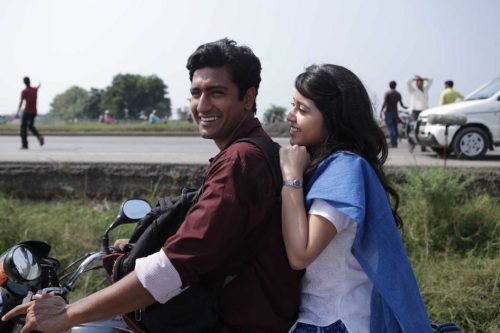
-Cringeworhty flirting attempts from young male protagonist + dubious techniques (legit online and physical stalking seen as ‘sweet’ or ‘romantic’, angry outbursts) make for a pretty terrible romantic plot. Upper-caste female love interest, Shaalu, is ready to elope with lower-caste “Awkward Loverboy” after barely getting to know him, which sounds about right. All the caste system criticism you want, but relationship-wise, this romantic plot it’s hardly a healthy or even realistic scenario.
If I might elaborate about Awkward Loverboy (aka Deepak)'s methods? I'm glad you asked:
He starts drooling over Shaalu's Facebook pictures surrounded by his male friends, and then proceeds to basically stalk her Facebook profile, printing part of it so that he can gaze at her profile pic in his bedroom at night (obsessive behaviour is somehow romantic or something). Instead of walking over to her like a normal person, he prefers to watch her from afar surrounded by his male friends. Once they have actually started talking and going on dates, he overall tries very awkwardly to be all romantic, basically so that he can get sex going on (aka get married, because that seems to be the only option where they live or they'll face 'public indecency' charges and scandal!). He seems to appear interested in her hobbies and likings in a very forced manner, to give some impression of him being interested in something more than her looks. To sum it up, very short, and very, veeeeeery cringeworthy courting period, and bam! he’s already asking her to marry him.
Moments after this, Awkward Loverboy loses his temper because he’s hiding his whereabouts and lower caste from her. Points for lack of truthfulness in a relationship (yes, I know that the caste system discrimination is a thing, but hiding information while asking someone to commit to a long-term relationship is not cool - Yes, I'm looking at you, Aladdin). Plus more points for showing us that his sweet attempts at romance don’t mean he’s not going to get all angry and aggressive with women when the situation asks for it, same as most of the other males we’ve been seeing in the film! Also, she’s supposed to forgive him and actually keep wanting to marry him seconds after that! Everything is so healthy and romantic!
It's also worth nothing that in a country (among many others) where women are systematically assaulted and raped, he also doesn't stop to think about Shaalu's comfort level when asking her to step off the bus (where she's among her girlfriends) and go off with him on a borrowed bike. With the level of Deepak's secretiveness and lack of communication about himself, how is she to know it's safe to go out alone with him to an isolated place? And I'm still trying to wrap my mind around the fact that Shaalu basically is all for eloping with Awkward Loverboy to the cremation sites (has she even thought about the kind of life she would lead as a woman there?) after barely getting to know him, and just after witnessing Awkward Loverboy's anger outburst and the fact that he was keeping all the information about himself hidden.
-Female love interest is fridged just after this last scene where Awkward Loverboy proposes and has an anger outburst and confessed he's been lying. Yay, let's give him some emotional pain and an excuse to find himself again and grow as a person! While fridging his female love interest!
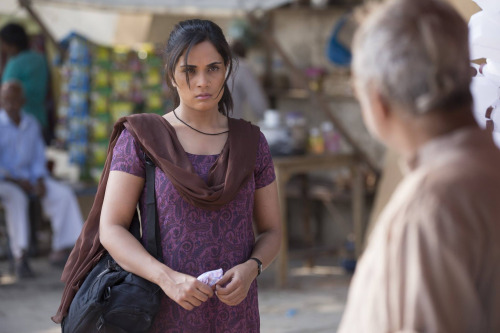
-The father character in the film hits her daughter for bringing "dishonour" to herself and him (by having sex in a hotel with a fellow guy from university who then commited suicide), shouts at her, lets her do all the cooking and housework, manipulates her emotionally when she wants to leave home to continue her studies (apparently he cannot care after himself), and also exploits and hits a young child who works for him (and I think that he doesn't have a pay, so he’s basically a slave). FILM STILL SYMPATHISES WITH HIM AND TRIES TO MAKE US THINK HE’S SUCH A GOOD FATHER AND GOOD PERSON. How the hell is that ‘feminist’??

-Devi, the daughter, actively tries to get jobs and ends up being able to continue her university studies far from home (because Exploited Kid has severe Stockholm syndrome and cares for her father)…but obviously Awkward Loverboy who had his romantic interest fridged for his character development begins to make advances to her at the end of the film. Heavens forbid we don’t make heteronormative, stereotype-conforming relationships the central topic of this ‘critical’ film.
By our world’s standards, there are no hardcore graphic scenes of abuse on this film, but I exited the cinema thinking that this film (and others) have a trend gong that is pretty problematic: Showing misogyny and abuse without actively denouncing it, plus actually trying to make the perpretrators sympathetic, isn’t only problematic per se, it also makes the abuse seem gratuitous and nothing else (we have the exact same problem with Game of Thrones, only with the graphic and gratuitous elements multiplied exponentially).
For example?
The father gets to be the ‘good guy’ despite treating her daughter and the young boy pretty terribly (physical abuse and emotional manipulation for both). Devi is supposed to feel sorry for him and guilty for various reasons which are definitely not her fault. The film revolves more about the plights of the father than around the fact that Devi faces freaking scandal and prison just for having consensual sex in a hotel (and also because if the guy decides to commit suicide that makes her an accomplice, somehow). The boy is supposed to also feel sorry for the father, to the extent of giving him all the money he gets and end up caring after him. If anyone should be caring after anyone, it’s after the young boy, for heaven’s sake! Shaalu, the teenaged love interest, is supposed to forgive Awkward Loverboy’s anger outburst in five seconds and be ready to elope with him without really knowing anything about him… I felt like this film revolves mainly around the comfort and plots of the male characters, with the women being love interests, commodities and persons who feel guilty instead of denouncing what’s wrong and sexist about their society. All this masked with brief topics of social critic and lots of clichéd 'romance' - 2D heteronormative relationships which have no depth and include a number of problematic points, every much in the style of Disney movies.
So feminist? Not really, no.