Showing posts with label Greek culture. Show all posts

Tuesday, 21 June 2022

Goodreads feminist reviews - Cleopatra (Reinas y Rebeldes RBA, #1)

'Cleopatra' by John William Waterhouse (1887)

Book: Cleopatra, by Ariadna Castellarnau, the first of the 2022 edition of the Reinas y Rebeldes ('Queens and Rebels') kiosk collection by RBA Coleccionables.

4/5. Goodreads review also here

En esta serie, hablaré sobre la colección de libros titulada Reinas y Rebeldes, publicada por RBA Coleccionables, donde se visibiliza y difunde a una serie de reinas, gobernantes, nobles y líderes femeninas de la historia. La colección se centra en mujeres que son o bien nobles y aristócratas, o bien mujeres que llegaron a ostentar cargos importantes en las áreas del gobierno, monarquía y/o política, y la gran mayoría de las mujeres de la selección (si bien no todas) son también blancas y mayoritariamente europeas. En base a estos cortes, obviamente se está escogiendo a una serie de mujeres con privilegio social de clase y raza en la gran mayoría de los casos. Aun así, podemos ver que siguen marcadamente oprimidas en base a su género, y es en esta intersección en la que se basa la gran mayoría de lo innegablemente meritorio de sus vidas, pero también me gustaría dejar ese punto comentado por los sesgos que también puede añadir la colección. Todas las mujeres de esta colección tienen vidas interesantes y muy meritorias, pero sí es cierto que habría apreciado también algo más de variedad y diversidad al menos en cuanto a la etnicidad y raza de las mujeres de la selección, ya que de 60 libros, creo que sólo contamos con 8 mujeres pertenecientes a culturas y etnicidades no blancas (2 egipcias sin contar a la griega Cleopatra, 2 chinas, 1 india, 1 mesoamericana, y 2 sirias).

Las reviews que termine publicando de esta serie las escribiré en español, a pesar de que el inglés es la lengua habitual en la que suelo escribir en este blog. La razón de esto es que los libros originales están todos en castellano, de forma similar a que suelo postear las entradas con charlas presentadas en las convenciones y publicadas en la revista de la Sociedad Tolkien Española en castellano también. Dicho esto, pasamos a la primera review, sobre la última reina Ptolemaica, Cleopatra, y las impresiones con las que me quedé del libro de Ariadna Castellarnau:

General

 +1 Biografía amena con un enfoque feminista, narrando la vida de la reina Cleopatra con una crítica continuada a los sesgos sexistas y los enfoques misóginos que se le han dado a lo largo de la historia, tanto de parte de hombres romanos contemporáneos como de parte de demasiados escritores, pintores y películas en los siglos posteriores. 

Mientras que se suele enfocar a Cleopatra repetidamente dentro de una serie de estereotipos sexistas, desde la seductora sensual y la mujer fatal, la traicionera 'serpiente del Nilo' que se aprovechaba de los hombres, a la mujer enamorada que actuó siempre dominada por las pasiones, la reina incompetente y superficial, y/o la dirigente tiránica, mandona, gritona y caricaturizada (hola, Astérix :S), este libro subraya en todo momento lo inteligente y culta que era Cleopatra, y se enfatizan sus dotes estadistas y de liderazgo, contextualizando también sus relaciones con César y Marco Antonio dentro del marco político y las sociedades patriarcales de su época, con obstáculos constantes a cualquier mujer que pretendiera reinar.

'El encuentro entre Cleopatra y Octavio tras la batalla de Actio', 1787-1788, por Louis Gauffier.

+-1 La biografía parece estar en general bien contrastada y es informativa de todos los eventos de la vida de Cleopatra, aunque hay un par de puntos que están algo idealizados o no del todo bien expresados, según mis propias investigaciones. En general, para toda esta colección echo en falta una sección de notas, o al menos una bibliografía con material consultado. Por otro lado, aunque me ha terminado gustando ese balance, también he de notar que este libro está escrito de forma que mezcla el estilo de una biografía y una novelización, al estilo de la ficción histórica, interpretando lo que Cleopatra pensaba y sentía en diferentes momentos de su vida, lo que necesariamente termina añadiendo un factor de subjetividad adicional.

Estatua de mármol de Cleopatra con su cartucho real inscrito en el brazo derecho y portando una diadema con el triple uraeus que solía llevar cuando era representada en regalia tradicional egipcia.

Sobre los puntos algo idealizados, destaco que se comenta en ocasiones cómo la mujer en Egipto (y en las colonias Ptolemaicas de Alejandría) tenía prácticamente un estátus social de igualdad con respecto a los hombres, y por eso Cleopatra resultaba ser también una mujer tan resuelta y fuerte. Si bien es cierto que las mujeres en Egipto tenían más derechos y un nivel más alto de emancipación social que en el caso de varias culturas contemporáneas, como la romana y griega (en temas como la posesión de propiedades, el divorcio, la mentalidad de la modestia, o el poder acceder a varios trabajos y negocios), hay mucha gente que no matiza lo suficiente en este tema, ya que este hecho no quiere decir en absoluto que la sociedad egipcia no fuera también una sociedad de base patriarcal, e históricamente las pocas faraonas y reinas reinantes egipcias que ha podido haber han tenido problemas constantes lidiando con el sexismo de la sociedad. Desafortunadamente, las mujeres egipcias no gozaban de igualdad social al nivel que se afirma en muchas obras modernas hablando sobre el tema, ni siquiera en los ámbitos donde tenían más derechos que sus contemporáneas de otras culturas :S Para extenderse y matizar más en este tema, recomiendo por ejemplo el libro de Las mujeres en el Antiguo Egipto, de Gay Robins.

Cleopatra mismamente es un ejemplo de esto, ya que sí, de forma más aceptada socialmente había recibido una educación extensa, tenía posibilidades de ascender al trono como mujer, y la mentalidad de Alejandría era más flexible en cuanto a la vestimenta y la libertad sexual comparada con por ejemplo la sociedad de Roma (aunque pienso que tampoco tanto como también afirman varias obras, es más una comparación con otras culturas más estrictamente retrógradas en cuestión de género :S). De forma que por ejemplo las vestimentas podían ser más livianas y diáfanas que en Roma (sin llegar al nivel de orientalismo sexualizado de muchas películas de Hollywood, sin embargo), y Cleopatra podía tener amantes sin casarse con ellos, y los hijos resultantes tenían legitimidad para el trono - Pero, como las pocas faraonas y reinas reinantes anteriores, también pasó toda su vida teniendo que lidiar con obstáculos constantes para poder mantener el trono como mujer, algo que no hubiera experimentado un faraón varón, incluso teniendo que lidiar con la amenaza constante de Roma.

Relación con César y Marco Antonio

-1 En relación a esto, una cosa que no me gustó del enfoque del libro es el toque más neoliberal en algunos de estos temas, idealizando ciertas situaciones sin tener en consideración el peso del patriarcado de la sociedad, y las razones por la que Cleopatra tomaba ciertas decisiones, específicamente la decisión de Cleopatra de acostarse con César y Marco Antonio y tener relaciones sexuales y/o románticas e hijos con ellos.

Cleopatra sube al trono de Egipto con el apoyo de Julio César (Cleopatra, película de 1963 con Elizabeth Taylor).

Por un lado, el libro se esfuerza de manera acertada en enfocar las relaciones entre Cleopatra y los romanos Julio César y Marco Antonio dentro del marco político y social que estaba viviendo, donde Cleopatra literalmente necesitaba el apoyo e influencia política de estos romanos poderosos para poder recuperar y/o mantener su trono sin la amenaza de sus hermanos o la invasión de Roma, mientras que infinidad de personas (sobre todo hombres) siempre han tildado a Cleopatra de una 'promiscua que embaucaba y seducía a un hombre tras otro por su sed de poder' - Olvidando también que César era un famoso mujeriego 30 años mayor que ella que en ese momento estaba casado, y Marco Antonio, 15 años mayor, también estuvo casado con dos mujeres en los años en que tuvo a Cleopatra como amante (y ellos nunca son tildados al mismo nivel de promiscuos, seductores o adúlteros, con la culpa siempre cayendo principalmente en Cleopatra).

Pero a la hora de relatar los momentos que llevaron a Cleopatra a decidir entrar en una relación sexual con estos hombres para poder mantener el trono y toda la independencia posible de Egipto como reino vasallo de Roma, el libro lo enfoca varias veces en la libertad sexual mayor que había en Alejandría y en la cultura egipcia y Ptolemaica, y cómo Cleopatra tomó decisiones empoderadas y liberadas, usando de forma libre su sexualidad en estos casos, además de su inteligencia y sus dotes de estadista. 

'Julio César y Cleopatra', de Carl Gottlieb Venig, representando el famoso momento en que Cleopatra, según se cuenta, llegó secretamente a la presencia de Julio Césat envuelta en una alfombra para pedirle el apoyo político de Roma para ascender al trono por delante de su hermano pequeño (y marido) Ptolomeo, que en ese momento la mantiene exiliada de Egipto.

 Quede claro que no seré yo quien diga nada nunca en contra de la libertad obvia que tiene una mujer de tener amantes sin casarse y disfrutar su sexualidad - Y de hecho considero que en el contexto de tantas mujeres metidas en un matrimonio de conveniencia con un marido muchas veces indeseable o ausente, y reducida a su rol de incubadora y moneda de trueque entre familias, sí se puede demostrar una verdadera agencia empoderadora iniciando una relación con un amante (en el caso de buscar sólo amantes varones) que las tratara mejor (el listón está bajo), o que les permitiera explorar su sexualidad de forma más positiva, placentera y satisfactoria, siendo esto además de las poquísimas libertades o subversiones a las que podían aspirar en su situación, algo a menudo mucho más accesible que aspirar a una educación o una carrera, por ejemplo. 

Sin embargo, en este contexto específico tampoco podemos olvidar que Cleopatra no tenía el objetivo final de conseguir amantes y explorar su sexualidad o establecer relaciones románticas, sino de primero recuperar su trono, y luego mantenerlo todo el tiempo que fuera posible. Y, en lugar de simplemente poder establecer relaciones de alianzas políticas con estos hombres (uno de los cuales le llevaba 30 años, y el otro 15), tuvo literalmente que acostarse con romanos poderosos y tener relaciones sexuales e hijos con ellos para legitimizar su posición como dirigente de Egipto sin la amenaza de sus hermanos y de Roma. Algo mucho más cercano a tener que casarte en matrimonio de conveniencia con un señor (cosa que también tuvo que hacer, con sus hermanos), que de tener una relación libre con un amante.

'El encuentro de Antonio y Cleopatra', de Lawrence Alma-Tadema (1885).

Además, esto es algo que un hombre en el contexto de estas sociedades patriarcales jamás se vería obligado a hacer - César y Marco Antonio aceptaron a Cleopatra como amante (estando además casados) como una conquista adicional y una relación más que podían tener, sin que entrara en juego en ningún momento el poder ejecutivo que ya tenían (o, por supuesto, su reputación). Cleopatra lo hizo literalmente para mantener su posición y su poder, como forma de subsistencia. Es un doble rasero y una dinámica de poder impresionantes, así que el verlo como una 'decisión empoderada, reflejo de la mayor liberación sexual de su cultura' es un error que no tiene para nada en consideración el contexto de las sociedades patriarcales en las que vivían

En la época presente, un ejemplo muy paralelo sigue siendo por ejemplo el que una mujer tenga que acostarse con su jefe o con un hombre con poder conseguir o mantener un trabajo :S Es una decisión que no es ni verdaderamente libre, ni liberada. Y, en el caso de Cleopatra, tampoco termina siendo una decisión sorora, teniendo en cuenta que ambos hombres estaban casados, y tanto Calpurnia, última esposa de César, como Octavia, esposa de conveniencia de Marco Antonio, nada de culpa tenían tampoco en estos 'triángulos' y se llevaron sufrimiento asociado, ya que encima su reputación (exigida a las mujeres pero no a los hombres) también pendía de un hilo. Aunque obviamente mucha más culpa se llevan los hombres privilegiados que una mujer que literalmente tiene que recurrir a acostarse con ellos para mantener su poder, y la historia se ha cebado continuamente con el típico enfoque misógino de Cleopatra como la seductora de hombres que les llevó a su perdición y a la ruptura de sus matrimonios (sigh).

Aspecto físico, peinado y vestimenta

+-1 Por último, me ha gustado que el libro ayude a romper un poco la desinformación sobre el aspecto y vestimenta de Cleopatra.

Portada y contraportada del libro

+1 Por un lado, en la historia del arte y las descripciones escritas siempre se la ha visto como una reina 'seductora y sensual' con un físico muy canónicamente atractivo, dando, por supuesto, muchísimo más peso a su aspecto físico que a su inteligencia y sus dotes políticas. Según las estatuas, pinturas y monedas que tenemos de ella, sin embargo, Cleopatra tenía un físico de nariz aguileña y estructura facial fuerte que no se alinea con los cánones estéticos ideales de muchas épocas y culturas - lo que para nada quiere decir que no fuese atractiva, como bien dice también el libro, ya que los cánones normativos son absurdos y el considerar que las mujeres con perfiles definidos y narices grandes son 'feas' es el culmen del absurdo del machismo y los roles de género. Pero es una imagen que sí ayuda a romper con la creación masculina de la 'femme fatal' sexualizada y seductora, dando más lugar a la reina culta, inteligente y estadista, que también era atractiva y también tuvo que hacer uso de sus dotes de seducción para mantener su poder, pero que no tiene por qué seguir para ello el canon normativo de belleza y no tiene por qué ser relegada a ese rol, invisibilizando el resto de sus atributos. 

Busto de mármol de Cleopatra de ca. 40-30 aC. En este busto, Cleopatra lleva la diadema real típica de los gobernantes Ptolemaicos encima de un peinado típico con el que es representada en bustos y monedas: textura rizada recogida en un moño a la altura de la nuca.

-1 De todas formas, la portada del libro sigue, en mi opinión, una visión de Cleopatra que también es más canónicamente normativa que la descrita en el propio libro. Se la describe tanto en el libro como en las representacioones que tenemos como una Ptolemaica de ascendencia casi íntegramente griega macedonia (con una ligera ascendencia persa), de nariz aguileña, estructura ósea definida, pelo rojizo y labios finos. Sin embargo, la ilustración de portada creo que la muestra con una belleza más normativa en cuanto a su estructura facial, lo que es un poco contraproducente, porque la idea no sólo es recalcar la inteligencia y demás atributos de Cleopatra además de su físico, sino normalizar otros tipos de atractivo físico, y el restar importancia al atractivo físico en general a la hora de visibilizar a mujeres en la historia :S

Izquierda: Pintura póstuma romana de Cleopatra representada con pelo rojizo, la diadema real y sus rasgos faciales distintivos (siglo I dC); derecha: Tetradracma de plata con la efigie de Cleopatra.

+1 Por último, me gustó que comentaran ciertos elementos sobre su vestimenta que mucha gente suele ignorar por tener otra visión estereotipada de Cleopatra. Como reina Ptolemaica de ascendencia griega, Cleopatra solía usar vestimentas y peinados de estilo griego muy a menudo, junto con la diadema típica de los reyes y reinas Ptolemaicos, y así es representada en muchas monedas, bustos y pinturas, aunque también llevaba ropas ceremoniales egipcias en las ocasiones que lo requerían, y fue representada a la manera egipcia en el arte de templos y obras ceremoniales (Cleopatra fue además la única de los faraones Ptolemaicos, linaje de reyes y reinas colonialistas procedente de Macedonia, en aprender el idioma egipcio e interesarse más por la cultura nativa, y como resultado fue bastante más apreciada por el pueblo egipcio). En la ilustración de portada se combina una túnica al estilo griego alejandrino con peluca y maquillaje egipcios, y la corona de cobra y signos de oficio tradicionales de una reina egipcia.

Cleopatra vestida y peinada al estilo griego alejandrino. Izquierda: Estatua reconstruida romana de Cleopatra con la diadema real y el peinado usual con el que se la representa en las monedas; derecha: Busto romano, ca. 50-30 aC, que representa a una mujer del Egipto Ptolemaico, probablemente Cleopatra o una mujer de su séquito, durante su visita a Roma para encontrarse con Julio César en 46-44 aC. 

Cleopatra representada al estilo tradicional egipcio. Izquierda: Busto de granito de Cleopatra con la peluca ceremonial y la corona de reina egipcia, descubierto en Alejandría; derecha: Estatua egipcia de basalto representando a Cleopatra (o la reina Ptolemaica Arsinoe II) como una diosa egipcia (siglo I aC).

Recomiendo también los vídeos de Janet Stephens, recreando los peinados griegos con los que Cleopatra es representada cuando vestía a la griega en muchos de sus bustos, pinturas y monedas:

-1 Y, ya que estoy, el libro se refiere a Cleopatra continuamente como 'la faraón'. Es cierto que bastantes de las reinas reinantes y 'faraonas' egipcias predecesoras de Cleopatra tuvieron que usar el título de 'faraón' masculino y vestir con ropa tradicional masculina (e incluso llevar barba postiza, como hizo Hatshepsut), dado que se trata de un título reservado a hombres dentro de su sociedad patriarcal. Sin embargo, en la época Alejandrina tener reinas reinantes de la dinastía Ptolemaica ya era algo más normativo sin necesidad de denominarlas siempre en masculino en sus títulos (aunque se seguía haciendo en algunos casos), y, dado que en español tenemos la palabra 'faraona' perfectamente normalizada para poder también referirnos a las reinas reinantes de Egipto, me parece ilógico por completo el usar la forma masculina en el caso de Cleopatra de forma asidua. E incluso en el casi de otras faraonas como Nefertiti (también en esta colección), que reinó brevemente y a la que se denominó en su propia época con títulos y referencias femeninas además de ser representada de forma tradicionalmente masculina como 'faraón', o de forma más andrógina como se puso de moda en la cultura de Amarna.

Izquierda: Cleopatra vestida como un faraón (con vestimenta y aspecto tradicionalmente masculinos) presentando ofrendas a la diosa Isis, en un estela de caliza (51 aC); Derecha: Cleopatra y su hijo Cesarión representados al estilo tradicional egipcio en un bajorrelieve del Templo de Dendera.

Monday, 6 November 2017

Caixaforum Madrid 'Agón!' - Ancient Greece and patriarchal modesty mindsets

Last Summer I visited a Caixaforum exhibition about sports in Ancient Greece ("Agón! La competición en la Antigua Grecia"), and I couldn't help but see - as is usual with Ancient Greece - a number of glaring double standards regarding how men and women were depicted in the statues and paintings. 

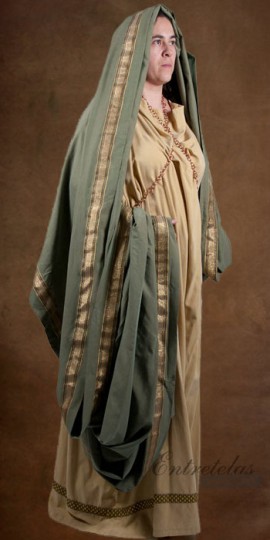
Women are often conforming to patriarchal modesty mindsets, shown way more covered than their male counterparts, with anke-length tunics and himations that covered them fully when going out (meanwhile, men saunter around in the statues and paintings with bare torsos and stark naked, no problem):


She's fully covered in a himation and ankle-length tunic, with her hair up (and only partially covered, I guess we should be thankful about that)...He's stark naked as if it were the most normal thing in the world (and not afraid of anyone calling him 'immodest' or fearing harassment, either!). Thank you, double standards.

A similar situation to the Greek exhibits in the Museo Nacional Arquelógico:
"It's also worth mentioning that, while Greek male depictions are often of men with bare torsos, bare legs or fully nude, bare female torsos in the exhibit were pretty rare, mostly associated with female idols or the marriage section (the case of the female torso above). Greek women's clothing was actually very restrictive (patriarchal 'modesty' mindset acting as a way to control and repress women's autonomy and sexuality), something that many people, accustomed to seeing female nudes in Greek statues and idealized depictions of Greek fashion, may not be familiar with. Short tunics were only acceptable in places such as Sparta, ankle-length tunics were the norm. Hairstyles where the hair was partially or completely covered by a cloth or headscarf were also common (open hair or even loose strands were hardly worn), and women, especially married women, had to cover their head at least partially, and wrap themselves in an himation (mantle) when going out - when they were actually allowed to be out, that is. Not dissimilar to the idea of today's burkas, the himation is 'a garment of decorous modesty' which disguised the shape of the woman's body in public, and which Hetairai also used as 'provocation' (in the same way veiling is used in 'exotic dancing' in the Near East).  This is quite a different idea from the idealized woman wearing the light tunic that we're so accustomed to seeing in Neoclassical and modern depictions of Greek culture, and not at all dissimilar from the religious-based head and body coverings typical of Patriarchal Monotheistic (and also polytheistic, in some cases) religions." (post)

The only time they seem to show naked women is primarily in the case of  goddesses associated with sexuality, such as Aphrodite. This is not a case of honouring female sexuality and the divine feminine, however, seeing as these depictions are consistently shown in a rather male-gaze-y way (with objectified, passive poses instead of depictions of a powerful goddess whose body and sexuality are not owned by any man). Many of these depictions also conform to patriarchal misogynistic ideas of 'modesty' and 'purity' as well - showing the naked goddess (of sexuality, no less!) covering her genitalia and breasts with her hands and arms, with her legs well close together  and shoulders hunched in a semi-stooping pose that gives 0% powerful vibes to anyone (let us remember that meanwhile all dudes are sporting their nakedness, very much including genitalia, no problem).

Definitely not how a powerful goddess should look like
Meanwhile, goddesses such as Astarté and Ishtar, the original Middle East inspirations for Aphrodite, goddesses of fertility and sexuality, are usually depicted in actually powerful and non-objectified poses and with no need to 'modestly' hide their nakedness (which in this case is not there in order to be sexualized, but rather a depiction of the divine feminine, which is not intended for the male gaze):

However, side note - The industry of the 'sacred prostitution' which flourished as part of the cult of these goddesses was very much a patriarchal issue, seeing as we're talking about a exploitative sex trade where the beneficients are always men (it was also often linked to trafficking, exploiting young girls and women from lower classes). In theory these goddesses' sexuality is powerful and has full autonomy because it's not owned by any man, and no man dictates it - but in reality the society in these cases was equally a patriarchy, so objectification and sex trade obviously and sadly happened. These prostitution practices, by the way, should also be in direct contradiction with fertility and sexuality goddess cults - Exploiting female sexuality for male pleasure has literally nothing to do with the free and powerful female sexuality symbolized by these goddesses, and is literally the very opposite of what the 'divine feminine' is all about (which is not being obligated to have sex with whomever asked because you 'represented the goddess's sexuality' - a fine example of how patriarchy twists everything for its own gain, which includes exploiting women under the pretence of 'serving a goddess' and 'honouring female sexuality'). 

As for today, "thanks" to neoliberal 'feminism' those concepts have been further twisted up, to the extent of calling sexual exploitation such as the sacred prostitution industry (and the sex industry in general) "empowering" and even "feminist".
I know, Bill, I know
Which yeah, angers me quite a lot. But back to the exhibition -


There were also your typical patriarchal gender roles, such as women not being allowed to participate or watch most sports games and competitions, or women loving going for water to the well because it was the only freaking moment they had to socialize and have a chat (meanwhile, men had male-exclusive banquets, sports, the theater, etc, etc). "The women had to catch a moment to chat in between domestic chores" - Women have to dig for a brief chat while still working, men have plenty of leisure time. Another charming double standard.

There was also a depiction of the Amazons, a refreshing breath of air of empowered, active women, albeit demonized by the patriarchal Greeks, who were hella offended that these women chose to avoid the company of men in order to get stuff done (seeing as the alternative is to talk to women for five seconds while drawing water from the well, and then working the rest of the time plus catering to various men's tirannical wishes - who would not choose to be with the Amazons, come on).

Sunday, 6 August 2017

Goodreads feminist reviews - Four Greek myth adaptations

Today's review post is about four books with adaptations of Ancient Greek mythological tales in the Spanish Anaya collection 'El Sendero de los Mitos'. The individual reviews can be found in my Goodreads account.  

Warning (kinda): Long post! Also, heavy criticism of Ancient Greek misogyny.

For all four stories:
+1 The version is engaging and enjoyable to read.
+1 I really like the way this collection is illustrated with colour and black-and-white renditions of original Greek art.

1. Atalanta, la de los pies ligeros: 5/5. Review on Goodreads here.


+1 Story revolving about the feats of the huntress and warrior woman Atalanta. Goddess Ártemis and her nymphs also make an appearance.

+1 Feminist content in this version, both narrator and plot: 

-Female bonding and criticism of Greek misogyny: Ártemis curses men for abandoning female children to die in the wild: 
"-(...) ¡Oh, Ártemis, qué crueles son los hombres!" ; "-(...) lo considero como una ofensa personal. Maldito sea el padre que desprecia a su retoño por ser mujer. No se saldrá con la suya."

["(...) Oh, Ártemis, how cruel men are!"; "(...) I consider it a personal insult. Cursed be the man that despises his offspring for being female. He will not get his way."]

-Amazon feminism regarding Atalanta and her warlike and huntress prowess:
"no sólo vencía a las mujeres, sino a los hombres, y no a cualquier hombre, sino a los mejores y más rápidos de su época. Y no sólo eso: además de correr como un gamo, (...) manejaba el arco y la flecha como nadie. (...) se hizo fortísima, y conocía la selva (...) mejor que nadie (...) cuán extraordinaria había de ser la habilidad de Atalanta para que toda Grecia estuviera pendiente de ella".

-Ancient Greek misogyny and gender roles are criticized more than once:
"Naturalmente, estas cualidades - excepto la de la belleza -no se explicarían si Atalanta se hubiera criado como el resto de las niñas de su época, dedicada a las faenas tradicionales de la mujer"; "En aquellos tiempos -como en los de ahora -algunos hombres eran así, extraordinariamente brutos, y creían que una mujer no puede hacer la mayor parte de las cosas que hacen ellos. (...) con un padre así, los problemas no podían tardar mucho"

-1 Emotional dependence and the 'taming of the shrew' cliché: In spite of her misogynistic and abusive father, Atalanta stills wants to gain his approval :/ ("demostrando que ella valía tanto a más que un varón, esperaba que su padre comprendiera su error, y la reconociera por fin como hija suya. (...) [Atalanta no quería casarse] mas, como tampoco quería contrariar a su padre, cuyo amor tanto le había costado conseguir (...)"). 
 
She also ends up being forced and tricked into marriage with a man. Although it's stated that she kept on hunting and stuff with him (woah, thank you nice guy!), she has to end up in a traditional heteropatriarchal marriage even though she had the intention of never marrying ("Atalanta no quería casarse por nada del mundo").

-1 The problematic myth of 'virginity' as undertood by a patriarchal society, and of Atalanta having the obligation to remain 'a virgin' because she was a follower of Ártemis (as opposed to saying that she was simply not interested in men and/or preferred to remain unmarried to retain her freedom in such a restrictive society). Of course, the misogynistic Greeks thought that the logical alternative of not being married in their heteropatriarchal system was to remain 'chaste' and 'a virgin' (a concept which is also extremely heteropatriarchal), without even considering all remaining options.

-1 Goddesses going against women - Ártemis seems keen to protect Atalanta in key moments, but seems to ignore her when she's tricked into having to get married, for example (also, the concept that Ártemis also cares for the 'virginity' of her followers is nothing but deeply patriarchal). Aphrodite helps Atalanta's future husband to trick her into getting married. Cibele punishes Atalanta (and husband) for entering her temple (in other version, it's Aphrodite, who's apparently offended because Atalanta didn't thank her for the gold apples that tricked her into getting married - which is just ridiculous).

  • Feminist infographic:
-Number of women (named): 5- Atalanta, Ártemis, Aphrodite, Cibele, Atalanta's mother Climea
-Other women (unnamed): Ártemis' retinue of  nymphs
-Bechdel: Yes
-Female bonding: Yes (and no, see above)
-Proactive female characters? Empowered traits in at least one female character?:  Atalanta is a huntress and athlete. Ártemis is a huntress goddess.
-Subversion: Atalanta defies and subverts traditional gender roles
-Problematic stereotypes or relationships?: Myth of virginity. Atalanta being tricked into marriage. Atalanta's emotional dependence when seeking her father's approval.


2. Los trabajos de Hércules: 3/5. Review on Goodreads here.

-1 As is the usual norm with Greek myths, there's quite a lot of sexism and misogyny around
I gave this tale a 3/5 instead of a lower rating, though, because, even though the misogyny content is still significant (although lower than in other tales in the collection, such as Apolo's sexual harassment of Daphne, or Helena being seen as the ultimate downfall of Troy), I find this tale to be more adventure-driven and more engaging to read.

+1 Appearance of the Amazons, who in this tale seem not to be described in an overly negative light - as is usually the case of Ancient Greeks, who saw the (originally Steppe) warrior-women as a threat against their patriarchal order and tended to demonize them as much as they could in their myths.
-1 However, in this tale the Amazons are probably not demonized as much because Hippolyta and many Amazons's main role in the plot is to admire Hercules's feats, so much that they're surprisingly compliant when it comes to handing him over Hippolyta's belt. This part of the story also includes the male hero battling the Amazons and acquiring the belt by force later on, so it can also be seen as a male fantasy where the strong male hero defeats the warrior-women who threaten patriarchal order. So the Amazons are not seen in such a good light after all - their main function here is to uphold the male hero's supremacy, and they're also seen as another monster that the male hero has to battle.

+-1 There are, of course, no main female characters, but, apart from Hippolyta and the Amazons, a handful of goddesses make an appearance - Hera, Athena and Artemis, mainly.

-1 However, they are either seen in a bad light (Artemis, Hera) (and so, they're the baddies who oppose our male hero), or, once again, they are used mainly as a means to help the male hero and uphold his supremacy (Athena) (and the gods (xD) know I hate the trope where empowered female characters are just in the story to help men with *their* issues).

Ártemis antagonizes the male hero and is described as "the most vengeful of gods" (which I highly doubt, seeing the excellent options we have with many other gods, especially the male ones, who will destroy your everything if you reject them sexually, for example). In the Ártemis scene, Apollo, the serial rapist and vain entitled brat extraordinaire, is not given any negative comment even though he threatens Hercules alongside his sister (double standards ftw!). 
Also note how our dear patriarchal Greek dudes choose to give Ártemis a head-covering in this particular depiction! To the unmarried wlw huntress goddess who gives zero f*s about patriarchal modesty mindsets and gender norms!   
 
Meanwhile, Hera is constantly antagonizing Hercules as a way to get her revenge from Zeus cheating on her with Hercules' mother Alcmena - and yes, she's seen as the 'villain' of the story, the baddie who goes against the male hero, because her husband is a serial cheater and rapist. But she's the bad guy in the equation, of course! (double standards ftw!) (of course, it's also a patriarchal sign that Hera would choose to rain misfortune on the women Zeus harasses and the children they end up having instead of just kicking Zeus' ass and becoming the independent sky goddess she was before patriarchy destroyed Pre-Hellenic goddesses' lives).
Athena and Hera looking 100% done about all those entitled men they have to put up with
 
And then there's Athena, one of the most empowered Greek goddesses, the warlike goddess of wisdom and strategy...who, as is the norm in these patriarchal myths, instead of doing awesome empowered stuff, usually spends whole stories just assisting the male heroes. This version's narration also comments how she does it partly because she is against Hera for some reason or other (yay female bonding) ("Pero allí estaba Atenea, que sin duda debía tener alguna cuenta pendiente con Hera, cuando tanto se empeñaba en ayudarlo"), and how Hercules' reaction to her help is often to dish out compliments to her ("most beautiful Athena", which is certainly the best compliment you can give the goddess of strategic war, wisdom and crafts! Keep it simple!). Also yay to Athena's glorious OoC reaction - the goddess who quite literally shouldn't give a d*mn what men thought of her (not only because she's like 0% interested in them, but also because she'd probably feel offended that they chose to focus on her appearance), feels oh so flattered and probably decides on the spot that she's going to keep on helping the male hero because her priorities are now 100% fulfilled - She's doing it because she's against another goddess, because she's supporting her father's son (who is not only a cheater, but swallowed up her mother because of MRA fears, so you know, so much respect), and now bonus points if said half-brother showers her with positive (and creepy) comments on her appearance! So thank you, Ancient Greeks, for wrecking a perfectly awesome character in so many of your tales.
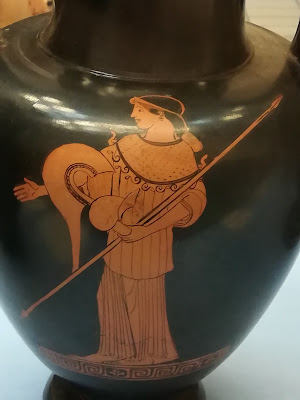
This depiction pretty much sums up all my rant about Athena and Hercules, actually xD Also, I'm eternally fascinated by the fact that men can walk around with their junk hanging out (and no one assaults them), but the actual goddess of war and strategy is always wearing ankle-length layered tunics.
  • Feminist infographic:
-Number of women (named): 7- Alcmena, Hera, Athena, Ártemis, Admete, Hippolyta, Rhea.
-Other women (unnamed): Amazons
-Bechdel: No 
-Female bonding: No
-Proactive female characters? Empowered traits in at least one female character?:  Ártemis and Athena are warlike goddesses, but all they do is either help or oppose the male hero, so not really. Same with the Amazons.
-Subversion: Not really. Maybe the appearance of the Amazons, who do subvert traditional gender roles.
-Problematic stereotypes or relationships?: Ártemis as 'the most vengeful of gods'. Hera as the baddie who opposes Hercules because her husband cheats on her (but she's the evil one). Athena only there to help the male hero.

3. Helena y la guerra de Troya: 2/5. Review on Goodreads here.

-1 I don't like the inherent misogyny of this mythological tale. I usually give The Iliad a very high rating because it's so well written, even just judging from a translation, but the patriarchal values and misogyny present in the tale merit a heay criticism from a feminist point of view
 
Ancient Greek women are incredibly subjugated, and in this case we also have, with Helen, the infuriating sexist cliché of the woman as the 'home-wrecker', 'bad wife' and 'femme fatale' who brings about the downfall of men and cities because of her beauty and lack of 'fidelity' (such a nice way to excuse the way men can't stop themselves from being violent against women, and from objectifying them). This misogynistic topic sadly appears in many tales and myths as well (Deirdre, Isolde, Gráinne in Celtic myth, for example - although these women are allowed a bit more agency and strength than the deeply subjugated Greek women). I personally see Helen as a clear victim of Patriarchy, forced with dubious consent into a traditional marriage with Menelaus and then used by the equally sexist and entitled brat Paris - and while she is clearly oppressed by both men, who control and objectify her, it is she who is seen as the 'evil one' in the equation ("[Menelao] tiene derecho a matarte. Le has hecho sufrir tanto..."), something which of course suits Patriarchy and men very much.

-1 I'd also like to reference the mentions in the text and depictions in the illustrations to the Greek misogynistic modesty mindset and the head-and-body-coverings women usually had to wear, very similarly to all religious-based gendered coverings of today. Helen is described as veiling and covering herself to go out, and depictons of veiled women and women with head-coverings are to be found in all four books in this collection. See here for more about this issue.


Apart from the portrayal of male violence against women here, see again the fascinating double standard regarding clothing: While women are nearly always wearing ankle-length tunics with most of their body covered, and have to cover themselves with veils,mantles and practically burkas when going outside, men are allowed to wear little clothing with no problems whatsoever - even frankly illogical situations like having their genitalia out when in armour because I don't know, fragile masculinity issues, needing to flaunt their junk in front of their pals? *facepalm* And no one assaults men in these stories for that! I know, it's crazy!
  • Feminist infographic:
-Number of women (named): 4- Helen, Leda, Clitemnestra, Aphrodite
-Other women (unnamed)
-Bechdel: No. Helen talks about Clitemnestra, but about men, so doesn't count; and Aphrodite opposes Helen in a sexist way and it's also about men, so nope either.
-Female bonding: No
-Proactive female characters? Empowered traits in at least one female character?:  Helen tries to get away from her restrictive position, but gets another similar situation with an equally problematic man. So not really :/
-Subversion: No
-Problematic stereotypes or relationships?: Abusive, controlling and problematic relationships (Helen with Menelaus, Helen with Paris). The misogynistic stereotype of the woman as the 'femme fatale' and 'home-wrecker' who 'causes wars'.

4. El laurel de Apolo: 1/5. Review on Goodreads here.

-1 As is the usual norm with Greek myths, there's quite a lot of sexism and misogyny around - In this case we have topics from sexual assault, to victim blaming, to societal pressures to marry and have children.

-1 I especially dislike this tale because it deals with the bratty entitled serial rapist Apollo, who stalks, sexually harasses and tries to assault the 100% unwilling poor nymph Daphne. This version seems to sympathize with Daphne (as it should logically happen), but that is actually not the case of other versions I have read - in some cases, the whole issue is referred as 'tragic romance', claiming that Apollo was 'in love', so poor Apollo, and I don't know in which universe you can call sexual assault 'romantic' and 'being in love' in any way. Especially given that Daphne has to get literally dehumanized and turned into a tree in order to get Apollo to leave her alone.
 
This version, following the original, is full of problematic and potentially quite triggering aspects having to do with Apollo's male entitlement, and stalker-harasser-rapist mode.

-1 I also deeply resent that they somehow try to justify, in this tale, the explicit sexual harassment and assault, by saying that Apollo could not contain himself because he had been struck by Eros' 'love' arrow. Of course, let's keep on promoting the fact that men 'can't control themselves' so we should let them keep on harassing women. They also try to explain Daphne's distaste and fear not because she is logically afraid and repulsed by the rapey Apollo, but rather because Eros has also struck her! With a 'hate arrow' of sorts! Yay patriarchy trying to justify sexual assault everywhere!
It's not harassment and sexual assault if they're being controlled by 'love' and 'hate' arrows! Misogynistic assholes justifying and glorifying rape culture since forever. Also misogyinistic jerks getting off on portraying violence against women since forever :/ (Cornelis de Vos, Apollo Chasing Daphne)

-1 And it's not just about the arrows, it's actually Daphne's fault that people harass her, really! It's totally Daphne's beauty that's to blame, obviously! ("-Eres demasiado hermosa como para que te dejen en paz. Un buen marido te daría el sosiego y la seguridad que necesitas"; "la belleza de Dafne no dejaría de acarrear consecuencias"
It's Daphne's fault for being beautiful, being alone in the woods and not wearing a burka! 

 -1 Daphne's father keeps pressuring her daughter and tries to guilt her into marrying and giving him grandchildren ("-(...) si no por tu propio bien, deberías casarte por respeto a tu padre, que bien merece, en su ancianidad, el premio de ver a sus nietos"), even though she repeateadly states that she wishes to remain unmarried, thank you very much ("-No lo quieran los dioses (...) Sólo de pensar en el matrimonio se me ponen los pelos de punta. No, yo quiero vivir siempre como vivo ahora, y no permitiré que nadie se me acerque") (and given that men usually pounce on you trying to assault you in these tales and also in real life in too many cases, I cannot but totally understand her choices).

-1 I also find it...interesting that when Daphne is being pursued by Apollo, keen on assaulting her, it's her father who 'comes to her aid', and by dehumanizing her - Ártemis was said to have a liking for the nymph earlier in the story, why didn't she help her? Especially given that the attacker is her brother?? Like, she should have been angered and upset?? Why do the Greek people keep wrecking Artemis' character by turning her into a vengeful goddess who doesn't actually care about women in too many instances? And why did Peneus think that the only way to save her daughter was to dehumanize her, couldn't he have done something else? I get it that he's a lower god against an Olympian, but I don't know, do some water tricks or whatever! Distract him so she can escape! And if you can change her to a tree, surely you can also give her super speed or invisibility powers or whatever so that she can safely escape! Her end is also so sexist :/

  • Feminist infographic:
-Number of women (named): 2- Daphne, Ártemis
-Other women (unnamed): Nymphs
-Bechdel: No
-Female bonding: No
-Proactive female characters? Empowered traits in at least one female character?:  Sadly, no.
-Subversion: No
-Problematic stereotypes or relationships?: Sexual assault and harassment issues. Father trying to guilt her daughter into marriage.

Wednesday, 27 July 2016

British museum: Egypt and Greece

My third post about my visits to the British Museum (Anglosaxons, Vikings), today's historical-based pic-overload will be about some Egyptain and Greek pieces, and mainly women-centric depictions, including pics from my visits in 2014 and 2019.  As usual, click on the individual pics or open in a new tab for larger sizes!
 
Other British Museum posts: Anglosaxons, Vikings, Celts

  • Egypt: I love the Hathor statues, and particularly all the Sekhmet statues. Sekhmet's one of my favourite Egyptian goddesses, and not only because I'm a Leo xD, she's just a really empowered warrior-goddess and a feminist role model for me 💪🦁💜 And even though Egypt was still a Patriarchal society (even if Egyptian women did have more civil rights than other contemporary cultures), I also love how these women are portrayed with bare chest in the statues without being sexualized.

Hathor


Hathor:


  • Greece: The woman-centric pics I took in the Greek section include Athena 🦉💙(my favourite Greek/Pre-Hellenic goddess alongside Ártemis), a Caryatid, the Nereids 🌊 (I love those statues, so aesthetic), and some Amazons (once again, more feminist role models for me, I love them 💜🏹).

Athena:  


Amazons:


    Nereids:


    A Caryatid:


    More pics from the Greek section from 2006 and 2019:


    Also, this depiction of a Cretan woman or goddess (640-600 BC):


    And finally, I also took a couple of pics from the Etruscan and Mesopotamian sections:
     
    I believe this is Ishtar, I forgot to take a pic of the caption

    And an Etruscan statuette of Vanth, a 'winged female demon holding snakes' (425-400 BC), aka Crowley confirmed 🐍 xD