Showing posts with label Role models. Show all posts

Sunday, 17 July 2022

Goodreads feminist reviews - Gin & Daggers (Murder, She Wrote novels, #1)


 Book: Murder, She Wrote. Gin & Daggers (1989), by Donald Bain, the first of a series of Murder, She Wrote novels, based on the TV series of the same name.

2/5. Goodreads review also here

 I love Murder, She Wrote and adore Angela Lansbury's Jessica Fletcher, but unfortunately this book's characterization of her was not it. At all. This is my first foray into the Murder, She Wrote books, and I'm honestly quite discouraged to see that the same author wrote most of them, because I'm less than impressed - and more than a bit displeased - with the way he wrote Jessica's characterization. Not to mention the blatant male gaze present throughout the whole book.

I love Jessica Fletcher because she's just so refreshingly unconventional in every way. Firstly, we direly need more protagonists who are badass older women who subvert gender roles every day (Jessica loves both baking apple pies in her seaside town and solving murders everywhere she goes, and it's perfect xD). And I just love how Jessica combines badassery and kindness, doesn't care for money, fame or power in spite of having become a world successful writer of mystery novels, always keeps an open mind and constantly hones her curiosity for learning new things, for example, about other countries and peoples (she's not a typical EEUU citizen in more than one way welp), and she seems to always have a special affinity for the more oppressed minority groups.

Honestly, Jessica Fletcher is the intelligent, badass and supportive friend that we all need in our lives

The Jessica Fletcher of this book is quite dissimilar from this profile, though :S She is written as quite more conventional, displaying a somewhat narrower mind in her inner thoughts, and also displaying less of the badassery and aplomb that so defines her. And it's a shame.

But the main thing that really made me dislike this book more was the way that the male author displayed a blatant male gaze in each and every one of the descriptions involving women, particularly the young female characters in the story. The book is written in first person from Jessica Fletcher's point of view, and can there be anything more incredibly jarring than Jessica Fletcher describing the young women she meets while solving the murders in an incredibly sexist and sexualized manner that reeked of male gaze :S? The book kept describing women's outfits and how tight and revealing they were (sometimes combining this drooling male gaze with the misogyny of how they were sl*ts and dressed inappropiately). The descriptions focused on women's cleavage more than once, just freaking because, and generally made a point of highlighting how beautiful and seductive and sensual the women were (or not, depending on the author's tastes). Wtf. I would be angry about having to read about a man describing all women in this way anyway, but the fact that it's supposedly Jessica goddamm Fletcher describing them like that, in such a disrespectful and sexualizing manner? WTF. I'm personally offended on so many levels.

Jessica Fletcher WOULD NEVER.

The descriptions in the book also engaged in casual fatphobia, body shaming and ageism, there was a completely unnecesary subplot featuring strip clubs because more male gaze, one sole mention of a "*nasty* homosexual relationship" (wtf), and the author also proved that he followed the archetypal way of not bothering to learn geography beyond the United States - This Mediterranean European eyerolled so hard during a description of an Italian female character in which she was described as a 'sensual and exotic beauty' (bonus ethnic fetishism) with "Middle-Eastern features, perhaps from Lebanon, perhaps from Spain or Italy". The word he was looking for, if he wanted to use all three of those countries at the same time, would have been *"Mediterranean"*, and he would have been right, without any need to mix up the continents. Sigh xD.

Jessica Fletcher is way more knowledgeable than that, dude.

The plot was alright, I guess, and it made me want to finish the book to find out if I was right about every whodunnit's main question (who the murderer(s) are xD), but I also found the mystery to have less quality than the standard series plotlines, and it also left me a bit dissatisfied as I felt that the book didn't tie all ends in a satisfactory way.

Did that character really write the fictional murder mystery book the plot revolves around, then? And what happened to that other murder victim who is never mentioned again?

There are also way more male characters than female characters in the story, and the main points about all the female characters' plots revolved very strongly around men. Which is something that we can also see in various episodes of the series, and not every Murder, She Wrote episode includes the healthy dose of social criticism that I tend to enjoy (although more than one does), but the book was overall lacking more in at least the unconventional and subversive element that Jessica Fletcher always adds to every episode no matter what. So meh.

Without divulging any of the whodunnit's twists, I also didn't quite like how Jessica kept either thinking about her late husband, or crushing on a handsome inspector from Scotland Yard. Jessica does indulge in sporadic love interests and casual lunch and dinner dates at the end of various episodes, and that's perfectly fine and more power to her, but the book often had Jessica thinking in a more engaged manner about men instead of you know, solving the murders. In the series, it's pretty much the other way around.

If she's interested, Jessica doesn't say no to a casual dinner date with the episode's random guy of the day, but murders, books and travelling are her main thing, dear author. It's literally because she's widowed that she started writing, travelling and solving murders in the first place, and she's also not about to change that any time soon no matter how much she had loved her late husband, lol.

Finally, I felt that the characters of Doctor Seth Hazlitt and Sheriff Mort Metzger and Jessica's dynamic with them also lacked the characterization of the series in more than one respect, and I actually found it patronizing and intrusive how the plot decided that they would both just travel from Maine to London and stay a few days to help Jessica out - as if she wasn't perfectly capable of solving murders wherever she goes with the help that she already would have found at hand had she needed it, as we have already seen in twelve seasons of the series :S xD. The dynamic is not at all like that in the series most of the time, and what's more, Seth and Mort hardly added anything to the mystery solving per se, choosing instead to indulge in sightseeing and especially in a "boys' night out" drinking and enjoying the attention of lots of young, attractive women (eww). I felt like the author relished every opportunity to add more descriptions of sexualized women and men being icky and nope.

Jessica disagrees with all the unnecessary sexism in this book

I'm not sure that I'll be reading more books from this series any time soon, although knowing my perfectionism, I'll most probably read them all at some time xDD Let us hope that the rest of the books improve at least somewhat on these accounts :S!

Thursday, 19 December 2013

Doctor Who feminist reviews - 'Rose'

UPDATED April-May 2016 and August 2020. Added gifs and pics, changed some of my former views and added a lot more text and detail (damn it, perfectionism xD)

My first Whovian feminist review is going to be about the first episode of the new series of Doctor Who ('Rose'). There will be SPOILERS about the plot of this episode.


                                            New!Who, 2005 series: 'Rose'                  

-Doctor: Ninth 
-Companions: Rose Tyler
-Episode: 'Rose' (New!Who, 2005, Season 1 episode 1)

 Brief summary of the episode in Wikipedia 

      1.   Overall:
  • Things I liked:
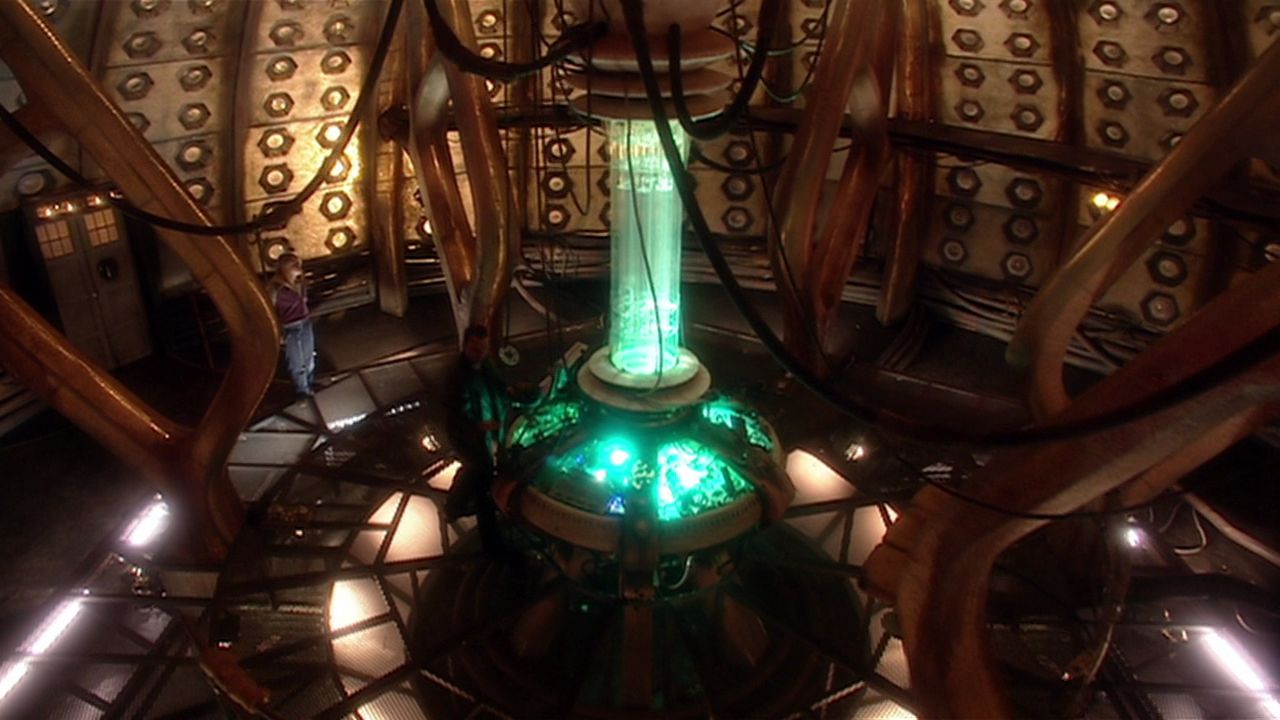
 -The whole time-travelling idea of Doctor Who, and the TARDIS design.

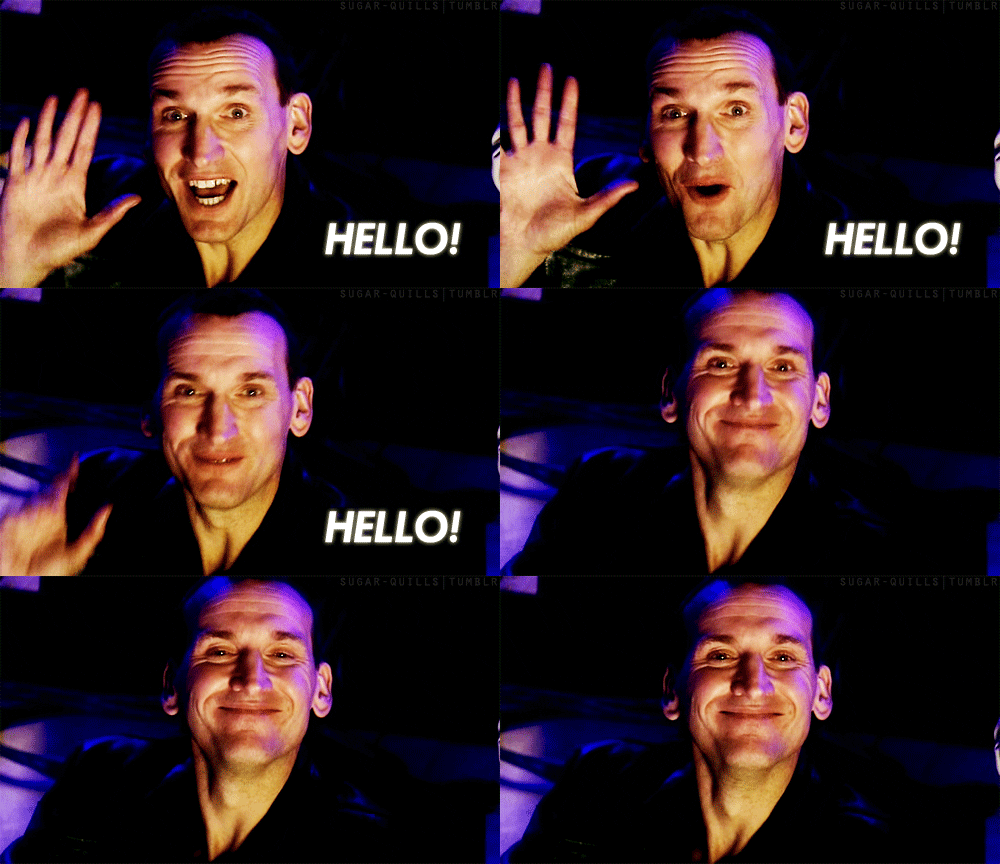
 -Christopher Eccleston's portrayal of the Ninth Doctor is pretty likeable and sassy.
Fantastic!
 -Rose's proactive traits (initiative, wits and sass). In this episode, she is really the one to stop the Nestene Consciousness, plus she saves the Doctor and outwits him (making him consider his former patronizing mode).
You go girl! Rose smashing gender stereotypes
  • Things I didn't quite like:
-The special effects. But then again, their budget wasn't very high, so it's understandable, I am grateful for the return of New!Who disregardless :)  
...Yep
-Sometimes the percussion parts of the soundtrack are too loud and it's hard to hear the dialogue.

-The bin-burp. I personally just don't find that type of humour funny.
  • Things I didn't like:
  -Mickey's interaction with his girlfriend in this episode shows a number of questionable traits, some of which can be explained by acquired sexism
 
-Disclaimer: In 2021 several allegations of sexual harassment were tied to Noel Clarke, several while working on the set of Doctor Who. I spoke about it here

Mickey does have character development later on in the series, and doesn't quite again show this level of sexism (the possessive moment in the car, or the "*slaps ass* 'Kit off'" demeaning comment), so I'm going to assume that the relationship portrayed in this episode is an 'objective' depiction - and even a critical view, explaining why Rose feels rather dissatisfied by it-, and not something that is condoned.
Mickey feeling possessive about his girlfriend being out there talking to other men
-The Doctor's patronizing/xenophobic-speciecist comments which arise from time to time.

Thankfully, his comments are never overly mean, can be explained (even if not justified) by his pos-Time War PSTD, trauma and increased cynicism, and his character develops quite a bit in that respect.
That's enough with the 'humans are stupid apes' nonsense, Doctor!
 -I don't like how they started portraying Rose's mother Jackie, even if thankfully the character got more depth and character development throughout series 1, 2 and 4 (and now I love her). In this episode she's shallow (but I'm not at all against her wish to date people casually - I'll talk about that problematic scene later), self-centered, conventional, and seems pretty careless when it comes to the well-being of her daughter (some careless and kinda demeaning comments, not encouraging her to retake her studies, etc).  As a Whovian and having watched all seasons, I now know Jackie's character got so much better and that she actually cares about Rose *a lot*, so yay about that.


Gossip ahoy!
-I quite like Nine/Rose, friendship and well, yes, also ship - the romantic subtext is very clearly there, and I don't dislike that, even though if we look at this pairing from a feminist pov we also have to note that 1) There's a sizeable age gap (if we only look at Nine's apparent age, it's a 20 year gap), and although that doesn't always mean the relationship is going to be unhealthy or lack equality (I actually think Nine/Rose is way more compatible than Rose/Mickey), a big age gap with a younger woman and an older man crops up repeatedly in the media and in real life, and it does often come with a power imbalance factor, so I am wary of seeing that model promoted too often. And 2) It's also worth noting that, following in the footsteps of the 8th Doctor 1996 movie and the newfound interest for romance in DW, the first companion in New!Who is also a love interest.

I also hate triangle clichés - and in this case, we have Mickey/Rose/Nine, as well as  unnecessary romance plots with crappy guys like Adam that only give Rose grief, and they didn't resolve the Rose/Mickey relationship until mid-series 2, which irks me immensely.  

Apart from the fact that I'm against the portrayal of unresolved, ambiguous relationships and potentially cheating scenarios, because that's not 'liberation' or 'equality' or 'empowerment' (unless we're exploring the topic of forced marriages and the like),  people could also be getting the idea that every time a female character goes off on her own (meaning without her heteronormative boyfriend), she's going to flirt with other people  and end up either cheating on him or breaking her relationship with him. And that's a pretty problematic way to see it  (this scenario will reappear with Amy/Rory - to a lesser extent - and Clara/Danny in future seasons).

-Feminism:
   About the Bechdel test, I think that it isn't that exhaustive in terms of feminism. There are films with empowered female characters who don't happen to interact with other women a lot. Are we going to compare a film with really empowered female role-models who don't really talk with other women with a film where two women (not necessarily awesome role-models or anything) happen to have a few lines of conversation together about something other than men? Not that I don't appreciate that people are beginning to worry about female representation, female communication, female bonding and female friendship (I think all of these are really important), but the test is a bit flawed, imo.

  •    Number of female charactes: 3 - Rose Tyler, Jackie Tyler, Caroline (Clive's wife). Main role for Rose, secondary role for Jackie and a minor role for Caroline. All three white and heterosexual (although Rose might actually be bi, because Billie Piper claimed she would also be in love with the 13th Doctor were she to meet her).
  •    Empowered traits in at least one female character? Rose is active, inquisitive, and shows agency in this episode (deducing where the Nestene Consciousness is and actively saving the Ninth Doctor).
  •    Level of sexism:  Mickey shows quite a lot of sexism and entitlement in his interactions with his girlfriend Rose (I'll be talking about that later). Also some stereotypical sexist aspects in the portrayal of Jackie.
  •    Bechdel Test and female bonding: Yes - Rose and Jackie talk together about the explosion incident, plus jobs and other trivia. Mother-daughter relationship and interactions (even though this dynamic isn't at its best in this episode).

-This Tumblr post also addresses this episode from a feminist point of view. We agree on most points.

-Other intersectional issues:
  •    Race/ethnicity. Speciesism: 
-Appearance of a black character, Mickey. Interracial relationship between Rose and Mickey. Mickey's character gets fleshed out and developed throughout series 1, 2 and 4, and it's never treated like a racial stereotype. While it's totally legit to criticize him for his entitlement and sexist behaviour when it arises, it can be also worth commenting that the fact that he will be basically reduced to 'Mickey the Idiot' in series 1 and 2 and treated in a pretty crappy way by the Doctor, while being the only recurring black character in the show, can rightfully rub people the wrong way :S
                                          

-Some patronizing comments from the Doctor about  humans, which can be seen as speciecism resulting from increased misanthrophy after the Time War. Rose is open-minded when it comes to class and race/species, though, and she doesn't mind that the Doctor is an alien (Rose: "Are you alien?" Doctor: "Yes. Is that all right?" Rose: "Yeah"). Mickey does have prejudices about it: "Don't. He's an alien. He's a thing."
  •    LGBTIQA+: The Doctor is canonically a genderfluid alien. Rose Tyler might be canonically bisexual, but there's no explicit mention of that in the series.  And I think the Doctor is being descriptive rather than offensive when saying "That won't last. He's gay and she's an alien".
  •   Social class: The first companion in New!Who is a woman from a middle-low working class. Even though she shares Rose's class status, Jackie questions Rose's ability to get a good job due to her upbringing and (lack of) education, showing some internalized classism when suggesting that she find a job at the butchers because the shop was giving her "airs and graces".
-Integrity and ethicsSubstantial-to-high. 

-The Doctor doesn't seem to show as much empathy as in other episodes, being rather dismissive of humans, but he still tries to stop the Nestene Consciousness in order to save humanity, and his current gruffness and closed-off manner can be explained by the fact that he's more or less recently regenerated after the end of the Time War and it's traumatized and guilt-ridden by it. 
-Rose saves the Doctor (and humanity). 
-Rose worries about Mickey being in danger and the possibility that he was killed. 
-Rose is sickened to hear that Wilson was killed ("That's just not funny. That's sick!").
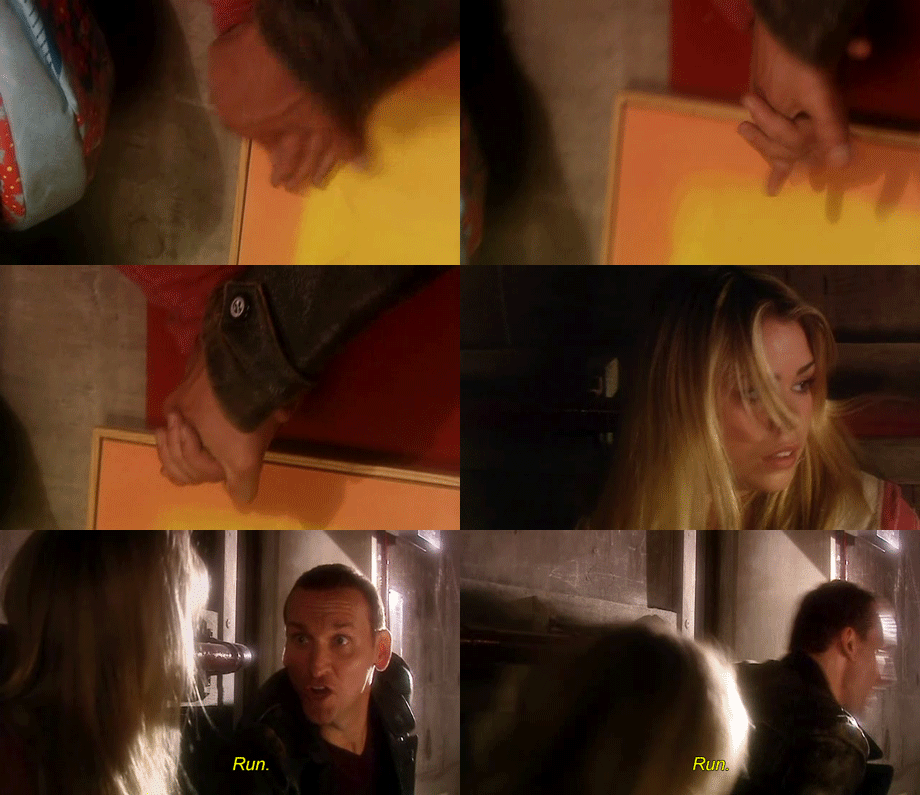
-The Doctor helps Rose escape the mannequins. 
-Rose phones her mother to warn her about the mannequins. 
-When Rose is assimilating all the information about the TARDIS and Mickey being attacked by aliens and she breaks down, the Doctor says "That's okay. Culture shock. Happens to the best of us".
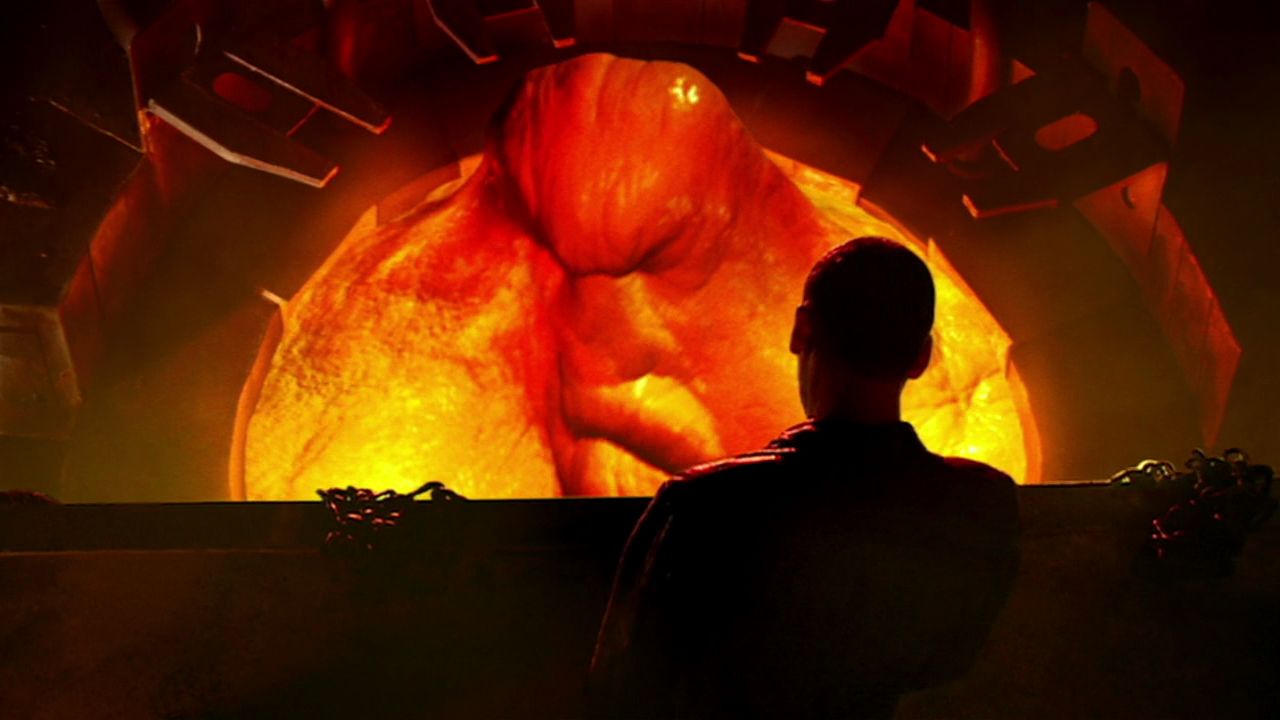
- The Doctor, following his pacifist and anti-genocide oriented mindset (especially after he thinks he commited double genocide in the war), also tries to negotiate with the Nestene Consciousness instead of killing it outright ("I'm not here to kill it. I've got to give it a chance"). 

     2. Character analysis, from a feminist point of view:
  (All the transcript quotes come from this site)