Friday, 13 April 2018

Goodreads feminist reviews - Doctor Who Audiodramas: The Ravelli Conspiracy

4/5. Goodreads review here.

 A story with the First Doctor, Vicki and Steven, who find themselves in early 16th Century Italy embroiled in intrigues featuring Giuliano de Medici, his brother Pope Leo X, and Niccolo Machiavelli. More engaging than I expected - I quite enjoyed this historical adventure :) And while I initially thought Peter Purves (Steven)'s impersonation of the Doctor's voice to be a bit meh at first, it grew up on me as the episode wore on. Also, female director (yay representation!).

The TARDIS team ^^!
+1 Ethics and anti-violence - When blackmailed into poisoning Giuliano de Medici, Steven refuses to kill anyone (he also opposes Carla's desire to poison Machiavelli after he's used and betrayed her). The Doctor and Vicki also try to stop the political intrigues and the murderous intent of the Medici ruler, and reach non-violent solutions (with varying degrees of success).

Steven: "I've thought about it, Carla, I've thought about this a lot - What you want me to do is murder! I can't help you, I'm sorry."
Carla: "You value your morals so highly, do you?"
Steven: "I do, yes." 

Steven: "You don't care who's hurt as long as you put the right people in charge. What happens when they decide they like power a little too much? Trust me, they'll soon realize the best way to keep it is by slaughtering a few more enemies."

+-1 Social criticism themes (about political intrigues, the religion institution, tyrannical rulers,...). However, the figure of Pope Leo X, while criticized in some ways, is also idealized in others, with the plot choosing to mainly criticize the tyrannical and violence-friendly Giuliano de Medici in comparison to his more 'reasonable and learned' pope brother. Pope Leo's corruption is also highlighted during the plot, but he's mainly shown in a rather sympathetic light :S.
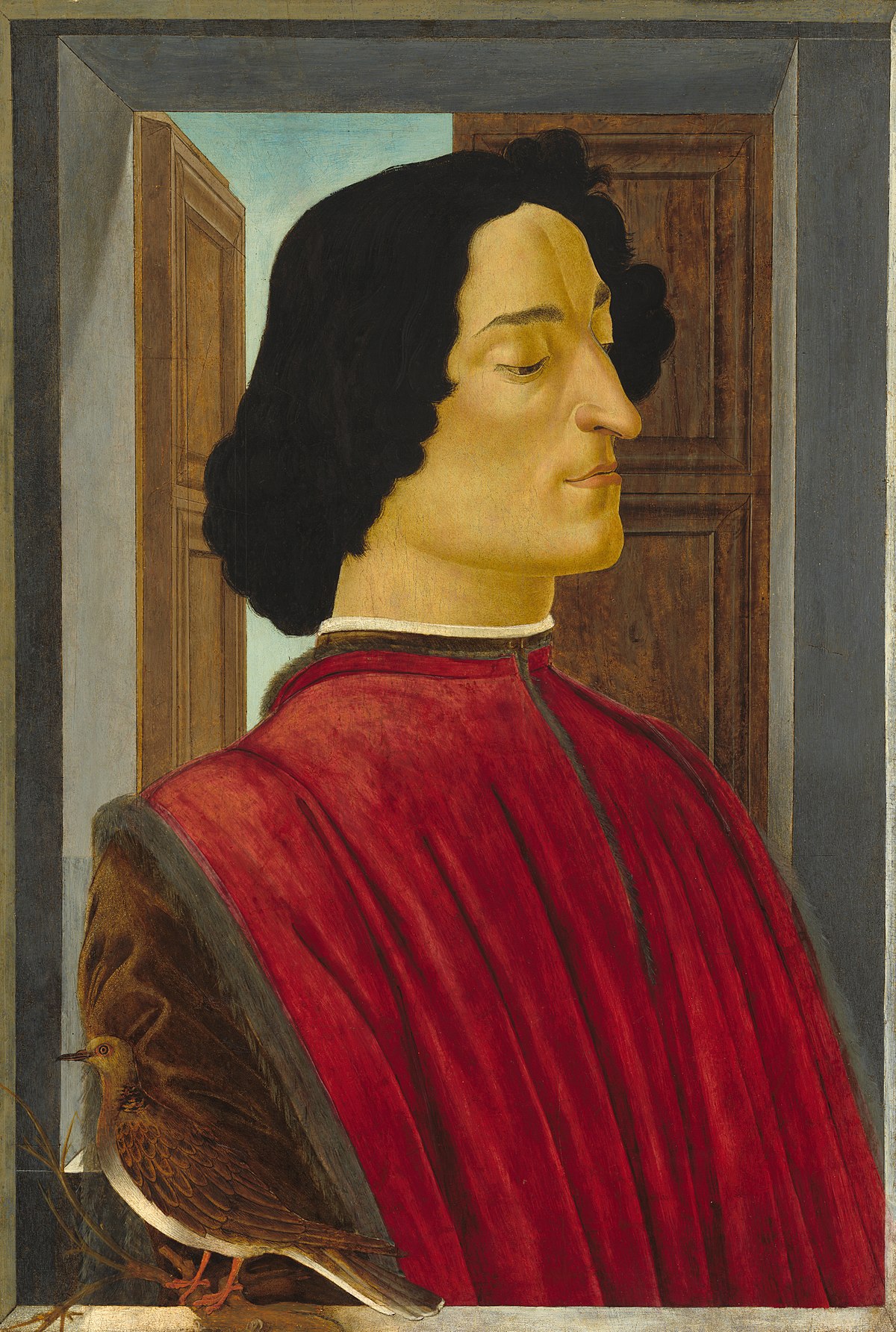
Giuliano de Medici
Steven: "So there's nothing in this period we need to watch out for?"
The Doctor: "Oh, there's a little backstabbing, I suppose. Some plots, the odd civil war, torture, religious persecution...And the ever-constant threat of violence and damnation should we be foolish enough to criticize the current religious orthodoxy, huh!"
Steven: "Right. Then perhaps we should go." (xD)

Some themes which can be discussed from a feminist viewpoint are addressed, such as -

-The way Machiavelli uses servant Carla (who is in love with him and also bears grudges against the Medici) for his own political schemes is criticized. 

Machiavelli is not seen in a very good light in general, backstabbing the TARDIS team in various ways in 'machiavellian' style  - maybe a cliché, but I'm all for viewing historical figures who spent quite a lot of their time getting drunk and using women in a non-positive, non-idealized light. He was also a pretty sexist dude, seeing women as "weak, lesser and incapable of ruling government compared to the 'strong man'" and promoting abuse against women.

Hell yeah, go criticize this sexist dude, Big Finish

The Doctor clearly has not great liking of Machiavelli:
 
The Doctor: "It seems to me that you have all you can wish for, heh! Why do you try to claim power and influence for yourself by this foolish scheme?"
Machiavelli: "Have you never been attracted by the thrill of turbulent times, Doctor?"
The Doctor: "Possibly. Possibly, my good man, ha!"
Machiavelli: "We are quite similar, then, I think"
The Doctor: "We are most certainly not!" 

The Doctor: "Cesare Borgia, the very worst of them all, a bully and a tyrant! No doubt a close associate of yours, huh?"
(...) Machiavelli: "Have you ever considered that good ends may sometimes justify brutish means?"
The Doctor: "And does this theory form part of your treaties, huh?"

 -The way Popes used to use women as their 'consorts' for physical and emotional companionship is also addressed, with people assuming Vicki became Pope Leo X's 'companion' because of her interactions with him (which is not the case here, Pope Leo X clearly insinuating he's gay - although this being the Church, pederasty is the word :/). But even though Vicki's fortunately not a target of unwanted "affections", she's still treated in a very entitled way by Pope Leo, who demands she entertain him with poetry and companionship (he basically tells her that unless she has something interesting to entertain him with, he will not protect her from her torture-friendly brother :S). He also asks her to leave her companions and travel with him in order to offer him advice (at least he acknowledges her intelligence - "Is there no end to your talents? Poetry and politics, and now horse-riding!"; "Your wise counsel would be much appreciated" - But still, entitled).
And as usual, women have to gain favour and 'power' by complying to this kind of male entitlement behaviour (Carla later also has to resort to using her 'feminine wiles' and declare she's hopelessly in love with him in order to take back the TARDIS key while he's distracted with his inflated ego :/).

Vicki: "Your Holiness, have mercy, I did not realize that Carla had such feelings for you. But then again, how could she not?"
Pope Leo X: "What? What do you mean?"
Vicki: "How could she not have feelings for you? The luster of your intellect, those piercing eyes...(...) And your wit, charm,..."
Carla: "I'm so sorry, my Lord! I was overcome by your presence!"
(...)
Pope Leo X: "Well, I suppose my presence can be quite overpowering."

Also, let's note how men - even members of the Catholic Church - come to no harm if they go a-dallying with as many women as they like, while for women their everything depended on their 'reputation' on that respect. Here with a bonus of heteronormativity (although I'm not keen to defend the Church's homosexual pederasty, of course):
 Pope Leo X: "As leader of the Church, I am forbidden to marry, but that does not mean that I may not enjoy female company."
 Vicki: "Is that...encouraged?"
 Pope Leo X: "Maybe not encouraged, but it is certainly expected that I would take a consort, and so far, well, I have failed to do so."
 Vicki: "Failed?"
 Pope Leo X: "It would do no harm to my, um, public image to be seen arm in arm with a fair lady such as yourself ."
 Vicki: "Because you are expected to enjoy female company?"
 Pope Leo X: "Exactly."
 Vicki: "But, as it happens, you don't enjoy female company?"
 Pope Leo X: "Um, well, controlling an empire leaves very little time for such things."

Carla: "Every Pope needs a consort. And this Pope especially needs a consort, given the rumours." 
Vicki: "But I'm not his consort!"
Carla: "Have it your way. And at least you can be sure that he won't, not with you anyway."

(About Pope Leo Xs sexuality - this would be a good historical LGBT+ example in order to get narrow-minded religious people tearing at their hair (xD) if he hadn't taken advantage of young men in the usual pedophilic way the Church has going on :S (cf Wikipedia, "the pope's familiar banter with his chamberlains – handsome young men from noble families – and the advantage he was said to take of them" Not only age gaps, but power imbalances stemming from class differences and servants vs their lords as well - this happens *a lot* with female servants and handmaids, too). So not super keen to idealize or exalt that issue much, to be honest).

-Other issue that is tackled in a positive way is the patronizing way in which the Medici brothers treat Vicki (who is way smarter than both of them and uses their entitled sexist mindset in her favour more than once). Bonus points for Vicki demanding to be taken seriously and not to be called 'child' (chided, they end up resorting to 'person' a couple of times xD :D).


Pope Leo X: "I will write a letter for this child-"
Vicki (admonishing voice): "I'm not a child!" 
Pope Leo X: "This...person" (:D xD)

Also-
Pope Leo X: "I'm sure you can look after yourself, child - uh, girl, uh, young woman-"
Vicki: "Vicki"

Can we also talk about Vicki's complete snark and badassery xD?

Giuliano de Medici: "Prisoner! Guards, seize her!"
Pope Leo X: "No, no, no! Leave her alone!"
Vicki: "Oh, make your minds up!" (xDD) 

Giuliano de Medici: "She's part of it, I know she is! She was in [Machiavelli's] house!"
Vicki: "Well, this is your house, so by the same logic, I must be on your side!" (xDD)

+1 Vicki's actions are proactive throughout the story. She finds herself having to take part in the political intrigues between the Medici brothers and using her favourable relationship with Pope Leo X in order to try to free her companions from prison and get back the TARDIS key (Pope Leo being of an artistic disposition, he thinks the TARDIS is 'Greek art' and wants to take it with him xD). Steven and the Doctor have also good moments (one highlight is the Doctor impersonating a textile merchant, calling the Pope 'my dear chap' and trying to convince him that the TARDIS is not a valuable Greek piece of art xD), but I found Vicki to be the highlight of the audio adventure - Badass, smart, assertive and proactive female companions ftw :D!

"Oh, Steven...Try and get out of trouble till I get back with the Doctor!"
I love how Vicki is allowed to be portrayed as cute and sweet *while* being very proactive, smart and capable :D We  need more female characters like her (Jaylah is another great example of this)!
Machiavelli: "[The Doctor] has gone to the palace to secure your freedom. I little expected you would be able to affect your own release. You certainly have proven a fine and swift negotiator with our Holy Father!"

 Look how smart and capable Vicki is ^^ <3:

 Steven: "Oh, that's just brilliant! Trapped again!" (he's so done xD)
The Doctor: "And with Vicki in here with us, we've no possible means of escape!"
Vicki: "Well...I wouldn't go that far!"
Steven: "Eh? What are you talking about, Vicki? We're as trapped as we've ever been!"
Vicki: "We're not! I've got these keys!" 
The Doctor: "Hah! Where did you get those, child?"
Vicki: "If didn't know if I could trust Carla, so when I saw the guard at the door I said, better safe than sorry - I gave him a big hug and grabbed the keys off his belt. (...)  There you go! We're free!"
  Bonus line of Steven being 100% done xD: "Vicki, we're in the subterranean cells of a 16th Century Medieval gangster with no access to the TARDIS! It's not exactly what I'd call 'free'!"
Look at these dorks ^^
+-1 There are not many female characters in this story - Vicki and Carla are the only ones. They do have some scenes talking together and forming an alliance in order to get the TARDIS key back.

+-1 Carla is initially described as wanting revenge against the Medici and not caring if other people get hurt in the process (which Steven criticizes her for), and backstabs both Steve and later Vicki throughout the plot. However, she is seen in a more sympathetic light when Machiavelli is described using her by exploiting her grudge against the Medici, as well as the intense crush she has on him (problematic relationship with emotional dependence issues - "I have nothing left"; "I will only be satisfied when he's dead").  She ends up as the Pope's companion, so she definitely deserves better :S


 Steven: "Well, Carla, she hates the Medici, Doctor, the whole family! She was telling me horrible stories about what they've done, who they've killed."
Machiavelli: "Yes, poor girl."
The Doctor: "She must have been very easy to...manipulate."

The Doctor: "So, Signor Machiavelli has abandoned you to your fate, has he, huh? I'm very sorry, my dear."
Steven: "He was using you, Carla. If his plan had worked, you would have been arrested and killed!"

Also, special mention to the 'I'm so done with everything' prison guard who keeps losing his prisoners and fears writing long reports more than death xDD

Vicki: "I insist that we not being followed."
Guard: "That's a bit tricky, really. Because we've been doing not at all in keeping the prisoners in the cells as of late. Every time one escapes, I have to write a report, and probably face torture and death myself." (he wrote a lot of reports during this adventure, then xD)
Carla: "If [the Pope] finds out you've disobeyed his orders, given via Signora Vicki, you'll-"
Guard: "Face torture and death?"
(...) Carla: "And have to write an even longer report." (xDD)
Guard: "Ah, go on then. I'm thinking of quitting anyway." (xDD)

And I'll finish this review with some good old Whovian ethics from the Doctor, showing the TARDIS to Pope Leo in order to influence him into controlling his more violent brother: "I wanted to give you a glimpse of this, something bigger, something outside yourself. (...) Your brother and his nefarious associates, they believe they can control the state of Florence, control the future. They believe, if they make the right decisions, frighten the right people, execute their friends, well, then they can bend the universe to their will."
Vicki: "But life isn't quite as straightforward as that."
Steven: "No, it isn't" 
 *cue TARDIS dematerializing in order to scaring the religious fanatics of the day into being a little less violent, perhaps xD* (effect marred by the Pope being kinda idealized, but yeah)

Monday, 2 April 2018

Herstory - Christine de Pizan's Book of the City of Ladies & Treasure of the City of Ladies

   I've been researching Christine de Pizan's life and works, especially focusing on her feminism and defense of women, for a couple of feminist projects: First was a Spanish representation initiative on Twitter, #VisibilizaciónEnLaLiteratura ("Visibilization of women in literature"), which took place last 29th of December - Here's the link to the Twitter thread (in Spanish).

And second was a talk about Christine (made a presentation based on my Twitter thread) for a Spanish feminist group (Dando Voz al Silencio) which organized a couple of days with talks, presentations and exhibitions visibilizing women writers and artists.
I will be posting a translated version of my Twitter thread (in Blogger post version), as well as the presentation from the talk.

Today's post is the review on The Book of the City of Ladies (and its sequel, The Book of the Treasure of Ladies/The Book of Three Virtues) which I posted on Goodreads.

 I also reference the two books I also studied in order to prepare the Twitter thread and presentation for the talk: Charity Cannon Willard's biography (Christine de Pizan: Her Life and Works) and Rosalind Brown-Grant's study about Christine's pro-women work (Christine de Pizan and the Moral Defence of Women. Reading Beyond Gender) (she is also the translator of my edition of the City). You can find all of them in my Christine de Pizan Goodreads shelf.


So here's the review: (on Goodreads I gave the City 4.5-5/5; 3-3.5/5 for the Three Virtues)

   This book (The Book of the City of Ladies) has quite a lot of points which are very interesting and pretty progressive (bearing her Medieval period in mind!) from a feminist point of view (pro-woman representation, criticism of patriarchal double standards, gender roles, and the behaviour of misogynistic entitled men against women).   
   Some parts, however, still include quite a lot of problematic content (internalized misogyny, especially regarding modesty mindsets; promotion of patriarchal gender roles - albeit in order to protect women from a cruel patriarchal society; and a lot of religious content). 
   Giving it 4.5/5 in spite of this problematic content because I think her pro-woman anti-misogyny feminist ideas - sometimes remarkably close to modern feminism, especially her direct criticism of men's misogyny and double standards - are remarkable and amazing for the society of the 14th-15th Century, and Christine also deserves recognition as the first professional female writer in Europe, and also as the first who tackled the defense of women and feminist themes in her writing in a direct way - an important turning point in the history of feminism.
    
The first part is especially interesting in its female representation and its description of proactive, 'non-traditional' roles (it tackles ruling queens, warriors, erudites and inventors); and even if Christine didn't actually promote that the women of her time veer away from the established repressive gender roles society imposed upon them, it's still refreshing representation at the time. It's peppered with some biological determinism and religious problematic sections, but overall it's quite good in its pro-woman content.   
 
Regarding other pro-woman details, this book includes quite a lot of female bonding (women supporting one another), and most definitely passes the Bechdel test (it's all women talking with other women, and bashing misogynistic men, no less xD!).

   The second part also includes pro-woman representation and criticism of patriarchal double standards and men's behaviour against women that is on point (and awesomely snarky at times!), but it also includes more problematic issues such as the patriarchal concepts of 'modesty' and 'chastity', and other internalized misogyny issues (such as the fact that only 'respectable' women who uphold the patriarchal notions of 'modesty' and 'virtue' will be welcome in the City). We have to bear in mind, though, that one aspect of Christine's anti-misogynist and pro-woman strategies was to advise women to conform to these patriarchal mindsets in order not to be scorned and attacked by the repressive society they were living in. To her view, Christine was actually trying to help women and countering the misogynist stereotypes that painted women as 'sinful by nature', 'impure because of their female body' and 'lascivious adulterers'.

    The third part was my least favourite and focuses mainly on religion - it's particularly distasteful in its description of saints and martyrdom and had to skip the details when I was nearly half-through. It also includes some problematic issues having to do with the fact that, for all her remarkable criticism, Christine, like I mentioned above, doesn't really challenge the patriarchal societal system - Thus, she also falls into internalized misogyny/religious brainwashing by promoting female compliance and gender roles - I especially suffered through the very last part where wives are advised to tolerate and be devoted to their husbands no matter how wayward or cruel they may be :/ In the second part, however, Christine actually also criticizes wayward and abusive husbands and unequal marriages (and, like I mentioned above, Christine's own reasons for this 'promotion of the traditional statu quo' discourse were to protect women from societal retaliation rather than because of a purely misogynistic anti-women mindset. Still problematic, but we also have to bear that in mind).
 
  Christine's books seem at times almost contradictory in the way they alternate pro-woman activism and a harsh criticism of men's entitlement, misogyny and their treatment of women (issues which are tackled in a remarkable 'modern feminism' way, like I mentioned) with her own brainwashed religious upbringing and internalized misogyny, promoting biological determinism, gender roles, and the patriarchal statu quo (such as the modesty mindset and women being of use to the world basically if they benefit men in some way - being good wives/daughters/etc). Sometimes these two views are to be found side by side in the very same page, which also makes me think that, although she was already pretty enlightened for her day, Christine was maybe also less brainwashed by Patriarchy that she chooses to let on, potentially choosing to alternate her more progressive pro-woman ideas with the more regressive patriarchal ideas of her contemporary society and sphere, as a tactic in order to defend herself from criticism in a society which still punished people harshly for 'heresy' and the like (for example, when tackling the issue of whether women should be allowed to rule and be involved in lawmaking, she goes from using biological determinism and established gender roles to justify the statu quo to then stating that women are able to do anything and giving a handful of examples of ruling queens who made laws and governed admirably).
   She also uses the 'selective quotation' tactic against the misogynistic authors she criticizes in a really good way, quoting their sources - Greco-Roman mythology and culture and the Bible - in a way that only highlights pro-woman content and refutes their own misogynistic propaganda. A pretty intelligent move that made her pro-woman arguments difficult to refute unless misogynistic men wanted their religious piety and respect to Classical authority figures to be put into question xD. 
 
Other works I've read: I also really liked the useful introduction by Rosalind Brown-Grant, with whom I agree on nearly all points about Christine's feminist stance and interpretation of her writings (also read her book Christine de Pizan and the Moral Defence of Women: Reading Beyond Gender). I also recommend Charity Cannon Willard's Biography for a fuller understanding of Christine's life.
 

More about her apparent promotion of gender roles and the unequal statu quo after reading the sequel: 


In the Treasure of the City of Ladies/Book of the Three Virtues , which at first may seem to be just a courtesy book full of the promotion of the backward ideas of the time, it becomes clearer that Christine was advising women to comply to society's conventional roles, mindsets and expectations as a way to offer strategies to protect women from harm in a ruthless patriarchal society and help them survive the attacks of unforgiving misogynist slanderers :/ She doesn't actually denounce those social inequalities and gender roles, focusing rather on the 'moral and spiritual' equality of women and men in regards to the pursuit of virtue rather than social equality and rights, but her aim was pretty feminist and subversive at the time all the same, and I think that Christine is pretty praiseworthy for that, internalized misogyny/classism/heteronormativity/problematic religious views aside. 

   The main difference between Christine's brand of feminism and the more modern feminism is, thus, that she doesn't even contemplate the possibility of changing and trying to abolish an unequal system (patriarchy), she tends to "just" acknowledge misogyny in some of its forms and denounce misogynist authors who spout patriarchal double standards (no small deed and already incredibly revolutionary for the time!). She defends women by refuting misogynistic stereotypes, but does not actually consider the possibility to fight for equality and liberation in society per se - So the thing she ends up doing, especially in the sequel, is advising women how to cope with society as it is, with all its gender roles and misogyny, and how to tolerate the statu quo, which usually means endorsing gender roles in order to try to protect women from harm :/ 

For all her revolutionary thinking and intelligent tactics against misogynistic men, she is still *also* suffering from internalized sexist issues due to her socialization and patriarchal religious upbringing and sphere, of course (especially regarding the modesty mindset issue. That and religion in general are the two things that really fetter her, I think :S) - something that should have been nearly impossible not to be in that context, really. But in spite of all that, her more progressive and remarkably pro-woman ideas shine through in a way that definitely do make Christine a 'feminist' (most definitely a pro-woman activist who criticized and denounced quite a lot of aspects of her patriarchal society,), and paved the way for modern feminism.

So that's the review! It started as a review of the City but ended up commenting on the Treasure as well, in order not to have to write two separate reviews xD Will start posting the Twitter and talk content in the near future! 

Sunday, 17 December 2017

MCU warrior-women outfit analysis - Thor I (2011): Frigga

Intro about the series
As a sword-fighter, archer, Amazon feminist and warrior-woman enthusiast, warrior women and realistic female armour has always been one of my favourite topics to discuss and I've been wanting to start a series here for ages, analysing and commenting on the outfits warrior/action women wear and the way they are depicted in media such as TV series, movies and comic books (the latter is nothing less than a bleak territory for realistic armour and non-sexualized warrior women, so I guess I'll be having tons of fun with those :S). The main issues these posts will tackle are:
  • What is the level of realism and practicality of this armour/outfit? Is she portrayed in non-sexualized, active poses?
  • What is the level of objectification/sexualization of the armour? This translates in lack of mobility, realism and practicality in many ways. Is there male gaze involved in the way the warrior woman is portrayed? How about the poses and gestures
  • Double standards - How are the male warriors portrayed in contrast to the women? Do they also wear impractical and/or sexualized armour/outfits, or are they wearing practical, realistic armour? 
  • Other issues sometimes also discussed - Is the warrior woman a token female warrior, or is there more representation in the series/movie/comic? Another kinds of representation (ethnicity/race, age, sexual orientation, etc)? Is she a 2D 'strong woman' character with little depth, plot and/or development? Is her main function that of a love interest to a male character? Does she evolve from a 'strong' warrior woman to a more traditionally 'feminine' role, especially when romance is involved in the plot? 
  • Also going to comment on unrealistic outfits for female characters who are not warrior or action women, but who find themselves in the midst of action scenes which involve running, for example (and you can't do that very easily in heels or tube skirts, for example).
  •  General feminist rambles about the characters will sometimes also feature.
I decided to begin with the Marvel Cinematic Universe, and I've chosen Thor I (2011) as the first movie to analyse, so let's get started with it!
  • Number of warrior women: 2 - Lady Sif and Frigga (minor appearance of her warrior aspect) (Sif will have her own post)
  1.  Frigga
 Frigga's warrior aspect features mostly in Thor: The Dark World, but she is a warrior queen with a warlike 'cameo' in this film, so of course I'm going to include her because she's awesome (and deserved a better husband and a better plot, but that's another story - one that I'm only too happy to elaborate about at the end of this post for a bit, because I really don't like Odin :S xD):
  • Armour/outfit analysis
-Context: Frigga's warlike cameo involves her taking a sword in her non-warrior 'casual Asgardian day clothes' in order to defend the comatose Odin from being attacked by Frost Giants. She takes a frost giant down, but is thrown to the ground by Laufey (Frigga being a warrior (alien) goddess with extra magic powers, one would think she would be more of a match for him, but maybe she was caught tired and at unawares from having had to watch over Odin all that time? Or is it just the trope of 'woman shown as a warrior for brief cameo until male action character(s) (Loki and Thor, in this case) save(s) the day?' :S)

-Outfit analysis: Not much to discuss here. Frigga isn't wearing armour or a fighting outfit in this scene, being caught at unawares in non-fighting Asgardian clothes, with long hair in a low half-up/low ponytail,  long skirts and potentially heeled shoes (she wears heels in her warrior outfit in The Dark World, so even though I couldn't catch a moment where her shoes are visible, she might be wearing heels here too, the curve of her foot as she advances towards the Frost Giants kinda looks like it :S). 

Skirts and loose hair are not the best elements for a fight, but can perfectly work for a honed warrior if caught at unawares. Preferably not for an actual planned fight, though!


-About the character as a warrior:
  • Representation:  (Consort) queen with a warlike aspect. Middle-aged warrior woman (which is always really nice to see represented). 
  • Female bonding/Bechdel with other (warrior) women: Briefly talks with Lady Sif at the end of the movie.
  • Token warrior woman? Well, even though one could think that Asgardian warrior women wouldn't be out of the norm, Frigga is isolated, alongside Sif, among an ocean of male warriors in both Thor I and II.
  • Love interest/catering to men as main plot function? She fulfills the role of the queen consort, wife and mother in this movie, and most of her screen time in this movie shows her taking care of her comatose husband Odin, so unfortunately yes :S. 
  • Other: Her warrior abilities seem kinda underused and underwhelming in this movie in order to give her sons more space for action and 'saving the day' scenes :S  
-Feminist ramble about another issues concerning the character:

  Frigga is such an interesting, badass female character, following the archetype of the powerful warrior-queen goddess figure, that it seems a shame to relegate her to traditional roles of consort, wife and mother (this happens a lot, though, both in mythology and real life :/). I'm not saying women with children and/or in a relationship cannot be interesting and badass (I mean, look at Lagertha and many other women), but it'd be nice to see more of them have plot points that don't revolve mainly around men, and to see them being less relegated to traditional gender roles and having a more equal relationship with their partners (Frigga going with Odin into battle in the intro of the movie, for example, and/or going to Jotunheim to rescue Thor an Co. alongside Odin, would've been a nice way to showcase her warrior aspect more, as well as a more egalitarian partnership) - Also, Frigga is to me way more interesting than Odin - Intelligent, capable, badass, kind...you name it. Also definitely the better parent and the one who actually cared about giving affection - and skills - to her sons, especially regarding Loki; but thanks to patriarchy all her sons are primarily supposed to care about is their (shitty) father's approval. Even Frigga is brainwashed about this and insists that their sons 'make their father proud' even though the only thing their father seems to do for them is to give them massive daddy issues :S. So it's pretty unfair to see her take a secondary place in the shadow of her (morally shady and shitty father) husband (does it show that I really don't like Odin xDD?).
 
Historically, many women in patriarchal marriages have been often relegated and limited to their roles of wife and mother, especially when their whole lives revolving around catering to their husbands and rearing children with little room for anything else :S - Frigga is seen in her (absolutely badass) warrior and enchantress aspect from time to time, but we don't see her doing 'me stuff', or ruling-related stuff, or anything apart from basically appearing in second plane as the consort and wife to Odin, or discussing stuff with her sons (which I find way more interesting, of course, and the relationship between Loki and Frigga is everything, but it isn't enough). Odin has his own life with his exploits and ruling and stuff - Does Frigga?

   She isn't even portrayed sitting in a throne at Odin's side (actually, it seems like she doesn't even have a throne), and is shown standing and in a lower level than Odin in both Thor I and II. She does not act as the ruler when Odin is comatose in Thor I - With Thor banished, it's the remaining male heir, Loki, who becomes acting king, and not her. And she doesn't have a say in either Thor's banishment in Thor I (she is angry with Odin in a deleted scene but can do nothing to overrule his decision) or Loki's imprisonment in Thor II (she is literally told to leave when Odin is judging Loki) - like so many woman consorts, she doesn't have the executive power to make actual decisions most of the time, having to rely on the ever-present tactic of trying to convince the ruling husband to change his mind if she wants things differently - And she doesn't seem to be able to achieve much anyway: She asked him to tell Loki about his true parentage from the beginning, to no avail; her words do nothing to sway Odin about Thor's banishment - Odin actually claims that 'he is king' and the one making the decisions because Frigga wouldn't have the heart to fulfil that role, and she has to put up with this and later tell Loki that 'there's a purpose to everything your father does '-; she also has to visit Loki behind Odin's back using magic because she's not even allowed to visit him,  let alone have a say about his fate. So yeah, Frigga's capabilities and badassery are massively limited by her status as Odin's consort, only allowed to show a less traditional powerful warrior and enchantress mode in limited ocassions, and it's such a shame, because she's amazing.

Monday, 6 November 2017

Caixaforum Madrid 'Agón!' - Ancient Greece and patriarchal modesty mindsets

Last Summer I visited a Caixaforum exhibition about sports in Ancient Greece ("Agón! La competición en la Antigua Grecia"), and I couldn't help but see - as is usual with Ancient Greece - a number of glaring double standards regarding how men and women were depicted in the statues and paintings. 

Women are often conforming to patriarchal modesty mindsets, shown way more covered than their male counterparts, with anke-length tunics and himations that covered them fully when going out (meanwhile, men saunter around in the statues and paintings with bare torsos and stark naked, no problem):


She's fully covered in a himation and ankle-length tunic, with her hair up (and only partially covered, I guess we should be thankful about that)...He's stark naked as if it were the most normal thing in the world (and not afraid of anyone calling him 'immodest' or fearing harassment, either!). Thank you, double standards.

A similar situation to the Greek exhibits in the Museo Nacional Arquelógico:
"It's also worth mentioning that, while Greek male depictions are often of men with bare torsos, bare legs or fully nude, bare female torsos in the exhibit were pretty rare, mostly associated with female idols or the marriage section (the case of the female torso above). Greek women's clothing was actually very restrictive (patriarchal 'modesty' mindset acting as a way to control and repress women's autonomy and sexuality), something that many people, accustomed to seeing female nudes in Greek statues and idealized depictions of Greek fashion, may not be familiar with. Short tunics were only acceptable in places such as Sparta, ankle-length tunics were the norm. Hairstyles where the hair was partially or completely covered by a cloth or headscarf were also common (open hair or even loose strands were hardly worn), and women, especially married women, had to cover their head at least partially, and wrap themselves in an himation (mantle) when going out - when they were actually allowed to be out, that is. Not dissimilar to the idea of today's burkas, the himation is 'a garment of decorous modesty' which disguised the shape of the woman's body in public, and which Hetairai also used as 'provocation' (in the same way veiling is used in 'exotic dancing' in the Near East).  This is quite a different idea from the idealized woman wearing the light tunic that we're so accustomed to seeing in Neoclassical and modern depictions of Greek culture, and not at all dissimilar from the religious-based head and body coverings typical of Patriarchal Monotheistic (and also polytheistic, in some cases) religions." (post)

The only time they seem to show naked women is primarily in the case of  goddesses associated with sexuality, such as Aphrodite. This is not a case of honouring female sexuality and the divine feminine, however, seeing as these depictions are consistently shown in a rather male-gaze-y way (with objectified, passive poses instead of depictions of a powerful goddess whose body and sexuality are not owned by any man). Many of these depictions also conform to patriarchal misogynistic ideas of 'modesty' and 'purity' as well - showing the naked goddess (of sexuality, no less!) covering her genitalia and breasts with her hands and arms, with her legs well close together  and shoulders hunched in a semi-stooping pose that gives 0% powerful vibes to anyone (let us remember that meanwhile all dudes are sporting their nakedness, very much including genitalia, no problem).

Definitely not how a powerful goddess should look like
Meanwhile, goddesses such as Astarté and Ishtar, the original Middle East inspirations for Aphrodite, goddesses of fertility and sexuality, are usually depicted in actually powerful and non-objectified poses and with no need to 'modestly' hide their nakedness (which in this case is not there in order to be sexualized, but rather a depiction of the divine feminine, which is not intended for the male gaze):

However, side note - The industry of the 'sacred prostitution' which flourished as part of the cult of these goddesses was very much a patriarchal issue, seeing as we're talking about a exploitative sex trade where the beneficients are always men (it was also often linked to trafficking, exploiting young girls and women from lower classes). In theory these goddesses' sexuality is powerful and has full autonomy because it's not owned by any man, and no man dictates it - but in reality the society in these cases was equally a patriarchy, so objectification and sex trade obviously and sadly happened. These prostitution practices, by the way, should also be in direct contradiction with fertility and sexuality goddess cults - Exploiting female sexuality for male pleasure has literally nothing to do with the free and powerful female sexuality symbolized by these goddesses, and is literally the very opposite of what the 'divine feminine' is all about (which is not being obligated to have sex with whomever asked because you 'represented the goddess's sexuality' - a fine example of how patriarchy twists everything for its own gain, which includes exploiting women under the pretence of 'serving a goddess' and 'honouring female sexuality'). 

As for today, "thanks" to neoliberal 'feminism' those concepts have been further twisted up, to the extent of calling sexual exploitation such as the sacred prostitution industry (and the sex industry in general) "empowering" and even "feminist".
I know, Bill, I know
Which yeah, angers me quite a lot. But back to the exhibition -


There were also your typical patriarchal gender roles, such as women not being allowed to participate or watch most sports games and competitions, or women loving going for water to the well because it was the only freaking moment they had to socialize and have a chat (meanwhile, men had male-exclusive banquets, sports, the theater, etc, etc). "The women had to catch a moment to chat in between domestic chores" - Women have to dig for a brief chat while still working, men have plenty of leisure time. Another charming double standard.

There was also a depiction of the Amazons, a refreshing breath of air of empowered, active women, albeit demonized by the patriarchal Greeks, who were hella offended that these women chose to avoid the company of men in order to get stuff done (seeing as the alternative is to talk to women for five seconds while drawing water from the well, and then working the rest of the time plus catering to various men's tirannical wishes - who would not choose to be with the Amazons, come on).

Tuesday, 17 October 2017

Goodreads feminist reviews - Tolkien's The Story of Kullervo


This week's post is a feminist Goodreads review about J.R.R. Tolkien's The Story of Kullervo, edited by Verlyn Flieger. This review can also be found in my Goodreads account here.  I gave this book a 1/5 on Goodreads - I was quite underwhelmed by the structure and dynamic of this book, to be honest, not to mention I found quite a lot of problematic patriarchal and misogynistic content (as I already knew existed in the original tale of the Kalevala).

-Disclaimer: This review, of course, includes my personal views and are not supposed to be generalizations or objective truths. I do think, though, that the Patriarchal content is very problematic from an objective viewpoint.

Here are some points I chose to discuss and/or highlight about this book:

  • Not a very engaging or well-constructed structure overall, and lots of sexist mindsets around, not only in the retelling of Kalevala's Kullervo (there's heaps of sexism and patriarchal ideas in the Kalevala, and in my opinion the form is not good enough to "make up for it" in this case, as opposed to, say, The Iliad), but also in Tolkien's essay.


  • Problematic author comment: According to Tolkien, the women and 'housewives' are the ones who 'rule' in the homes in these tales ("mothers-in-law where worse than anywhere else in literature (...), sons and their wives under the iron hand of the Matriarch."). Did he just ignore all the violence and oppression towards women in the society portrayed in these tales? (because self-centred male privilege can do that to people, in a subconscious way, too). Or does he maybe think that the fact that many women are the ones who educate their children in the patriarcal values means 'real power'? Because that's not executive or 'real' power at all. More than anything, it means that the men in these tales (and in real life as well) are lazy and/or cruel enough that they don't even do the dirty work, leaving it to women to be the ones to promote and uphold the system and gender roles, teaching toxic masculinity to men and submissive oppression to women. To quote Hélène Cixoux: “Men have committed the greatest crime against women. Insidiously, violently, they have led them to hate women, to be their own enemies, to mobilize their immense strength against themselves, to be the executants of their virile needs.” 
Hélène Cixous
  • Bonus problematic author comment: "a medieval lover who takes to his bed to lament the cruelty of his lady in that she will not have pity on him, condemning him to a melting death". So saying no to sex is being cruel and condemning a man to death, I SEE, thank you for that fine example of male entitlement.
  • About the story of Kullervo, I find it especially ridiculous that we're supposed to feel terrible about the tragic 'incest' issue - which is way less problematic than the misogyny and sexism that's running rampant in these Finnish mythological tales - and not even bat an eye about the fact that Kullervo is a rapist with heaps of male entitlement who literally assaults random women he meets in the woods, but it's cool because he's not good looking (in this version at least) so he's being discriminated if women don't want to be raped! Also cool because he has been bullied and enslaved and victimized (so that gives him a right to be a violent misogynist, apparently), and he's oh-so-hurt and offended that the frightened women reject his advances (aka harassment). 
  • As usual, priorizing male entitlement and hurt fragile egos before women's safety and their right to bodily and mental integrity. Also, if you've been bullied and treated badly and that makes you think it's justified that you lash out even more aggressively and violently towards others, newsflash but you're not a good person either, and your misfortunes do not justify those kind of actions.
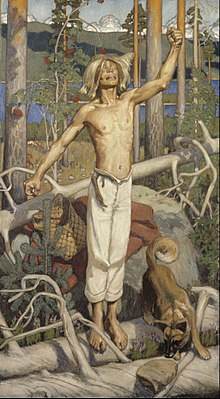
We're supposed to feel bad for Kullervo's antihero tragic misfortunes despite his violent misogyny, rapist inclinations, supreme entitlement and overall problematic character. "Kullervo's Curse" by Akseli Gallen-Kallela.
  • Problematic editor comment: Also, according to Flieger, consent is 'equivocal' because sister Wanona 'did not resist for long', after Kullervo literally harasses her, pursues her and lays hands upon her, assaulting her. OK then. Because we've never heard of a sexual assault victim being frightened enough that she (they) don't resist 'for long'. That doesn't make it any less of a rape. Because, fyi, if someone has to be coerced or convinced in any way, as is this case, it's not consent .   

  •  But no, the main trigger warning is the incest detail- a societal construct that, in those cases where there is less power imbalance (brethren, for example), is objectively way less problematic than the issue of rape culture and sexual harassment, and yet the first issue has a massive taboo associated to it (understandable in many cases due to massive power imbalances, although I'm not sure it's mainly about that for society), while the second one is too often ignored, excused and glorified. Wrong priorities, everyone.   And this is even more grating if we take into account that Flieger is a woman and should thus be more aware of the rape culture system from which all women suffer.
Kullervo's assualt of her sister seen as 'romantic' (???), 'tragic' or 'with equivocal consent' (!!!) promotes rape culture and glorifies abusive relationships. Manuscript Illustration By Jay Johnston
    "Finally, he meets a beggar-girl who also rejects him at first, struggling and screaming when he pulls her into his sleigh. But he starts talking to her sweetly and shows her all the gold he's collected during his trip, bribing her into sleeping with him. Afterwards, she asks who he is, and as she realises he's her own brother, she commits suicide by throwing herself into the rapidly rushing river nearby. The distraught Kullervo returns to his family and tells his mother what happened." (Source)

    "the maid was affright and shrank from him. 'Death walketh with thee, wanderer, and woe is at thy side.'
    Then Kullervo was wroth; but very fair was the maiden and he said ''Tis not good for thee to be alone in the forest [maybe because of rapists and stalkers like you, asshole??];nor does it please me; food will I bring thee and fare abroad to lay and lie in wait for thee, and gold and raiment and many things of cost will give thee [turning to manipulation and bribing is *not* consent].'
    'Though I be lost in the evil woods, and Tapio has me fast in his hold,' said she, 'yet would I never wish to roam with such as thee, villain. Little does thy look consort with maidens (...)'
    But Kullervo was wroth in that she had reviled his ungainliness, and put kind [??] thought from him and cried: 'Lempo seize thy folk and swift would I put them to the sword didst I come upon them, for thou I wilt have, nor shalt thou dwell in thy father's house again.'
    Whereat she was adread and sped like a wild thing of the woods through the tangle from him and he angry after her: till he laid hands upon her and bore her in his arms away in the depths of the woods.
    Yet was she fair and he loving with her [??? Is she supposed to be thanking him for raping her less roughly?? He hasn't been exactly loving so far. Also, he's allowed to be ugly but the fact that she's fair makes him treat her 'better'?], and the curse of the wife of Ilmarinen upon them both, so that not long did she resist him and they abode together in the wild"

    LOOK AT ALL THAT EQUIVOCAL CONSENT. This is textbook harassment and sexual assault, Ms Flieger. This is rape. Plenty of women 'do not resist for long' and it's still rape. 100% of Kullervo's actions scream rape. Shame on you for excusing that (also shame on Tolkien for choosing in this case to treat the theme of sexual harassment so lightly, as something that will give the antihero - aka the rapist! - emotional man pain™ at the cost of a woman's abuse. Yes, the original's not his, but he chose not to change or subvert any of the problematic stuff). and Let us also note that Wanona actually curses and blames herself for being alone and being, you know, assaulted (typical victim blaming argument), and that Kullervo is distraught because she was his sister, not because he has just raped a woman, and has done the same with others.
    "Kullervo and his sister in the sledge" by Louis Sparre, aka "Equivocal consent"


  • It's also worth noting that 100% of the women in this tale are either weeping and passive mothers/sisters/daughters - often kidnapped, thrown into thraldom and assaulted-, or women who are 'cruel', 'witches' and, in Tolkien's very problematic words, 'heartless virago wives' (wow) a little bit just because we also need the stereotype of the 'evil' woman to stand alongside the 'passive, submissive (and weeping) wife/mother/daughter'. 

"Kullervo sits down to eat, but his beloved heirloom knife breaks on one of the stones in the bread. Kullervo is overwhelmed with rage. He drives the cows away to the fields, then summons up bears and wolves from the woods, making them appear like cows instead. He herds these to Ilmarinen's house and tells the wicked mistress of the house to milk them, upon which they turn back into wolves and bears and maul her. As she lies there bleeding, she invokes the high god Ukko to kill Kullervo with a magic arrow, but Kullervo prays for the spell to kill her instead for her wickedness, which it indeed does." (Source)
  • We're also supposed to feel some sort of sympathy about Kullervo being tricked by the smith's wife (again, a little bit just because she's supposed to hate him and be 'evil'. Also we don't care about her name), and then consider it 100% OK that he sadistically and gruesomely kills her with the help of a pack of wolves and bears. The way the smith's wife is portrayed as the cliché 2D wicked woman who opposes the protagonist - again, just because - and is described with a variaty of negative traits ('treacherous and hard', 'grasping', 'malicious', 'spiteful', etc), is supposed to somehow justify the way Kullervo murders her, and his aggressive misogyny and violent vengeance tendencies ("they tore her fiercely and crunched her bones, and thus was her jesting and mockery and spite repaid, and the cruel wife brought herself to weeping" - I think Tolkien shows some serious problematic misogyny here with this kind of wording).

 It's all too misogynistic for my taste, sorry.