Friday, 22 July 2022

Goodreads feminist reviews - Tolkien illustrated books: Beren and Lúthien


Cover of Beren and Lúthien, by Alan Lee.

A new Tolkien post for today ✨! These were originally separate reviews on Goodreads, but I decided to make a couple of individual longer posts to talk about some of the illustrated Tolkien books published in the last few years: In this post I'll be talking about Beren and Lúthien (which should be frankly rather titled Lúthien and Beren, but ah well), and in the next post I'll be commenting on The Fall of Gondolin from the 'Tales of Middle-earth' series, and the newly illustrated edition of Unfinished Tales from 2020, which I got as a gift after finally defending my Astrophysics PhD thesis. 

As a Tolkien collector, I wanted to have all three of these books mainly because of the new illustrations by Alan Lee (alongside John Howe and Ted Nasmith for the latest edition of Unfinished Tales), but in these reviews I'm also going to gauge the pros and cons of these books regarding their material, organization, format and commentary, and how worth it they are, in my opinion, either as reading material for a Tolkienite in general, as source material for a Tolkienite scholar, or as an additional book for a Tolkien book collector. Random feminist ramblings will also feature, of course, and there will be an specific focus on these reviews regarding the representation and portrayal of female characters, as usual.

  • 1) Beren and Lúthien

Book: Beren and Lúthien (2017), by J.R.R. Tolkien, edited by Christopher Tolkien and illustrated by Alan Lee.  The second of the 'Tales of Middle-earth' series edited by Christopher Tolkien (volumes I-III) and Brian Sibley (volume IV, pending publication).


3/5. Goodreads review also here. 

- Is buying this book worth it? My opinion on content and format:

To be honest, when I thumbed through this book I felt like it was kind of a rip-off, and, as much as I like Lúthien (not Beren that much, really, or the romance, but more on that below xD), I personally don't quite get the aim of this book, apart from the fact that it contains a series of new illustrations by Alan Lee, and thus it's another book that Tolkien fans can add to their collection (and that the Tolkien State can easily profit from with minimal work, I guess. There I said it 🙃 xD). 

The thing that differentiates this second volume of the 'Tales of Middle-earth' series from its predecessor, The Children of Húrin, similarly edited by Christopher Tolkien and illustrated by Alan Lee, is that the rendition of Children of Húrin was a new and expanded one, containing a sizeable amount of new material and commentaries, as well as gorgeous illustrations by Lee. But in Beren and Lúthien (which I was initially pretty hyped about when I heard about its publication because my namesake Lúthien is one of my favourite Tolkien women), all texts found in the book were already published in former books, such as The Book of Lost Tales II, The Lays of Beleriand and other books in the History of Middle-earth series, with minimal or no changes, just a new organization. 

However, even so, the idea of a book containing a compendium of all versions of the tale of Lúthien and Beren, alongside updated and expanded commentary, and brand-new illustrations by Alan Lee, does sound pretty amazing and very much worthwhile for Tolkien scholars and fans alike, right? For me, such a book sounds very enticing because it would mean I would have pretty much all material regarding the evolution of the story of Lúthien in one book, something helpful to use as source for my Tolkien women-related personal projects, for example. But the main problem with this book for me is that an organized compendium it is not.

 The material included in this book is instead often heavily abridged, featuring selections and excerpts from different versions of the tale of Lúthien, but neither in their entirety (one version was presented in their entirety, and most were not, which seemed odd), nor quite in chronological order of publication, nor in o rather in order regarding the events of the story per se (confusing in the chosen inconsistency). 

While the early version of The Book of Lost Tales II is presented in full, whihle no other version is, which seemed odd and strangely inconsistent. the Lay of Leithian from Lays of Beleriand appears only as excerpts and sections that often focus more on tangencial characters and storylines, like Gorlim or the mention of Fingolfin's death, rather than on Lúthien and Beren's story and quest per se, although the selection did include at least part of the sections featuring Lúthien's confrontations with Sauron and Morgoth. The final version from Quenta Silmarillion is mentioned in commentary, but no selections of text appear, and then there are some short excerpts from various books of the History of Middle-earth. The overall format was quite confusing to me, both in the decision to show some versions complete and others simply as excerpts (excerpts which also appear in different sections of the book, interwoven with other versions), as also in the way that the book seems to not quite decide whether it wants to tackle the different versions in chronological order, or rather offer selections from different versions following the events of the tale. And it ended up doing neither in a consistent way.

Furthermore, I felt like the commentary in this book didn't add a lot of new information either, and I didn't find it very engaging or informative, as I was expecting something more in-depth about the tale, the characters and/or the evolution of the different existing versions, Children of Húrin style. That alone would have made this book rather more worth it, but to me it fell very short both regarding content, format, organization, and the quality of the commentary. When I bought the book, I already knew this was no Children of Húrin and so wasn't expecting to find a lot of new material, but I did expect a better format and more engaging commentary, and the book did not deliver those for me. So frankly, I don't think it's fair to ask for (the original price of) 20 pounds for a not that well-organized, abridged, selected remix of existing material 😕. 

Alan Lee's watercolour painting of Lúthien dancing in the forest of Neldoreth, from LOTR: The Fellowship of the Ring.

- How is Lúthien portrayed in this book? Text selections and illustrations: 

Still, I didn't want to give this book less than 3 stars on Goodreads because it has Lúthien in it. However, the way the texts are selected, there isn't as much emphasis as there should be about Lúthien's power and overall badassery, in my opinion. Both the text and the illustrations (more on that below) tend to focus instead on the more traditional aspects of her character, societally: Her beauty, her romantic plot, her dancing skills and her singing (but not so much her singing Songs of Power that topple down the fortresses of Dark Lords! 😐). Then again, that's what I'm always thinking practically every time I encounter something Lúthien-related. Most emphasis is often on the romance and her beauty and dancing, not on her power, magic and epic confrontations against Sauron, Carcharoth and Morgoth, which for me are the absolute highlight of Lúthien's character ✨✊. 

✨ILLUSTRATIONS✨

Alan Lee's illustrations were easily my favourite part from this book - and the main reason why I got it, apart from the inclusion of Lúthien -, although I also ended up a bit disappointed about the selection of illustrations for this book as well, as I had overrated the hype of the excellent combo that Alan Lee+Lúthien would make, especially considering that I adore his watercolour painting of Lúthien from The Fellowship of the Ring (see above). 

Firstly, quite a lot of the selection of illustrations for this book - including at least four colour plates - choose to depict male Elves, wolves, ravens and the like (not even Beren) instead of Lúthien. Lúthien does appear in six colour-plates and three graphite drawings. But, somehow bafflingly, in three of these six colour-plates, she is drawn small and hard to distinguish, with the main focus given to the scenery around her or to other characters. And in six out of the nine depictions of her, she is shown in the traditional mode mentioned above: Dancing - both in a graphite sketch (Fig. 1, below), and in a colour plate (Fig. 2) which focuses more on the forest of Neldoreth than in Lúthien herself, shown quite difficult to distinguish -; cowering in Tevildo's palace (Fig. 3) (and yes, she shows continuous agency in getting in there in the first place, but she was portrayed in a less badass manner in that particular version with Tevildo compared to the final one with Sauron); thrown to the ground in the very background (again, very hard to distinguish) after the attack of Celegorm and Curufin (Fig. 4); looking after wounded Beren (Fig. 5); and on the main illustration from the cover (Figs. 6a and 6b), where Lúthien does take center stage, but is also shown sitting sidesaddle on Huan (I've personally always imagined practical, intelligent Lúthien to ride Huan astride instead of sidesaddle, similarly to Ted Nasmith's illustrations), and holding hands with Beren, focusing on her role as romantic interest. 

Fig. 1: Graphite drawing - Lúthien dancing in Neldoreth with Daeron playing the pipes. Beren being creepy eavesdropping somewhere. Is stalking and invading women's personal spaces unsolicited romantic? Hardly.
Fig. 2: Watercolour plate - Lúthien dancing among the hemlocks in the forest of Neldoreth. Lúthien is painted small and hard to distinguish (I think that if she were dressed in her frequent azure and flax blues she would be easier to spot), alongside Daeron at the harp. The main focus is on the forest glade itself.

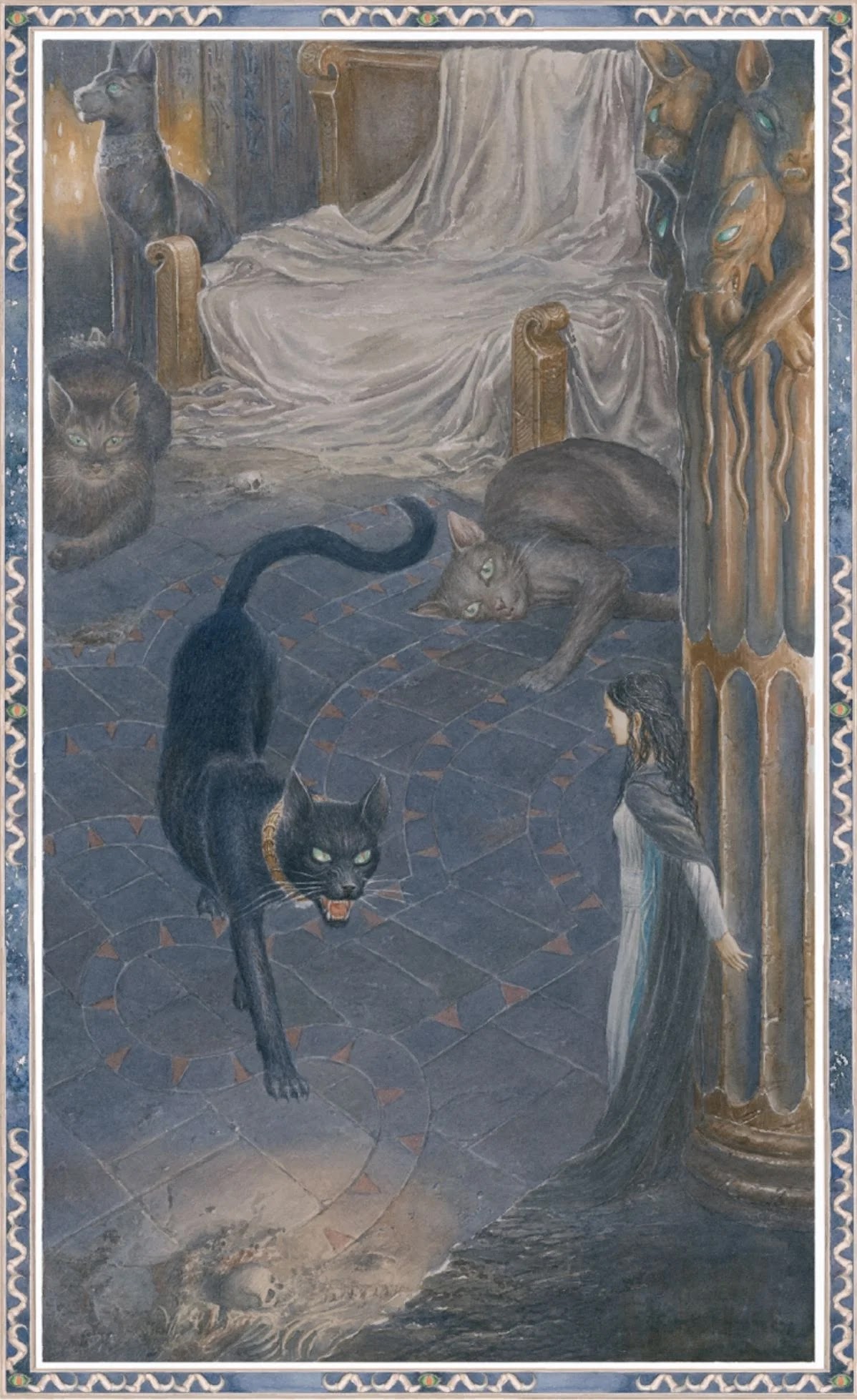
Fig. 3: Watercolour plate - Lúthien, discovered in spite of her shadowy cloak, cowers from Tevildo, Prince of Cats, the predecessor of Sauron.

Fig. 4: Celegorm and Curufin, creeps extraordinaire, shoot Beren after trying to kidnap Lúthien. Lúthien is with Beren and Huan in the background, hardly visible, the focus being on Celegorm and Curufin riding away after their attack.
Fig. 5: Graphite sketch - Lúthien uses her healing skills and magic to cure Beren

Fig. 6a: Cover of Beren and Lúthien (earlier version than the final painting shown in the actual cover), with Lúthien riding Huan sidesaddle and holding hands with Beren.

While there's obviously nothing inherently wrong in being beautiful, enjoying dancing, possessing healing abilities or engaging in a romantic relationship (although I tend to draw the line at problematic relationships 🙃), it's often telling how it's the more traditionally feminine attributes and characteristics of Lúthien the ones which are depicted and highlighted the most often both in the text selections and in art. This is particularly baffling to me in Lúthien's case because she literally has goddess-level magic powers (she and her mother Melian - an actual Maia, technically a goddess - are the most powerful enchantressses and magic-users in Beleriand, and the fact that Lúthien bests both Sauron and Morgoth means that yes, she's more powerful than both of them as well). Lúthien also often puts to use her 'traditionally feminine' skillset to create magic that is incredibly powerful both in the offensive and defensive areas, and is characterized in a subversive way as someone who wears flowing dresses and likes dancing and singing, *and* (not 'but') she is also incredibly courageous, capable, powerful, and continuously shows agency and an active, determined will wherever she goes (until she is eventually shoehorned in her own story into a traditionally romantic story with all its tropes, even with all her badassery, but ah well, that's my pet peeve xD).  

And so, in light of the fact that Lúthien is also often characterized in an incredibly badass and subversive manner in the Lay of Leithian, one thing that will forever mystify me about Tolkien artists - both professional and hobbyists - when it comes to depicting Lúthien Tinúviel is why they hardly ever fully exploit ✨✊the gold mine of awesome✨✊ that is portraying Lúthien going through all the badass af actions she can add to her personal CV: From bringing down the whole fortress of Sauron with a Song of Power (#BossLady, she created the hashtag alongside Galadriel), to escaping single-handedly from her imprisonment in Doriath with just her hair, to smiting down Carcharoth, to using her shapeshifting magic to create disguises to enter Angband, to performing her sadly rarely depicted magically-charged, literally 'winged dance' around Morgoth, the Balrogs and all the Orcs in Angband while singing more Songs of Power and kicking another Dark Lord's ass (in contrast to the more frequently portrayed male-gazey 'seductive dance' she initially entinces Morgoth with as her cover), reimagining Lúthien as a warrior as well as a powerful enchantress, there are so many options here.      And yet, for each artwork that depicts one of these scenes, there's a handful with Lúthien being beautiful, being a romantic love interest, being sad, dancing and singing in a non-offensive manner, looking after Beren, being sad again. I personally think it's a shame and a waste.

My cosplay of Lúthien, badass magical edition. Source

Going back to the illustrations of this book, Alan Lee does choose three of these scenarios for his selection, in two colour plates and one graphite drawing, and does depict Lúthien in her more active, badass roles. But I still found these examples to be fewer than I expected, and sometimes also executed in a way that didn't quite focus primarily on Lúthien or do her full justice, in my opinion. In one colour plate (Fig. 7) she's shown suspended in the air against Morgoth, showing the surprisingly rarely depicted scene of Lúthien rising 'wingéd' in front of the Dark Lord of Angband while singing her Song of Power. Lúthien does radiate power and agency in this illustration, my favourite from the whole book. In another graphite sketch, Lúthien is shown transformed into the female bat Thuringwethil, servant of Sauron, flying alongside transformed Beren towards Angband (Fig. 8). But in another plate (Fig. 9), Lee chooses to show the fortress of Sauron from a full panoramic view with Lúthien standing on the bridge as a mere blob, focusing more on Sauron's fortress instead of depicting the also massively underused-in-artwork epic moment where Lúthien takes down Sauron's fortress with her singing magic. While I also get the effect of showing Lúthien as a barely discernible speck in the midst of this huge dark fortress she is going to destroy just by singing, don't tell me that's not a freaking epic scene to fully paint, with Lúthien front and center and zoomed-in, because it is. My favourite Lúthien cosplay pictures are a tribute to that xD (see above).

Fig. 7: Watercolour plate - Lúthien is shown center-stage in this painting rising with a powerful, defiant pose in her 'wingéd dance' and singing her Song of Power against Morgoth. Various creatures are shown asleeep inside Angband, and Beren is huddled in the forefront alongside asleep Balrogs, Orcs and the like.
Fig. 8: Graphite drawing - Lúthien flies towards Angband transformed into Thuringwethil, bat servant of Sauron, with Beren disguised as a werewolf below her.
Fig. 9: Watercolour plate - Lúthien approaches Tol-in-Gaurhoth, the fortress of Sauron, determined to free Beren even if that means crushing the whole fortress down to its foundations (queen xD). The focus of the painting is the fortress rather than Lúthien, however.

✨CONTENT✨
 
Now we've talked about Lee's illustrations depicting Lúthien, how is Lúthien portrayed in the text selections and commentary in this book?  Well, as I said before, for some reason the selections do tend to omit the more badass, powerful and subversive aspects of Lúthien's characterization and her ample participation in the Quest of the Silmaril, especially in the final versions where she is the most active and overtly badass (so many people tend to put Beren centerfront when it was actually Lúthien with Huan who did like 90+% of the work, and that's being generous). The commentary did not add any particularly new or interesting info about her either, that I recall. 
 
Bonus rant incoming about how the relationship between Beren and Lúthien is so romanticized near everywhere and hardly anyone seems to feel like there are actually problematic points going on there. Because I adore Lúthien, but I don't much care for Beren, and I actually overtly dislike more than one point about the romantic relationship as portrayed in all the versions of the tale 😬. This is not an specific issue of this book, but rather of the different versions of the tale of Lúthien and Beren on their own. However, I feel that the way the excerpts from the different versions were selected for this book does highlight some of these issues, alongside the oftentimes found shoehorning of Lúthien into her more 'traditionally feminine' characterization and roles that I described above.

Some examples of why I don't really like this romance (I was initially supposed to review *three* books here lol, but then a feminist analysis appeared xD):

All extraordinary women deserve to be admired and respected the way Galadriel is, to be honest. Become even 1% less extraordinary just because of a relationship? She says nope can do.

-It's the epytome of the trope of the extraordinary woman whose considerable powers and skills (be they magical, warlike, intellectual, or a combination of all these) are at the service of the more objectively mediocre man. A man who 99% of the time also ends up - or even begins by - being in a romantic relationship with her simply because he's worth it (being a man), and also because the extraordinary woman often and very bafflingly (well, men often write them, so that's why) doesn't have standards, doesn't recognize red flags and accepts the first dude that falls for her no matter what 🙃 (if we ignore the Friendzoned Nice Guy act of Daeron, that is :S xD). I'm sorry, but that's the tea. I love Lúthien's epicness and power, but she basically does all Beren's work, with the added aggravating fact that said more mediocre man is often talked about as the actual main character and hero, both in the tales, in the commentary, by Tolkien in his letters, by part of the fandom. 

And your treatment in Multiverse of Madness wasn't fair either, Wanda.

Related to this, in one of the quotes selected for this book, in one of his letters Tolkien actually refers to Lúthien, with all her power, 'a mere maiden even if an elf of royalty', and centers his conversation on how heroic Beren is: "Beren is the outlawed mortal who succeeds (with the help of Lúthien, a mere maiden even if an elf of royalty) where all the armies and warriors have failed: he penetrates the stronghold of the Enemy and wrests one of the Silmarilli from the Iron Crown. Thus he wins the hand of Lúthien". Um, wtf. Lúthien's literally a powerful half-goddess with way more offensive capabilities, experience and wisdom than Beren ever had, but she's also called a 'mere maiden' who 'helped' Beren the Hero out because of her gender, while the mortal, power-free male is hailed as the brave hero, and nothing 'mere' about it, apparently, in spite of doing like 5% of the work during the Quest, and that's being generous (Lúthien allowed them to be able to enter Angband!). And let's also remember that in the fandom Lúthien's also often branded as a 'Mary Sue' because of the sheer power she wields and her many capabilities - because the Valar forbid a powerful woman (whose power and skills make total sense in terms of her nature and characterization) exist among an ocean of societally-accepted powerful men, am I right?

River relates and yes, I am right.

-The romance and the dynamic between Beren and Lúthien (or rather, of Beren with Lúthien) is just problematic when you delve minimally into it, quite frankly. They look like a power couple, but are they really? Prior to even meeting and during their very first meeting, Beren shows more than one sign of male entitlement and the consistent red flag behaviour of a creep and a stalker, spying and following her around while she thinks she's dancing and singing alone in her forest (the audacity of women being alone and tempting men with their looks and songs, am I right), and then, in all versions of the tale, basically sexually assaulting her when he calls to her, pursues her, grabs her and kisses her without a by your leave. Why Lúthien would find that attractive is beyond me (well, a man did write her, and, even taking into account her subversive active personality and amazing skill, that shows).  

If powerful demigoddesses aren't safe dancing alone at night in a realm magically protected by another goddess, who is??

One quote from an early version from The Book of Lost Tales II describes the interaction thusly: "Thus suddenly did he lay his hand upon her slender arm beneath the leaves, and with a cry she started away from him and flitted as fast as she could in the wan light (...). The tender touch of her arm made Beren yet more eager than before to find her, and he followed swiftly and yet not swiftly enough, for in the end she escaped him, and reached the dwellings of her father in fear; nor did she dance alone in the woods for many a day after." I think all women can relate to this feeling. And yet the interaction is painted as high romance, the ultimate heroic fantasy romance. In the very same page of this version, Tinúviel keeps getting stalked by Beren for months, and yet she grows fond and unafraid of him because of his 'sad, yearning face' and, without even knowing who he is or what his intentions are (I mean, those are clear anyway, he's obsessed with her :S) ends up feeling flattered that he likes to observe her dancing. That is so not relatable. Male writing in action.

*channelling Thranduil's I'm done with everything 24/7 attitude* Sure thing, serial stalking and non-con grabbing and kissing is romantic af. Why Tolkien, why.

After this non-consensual grabbing and kissing as a means of romantic meeting (not), Lúthien is then supposed to fall in love with him completely at first sight (because that's the natural reaction when a male stranger who's obsessed with your beauty and little else stalks you for months and then grabs you and kisses you when you were just minding your business), then she's putting all her power at the service of a quest devised by men who presume to treat her as a possession which passes from one man (Thingol the father of the millenium) to another (entitled lover-husband wannabe Beren) as recompense in exchange for a pretty jewel, and ultimately expected to sacrifice her everything, losing her actual lifestyle and immortality for this man who met her by forcibly kissing her. Romantic? Not to me.

And that's the tea

And then the woman who's being treated as a thing by near everyone in this tale does the majority of the work to succeed in this quest, involving a lot of misogynistic-flavoured obstacles and a lot of hard work, including but not limited to (brace yourselves):  

  • Having to break free of her father's imprisonment (because men still think they own women no matter how powerful they are, and Thingol sucks as a father)
  • Being kidnapped and forcibly detained by rapey Feänorians (a dog is literally her only ally. Celegorm was so set on raping Lúthien that Huan had to literally stand guard at her door 24/7 till they escaped, and bare his teeth and snarl at his former master so that he would leave her alone. Yay :|)
  • Having to destroy Sauron's fortress to rescue her lover while Sauron is beeing leery about what he would do with her (didn't know what was coming for him, did Mairon)
  • Curing said injured lover from another attack from the Feänorians who intended to kidnap her again (side note, they suck big time, but so do many men in The Silmarillion welp)
  • Transforming herself and Beren into servants of Sauron (10 points to cosplay magic xD)
  • Taking down a huge wolf guarding the gate of Angband (Lúthien literally multitasking with the badass shit and taking down dark creature after dark creature, and Beren literally wanted to abandon her and go alone lol)
  • Feigning to have come all the way to Angband to seduce the leery creep Morgoth into complacency (totally empowering for women, huh! And the entitled idiot believes her)
  • And then throwing all her singing and epic flying dancing magic at him and literally putting him and every creature in Angband to freaking sleep, Balrogs and all (after which Beren cuts the Silmaril from the crown because he wants to be helpful and get brownie points or something, but then again, he also causes the whole of Angband to wake again because he's kinda dumb with his plans, so maybe not)
  • Then curing Beren again when his hand is bitten by Carcharoth because he woke up the whole of Angband again (seriously, Lúthien should have cut the Silmaril from the crown while she was at it)
Then, finally, the pretty crystal is in the hands of the father and Beren - yes, Beren, as we saw before - gets hailed as a courageous hero while Lúthien's literally standing by hyping him up (male writing), and Lúthien gets successfully exchanged aka married to him. Tell me how any of this is fair and how Lúthien's OK with it, because I don't get it. 
 
"Beren is the hero of the Quest of the Silmaril" Dude, Lúthien is literally *right there*. She literally does *everything* and doesn't at least get hyped and praised, as she should? I'm suing.

Lúthien then of course also gives away her immortality in exhange of a mortal life with Beren because Elven women do that as an instinctual feminine thing when they're in love, we're told, but male Elves are rather more reticent about it (ahem, Aegnor). And she ends up living a very traditionally-structured life isolated from her mother (do I care about Thingol? Nope), friends and family, as a wife and a mother and a beautiful woman who dances and sings for Beren but never again shows the amazing feats of power featured in the Quest, with a short life and a very beautiful Silmaril to briefly wear until it shortens her already brief new mortal life. Yay!

While there's nothing wrong per se with actually choosing to marry, be a mother or partake in traditional activities that one may actually enjoy, having such an incredibly powerful woman simply end up like that because that's the societally accepted happy ending? Anticlimactic is the word (and Galadriel didn't have to tone down shit when she got married, btw, so it's doable). And all this time? Beren of course deserves such an extraordinary woman as Lúthien, so much so that she as a result should certainly work so much and sacrifice so much for him because he's so worth it.  Because everything is of little value in exchange for the promise of the traditional married heternormative life every woman longs for from the beginning (this is literally what Tolkien says in the infamous letter 42 - Tolkien's work is great and all, but if you also want a taste of stagnating conservative values about gender roles and relationships, that's the letter you want to peruse :S!). 

Totally a 100% great deal for every woman!

 When it comes to this tale, I would honestly, really love to see a power couple with two people who work together and take down the bad guys and go through obstacles as a tandem, and genuinely appreciate and love each other. But in this case, that's not what I see, unfortunately. While I love Lúthien being a badass who ends up doing nearly all the heavy lifting, the balance dynamic still comes off quite unequal instead of just subversive and indicative of a more egalitarian dynamic, and this is because the motivations for the Quest are masculine codes of 'honour' and female ownership, and she multitasks through it all at the service of said men, who just seem to see her as a pretty object. 

And the famed romance is still based on 'she's beautiful and he wanted a piece of that, and she fell in love at first sight in response because a man wrote her', and that isn't deep enough ot believable enough for me, I have to say. Because we also need to highlight the fact that Beren's main motivation to want to marry Lúthien is that she's incredibly beautiful, dances really well, and well, that's all there needs to be! He does call refer to her as brave sometimes, if I remember correctly (although Huan is the one who's mainly hyping her up), but in a truly equal dynamic firstly he would not have outright stalked and assaulted her, right? 🙃 

Secondly they would preferably have things in common that would help build a significant relationship, but their dynamic post-stalking and pre-quest involves Lúthien dancing for him (mainly) and sporadically with him, and them 'being in love' in a generic way. Which I guess could work in a kinda bland way (except for the fact that Lúthien's dancing wasn't originally intended to entertain or titillate a man - although Nice Guy Daeron might have thought otherwise as well :S), but there are other red flags, as we have discussed. And thirdly, if he really liked her as a person, he would very probably want to hype her up and talk to her and about her regarding how badass, witty and powerful she is, and...he doesn't really do that, and if he did it was so sporadical I have forgotten about it (Lúthien's dog friend Huan does hype her up, a lot more. Heh). Because she's beautiful, and that's the main reason why this romance exists for him, it seems ("I desire thy daughter Tinúviel, for she is the fairest and most sweet of all maidens I have seen or dreamed of", he says in Book of Lost Tales II, for example).

This gif is a must, come on xD

In conclusion, I love the character of Lúthien in itself, how utterly powerful and capable she is, but I resent and hate the way her character is made to revolve around entitled problematic men, and how all the men in the tale are constantly throwing obstacles in her path. No to Thingol, the controlling father. No to Daeron, the 'friendzoned' Nice Guy who doesn't get any in spite of offering free music for her dancing (the audacity. Pay me back for my free karaokes!). No to Beren, the stalker entitled guy who thinks he deserves the extraordinary woman just because she's beautiful and he called to her, who insists on the stupid quest when he could have opted out and stayed with Lúthien on their own terms, and who then made dumb decisions in the midst of Lúthien's unlauded multitasking (let's leave Lúthien asleep because I can totally handle Angband after the Sauron fiasco she rescued me from! Then let's sing so loud the creatures of Morgoth might hear me, and Lúthien too! Then let's prick Morgoth's foot after Lúthien's hard work while trying to pry off a second Silmaril you didn't even need!). No to Celegorm and Curufin, the rapey entitled brats. Yes to Huan, the only ally Lúthien seems to have, a freaking giant hound. Yes to Melian, who does support her daughter, but who, in spite of being an actual goddess, seems to need to answer to the commands of her Elven husband (hello, Patriarchy). And of course, no to Sauron and Morgoth, who get their asses kicked by Lúthien's badassery but not before they can tell the readers and Lúthien about their creepy lustful and rapey intentions towards her. But hey, at least the narration is honest about it and Lúthien is adequately creeped out and responds by taking them down. Beren basically stalks the shit out of her for months and assaults her by taking her in his arms and kissing her without her freaking consent, and it's all apparently 'so romantic'? So much that as a response she sacrifices her everything for him, including her freaking immortality? For a dude apparently only interested in how beautiful she is?? Yep, after so many years I'm still so not getting it, but now I'm kinda repeating myself xDD. 

I could definitely go on about how the fact that JRR Tolkien considered his wife Edith to be the inspiration for Lúthien and called himself Beren in association, and how we can definitely see a projection of some points of their dynamic (not all of them unproblematic) and his idea of an ideal F/M romantic relationship by comparing his real life relationship with his story of Lúthien and Beren as a romantic duo. But that is a whole different (but related) can of worms to analyse, and I do have at least a post about Edith planned, so that's enough controversial Tolkien women opinions for today, folks 😅 😂 xD!

Lúthien out xD

Sunday, 17 July 2022

Goodreads feminist reviews - Gin & Daggers (Murder, She Wrote novels, #1)


 Book: Murder, She Wrote. Gin & Daggers (1989), by Donald Bain, the first of a series of Murder, She Wrote novels, based on the TV series of the same name.

2/5. Goodreads review also here. 

 I love Murder, She Wrote and adore Angela Lansbury's Jessica Fletcher, but unfortunately this book's characterization of her was not it. At all. This is my first foray into the Murder, She Wrote books, and I'm honestly quite discouraged to see that the same author wrote most of them, because I'm less than impressed - and more than a bit displeased - with the way he wrote Jessica's characterization. Not to mention the blatant male gaze present throughout the whole book.

I love Jessica Fletcher because she's just so refreshingly unconventional in every way. Firstly, we direly need more protagonists who are badass older women who subvert gender roles every day (Jessica loves both baking apple pies in her seaside town and solving murders everywhere she goes, and it's perfect xD). And I just love how Jessica combines badassery and kindness, doesn't care for money, fame or power in spite of having become a world successful writer of mystery novels, always keeps an open mind and constantly hones her curiosity for learning new things, for example, about other countries and peoples (she's not a typical EEUU citizen in more than one way welp), and she seems to always have a special affinity for the more oppressed minority groups.

Honestly, Jessica Fletcher is the intelligent, badass and supportive friend that we all need in our lives

The Jessica Fletcher of this book is quite dissimilar from this profile, though :S She is written as quite more conventional, displaying a somewhat narrower mind in her inner thoughts, and also displaying less of the badassery and aplomb that so defines her. And it's a shame.

But the main thing that really made me dislike this book more was the way that the male author displayed a blatant male gaze in each and every one of the descriptions involving women, particularly the young female characters in the story. The book is written in first person from Jessica Fletcher's point of view, and can there be anything more incredibly jarring than Jessica Fletcher describing the young women she meets while solving the murders in an incredibly sexist and sexualized manner that reeked of male gaze :S? The book kept describing women's outfits and how tight and revealing they were (sometimes combining this drooling male gaze with the misogyny of how they were sl*ts and dressed inappropiately). The descriptions focused on women's cleavage more than once, just freaking because, and generally made a point of highlighting how beautiful and seductive and sensual the women were (or not, depending on the author's tastes). Wtf. I would be angry about having to read about a man describing all women in this way anyway, but the fact that it's supposedly Jessica goddamm Fletcher describing them like that, in such a disrespectful and sexualizing manner? WTF. I'm personally offended on so many levels.

Jessica Fletcher WOULD NEVER.

The descriptions in the book also engaged in casual fatphobia, body shaming and ageism, there was a completely unnecesary subplot featuring strip clubs because more male gaze, one sole mention of a "*nasty* homosexual relationship" (wtf), and the author also proved that he followed the archetypal way of not bothering to learn geography beyond the United States - This Mediterranean European eyerolled so hard during a description of an Italian female character in which she was described as a 'sensual and exotic beauty' (bonus ethnic fetishism) with "Middle-Eastern features, perhaps from Lebanon, perhaps from Spain or Italy". The word he was looking for, if he wanted to use all three of those countries at the same time, would have been *"Mediterranean"*, and he would have been right, without any need to mix up the continents. Sigh xD.

Jessica Fletcher is way more knowledgeable than that, dude.

The plot was alright, I guess, and it made me want to finish the book to find out if I was right about every whodunnit's main question (who the murderer(s) are xD), but I also found the mystery to have less quality than the standard series plotlines, and it also left me a bit dissatisfied as I felt that the book didn't tie all ends in a satisfactory way.

Did that character really write the fictional murder mystery book the plot revolves around, then? And what happened to that other murder victim who is never mentioned again?

There are also way more male characters than female characters in the story, and the main points about all the female characters' plots revolved very strongly around men. Which is something that we can also see in various episodes of the series, and not every Murder, She Wrote episode includes the healthy dose of social criticism that I tend to enjoy (although more than one does), but the book was overall lacking more in at least the unconventional and subversive element that Jessica Fletcher always adds to every episode no matter what. So meh.

Without divulging any of the whodunnit's twists, I also didn't quite like how Jessica kept either thinking about her late husband, or crushing on a handsome inspector from Scotland Yard. Jessica does indulge in sporadic love interests and casual lunch and dinner dates at the end of various episodes, and that's perfectly fine and more power to her, but the book often had Jessica thinking in a more engaged manner about men instead of you know, solving the murders. In the series, it's pretty much the other way around.

If she's interested, Jessica doesn't say no to a casual dinner date with the episode's random guy of the day, but murders, books and travelling are her main thing, dear author. It's literally because she's widowed that she started writing, travelling and solving murders in the first place, and she's also not about to change that any time soon no matter how much she had loved her late husband, lol.

Finally, I felt that the characters of Doctor Seth Hazlitt and Sheriff Mort Metzger and Jessica's dynamic with them also lacked the characterization of the series in more than one respect, and I actually found it patronizing and intrusive how the plot decided that they would both just travel from Maine to London and stay a few days to help Jessica out - as if she wasn't perfectly capable of solving murders wherever she goes with the help that she already would have found at hand had she needed it, as we have already seen in twelve seasons of the series :S xD. The dynamic is not at all like that in the series most of the time, and what's more, Seth and Mort hardly added anything to the mystery solving per se, choosing instead to indulge in sightseeing and especially in a "boys' night out" drinking and enjoying the attention of lots of young, attractive women (eww). I felt like the author relished every opportunity to add more descriptions of sexualized women and men being icky and nope.

Jessica disagrees with all the unnecessary sexism in this book

I'm not sure that I'll be reading more books from this series any time soon, although knowing my perfectionism, I'll most probably read them all at some time xDD Let us hope that the rest of the books improve at least somewhat on these accounts :S!

Tuesday, 21 June 2022

Goodreads feminist reviews - Cleopatra (Reinas y Rebeldes RBA, #1)

'Cleopatra' by John William Waterhouse (1887)

Book: Cleopatra, by Ariadna Castellarnau, the first of the 2022 edition of the Reinas y Rebeldes ('Queens and Rebels') kiosk collection by RBA Coleccionables.

4/5. Goodreads review also here. 

En esta serie, hablaré sobre la colección de libros titulada Reinas y Rebeldes, publicada por RBA Coleccionables, donde se visibiliza y difunde a una serie de reinas, gobernantes, nobles y líderes femeninas de la historia. La colección se centra en mujeres que son o bien nobles y aristócratas, o bien mujeres que llegaron a ostentar cargos importantes en las áreas del gobierno, monarquía y/o política, y la gran mayoría de las mujeres de la selección (si bien no todas) son también blancas y mayoritariamente europeas. En base a estos cortes, obviamente se está escogiendo a una serie de mujeres con privilegio social de clase y raza en la gran mayoría de los casos. Aun así, podemos ver que siguen marcadamente oprimidas en base a su género, y es en esta intersección en la que se basa la gran mayoría de lo innegablemente meritorio de sus vidas, pero también me gustaría dejar ese punto comentado por los sesgos que también puede añadir la colección. Todas las mujeres de esta colección tienen vidas interesantes y muy meritorias, pero sí es cierto que habría apreciado también algo más de variedad y diversidad al menos en cuanto a la etnicidad y raza de las mujeres de la selección, ya que de 60 libros, creo que sólo contamos con 8 mujeres pertenecientes a culturas y etnicidades no blancas (2 egipcias sin contar a la griega Cleopatra, 2 chinas, 1 india, 1 mesoamericana, y 2 sirias).

Las reviews que termine publicando de esta serie las escribiré en español, a pesar de que el inglés es la lengua habitual en la que suelo escribir en este blog. La razón de esto es que los libros originales están todos en castellano, de forma similar a que suelo postear las entradas con charlas presentadas en las convenciones y publicadas en la revista de la Sociedad Tolkien Española en castellano también. Dicho esto, pasamos a la primera review, sobre la última reina Ptolemaica, Cleopatra, y las impresiones con las que me quedé del libro de Ariadna Castellarnau:

General

 +1 Biografía amena con un enfoque feminista, narrando la vida de la reina Cleopatra con una crítica continuada a los sesgos sexistas y los enfoques misóginos que se le han dado a lo largo de la historia, tanto de parte de hombres romanos contemporáneos como de parte de demasiados escritores, pintores y películas en los siglos posteriores. 

Mientras que se suele enfocar a Cleopatra repetidamente dentro de una serie de estereotipos sexistas, desde la seductora sensual y la mujer fatal, la traicionera 'serpiente del Nilo' que se aprovechaba de los hombres, a la mujer enamorada que actuó siempre dominada por las pasiones, la reina incompetente y superficial, y/o la dirigente tiránica, mandona, gritona y caricaturizada (hola, Astérix :S), este libro subraya en todo momento lo inteligente y culta que era Cleopatra, y se enfatizan sus dotes estadistas y de liderazgo, contextualizando también sus relaciones con César y Marco Antonio dentro del marco político y las sociedades patriarcales de su época, con obstáculos constantes a cualquier mujer que pretendiera reinar.

'El encuentro entre Cleopatra y Octavio tras la batalla de Actio', 1787-1788, por Louis Gauffier.

+-1 La biografía parece estar en general bien contrastada y es informativa de todos los eventos de la vida de Cleopatra, aunque hay un par de puntos que están algo idealizados o no del todo bien expresados, según mis propias investigaciones. En general, para toda esta colección echo en falta una sección de notas, o al menos una bibliografía con material consultado. Por otro lado, aunque me ha terminado gustando ese balance, también he de notar que este libro está escrito de forma que mezcla el estilo de una biografía y una novelización, al estilo de la ficción histórica, interpretando lo que Cleopatra pensaba y sentía en diferentes momentos de su vida, lo que necesariamente termina añadiendo un factor de subjetividad adicional.

Estatua de mármol de Cleopatra con su cartucho real inscrito en el brazo derecho y portando una diadema con el triple uraeus que solía llevar cuando era representada en regalia tradicional egipcia.

Sobre los puntos algo idealizados, destaco que se comenta en ocasiones cómo la mujer en Egipto (y en las colonias Ptolemaicas de Alejandría) tenía prácticamente un estátus social de igualdad con respecto a los hombres, y por eso Cleopatra resultaba ser también una mujer tan resuelta y fuerte. Si bien es cierto que las mujeres en Egipto tenían más derechos y un nivel más alto de emancipación social que en el caso de varias culturas contemporáneas, como la romana y griega (en temas como la posesión de propiedades, el divorcio, la mentalidad de la modestia, o el poder acceder a varios trabajos y negocios), hay mucha gente que no matiza lo suficiente en este tema, ya que este hecho no quiere decir en absoluto que la sociedad egipcia no fuera también una sociedad de base patriarcal, e históricamente las pocas faraonas y reinas reinantes egipcias que ha podido haber han tenido problemas constantes lidiando con el sexismo de la sociedad. Desafortunadamente, las mujeres egipcias no gozaban de igualdad social al nivel que se afirma en muchas obras modernas hablando sobre el tema, ni siquiera en los ámbitos donde tenían más derechos que sus contemporáneas de otras culturas :S Para extenderse y matizar más en este tema, recomiendo por ejemplo el libro de Las mujeres en el Antiguo Egipto, de Gay Robins.

Cleopatra mismamente es un ejemplo de esto, ya que sí, de forma más aceptada socialmente había recibido una educación extensa, tenía posibilidades de ascender al trono como mujer, y la mentalidad de Alejandría era más flexible en cuanto a la vestimenta y la libertad sexual comparada con por ejemplo la sociedad de Roma (aunque pienso que tampoco tanto como también afirman varias obras, es más una comparación con otras culturas más estrictamente retrógradas en cuestión de género :S). De forma que por ejemplo las vestimentas podían ser más livianas y diáfanas que en Roma (sin llegar al nivel de orientalismo sexualizado de muchas películas de Hollywood, sin embargo), y Cleopatra podía tener amantes sin casarse con ellos, y los hijos resultantes tenían legitimidad para el trono - Pero, como las pocas faraonas y reinas reinantes anteriores, también pasó toda su vida teniendo que lidiar con obstáculos constantes para poder mantener el trono como mujer, algo que no hubiera experimentado un faraón varón, incluso teniendo que lidiar con la amenaza constante de Roma.

Relación con César y Marco Antonio

-1 En relación a esto, una cosa que no me gustó del enfoque del libro es el toque más neoliberal en algunos de estos temas, idealizando ciertas situaciones sin tener en consideración el peso del patriarcado de la sociedad, y las razones por la que Cleopatra tomaba ciertas decisiones, específicamente la decisión de Cleopatra de acostarse con César y Marco Antonio y tener relaciones sexuales y/o románticas e hijos con ellos.

Cleopatra sube al trono de Egipto con el apoyo de Julio César (Cleopatra, película de 1963 con Elizabeth Taylor).

Por un lado, el libro se esfuerza de manera acertada en enfocar las relaciones entre Cleopatra y los romanos Julio César y Marco Antonio dentro del marco político y social que estaba viviendo, donde Cleopatra literalmente necesitaba el apoyo e influencia política de estos romanos poderosos para poder recuperar y/o mantener su trono sin la amenaza de sus hermanos o la invasión de Roma, mientras que infinidad de personas (sobre todo hombres) siempre han tildado a Cleopatra de una 'promiscua que embaucaba y seducía a un hombre tras otro por su sed de poder' - Olvidando también que César era un famoso mujeriego 30 años mayor que ella que en ese momento estaba casado, y Marco Antonio, 15 años mayor, también estuvo casado con dos mujeres en los años en que tuvo a Cleopatra como amante (y ellos nunca son tildados al mismo nivel de promiscuos, seductores o adúlteros, con la culpa siempre cayendo principalmente en Cleopatra).

Pero a la hora de relatar los momentos que llevaron a Cleopatra a decidir entrar en una relación sexual con estos hombres para poder mantener el trono y toda la independencia posible de Egipto como reino vasallo de Roma, el libro lo enfoca varias veces en la libertad sexual mayor que había en Alejandría y en la cultura egipcia y Ptolemaica, y cómo Cleopatra tomó decisiones empoderadas y liberadas, usando de forma libre su sexualidad en estos casos, además de su inteligencia y sus dotes de estadista. 

'Julio César y Cleopatra', de Carl Gottlieb Venig, representando el famoso momento en que Cleopatra, según se cuenta, llegó secretamente a la presencia de Julio Césat envuelta en una alfombra para pedirle el apoyo político de Roma para ascender al trono por delante de su hermano pequeño (y marido) Ptolomeo, que en ese momento la mantiene exiliada de Egipto.

 Quede claro que no seré yo quien diga nada nunca en contra de la libertad obvia que tiene una mujer de tener amantes sin casarse y disfrutar su sexualidad - Y de hecho considero que en el contexto de tantas mujeres metidas en un matrimonio de conveniencia con un marido muchas veces indeseable o ausente, y reducida a su rol de incubadora y moneda de trueque entre familias, sí se puede demostrar una verdadera agencia empoderadora iniciando una relación con un amante (en el caso de buscar sólo amantes varones) que las tratara mejor (el listón está bajo), o que les permitiera explorar su sexualidad de forma más positiva, placentera y satisfactoria, siendo esto además de las poquísimas libertades o subversiones a las que podían aspirar en su situación, algo a menudo mucho más accesible que aspirar a una educación o una carrera, por ejemplo. 

Sin embargo, en este contexto específico tampoco podemos olvidar que Cleopatra no tenía el objetivo final de conseguir amantes y explorar su sexualidad o establecer relaciones románticas, sino de primero recuperar su trono, y luego mantenerlo todo el tiempo que fuera posible. Y, en lugar de simplemente poder establecer relaciones de alianzas políticas con estos hombres (uno de los cuales le llevaba 30 años, y el otro 15), tuvo literalmente que acostarse con romanos poderosos y tener relaciones sexuales e hijos con ellos para legitimizar su posición como dirigente de Egipto sin la amenaza de sus hermanos y de Roma. Algo mucho más cercano a tener que casarte en matrimonio de conveniencia con un señor (cosa que también tuvo que hacer, con sus hermanos), que de tener una relación libre con un amante.

'El encuentro de Antonio y Cleopatra', de Lawrence Alma-Tadema (1885).

Además, esto es algo que un hombre en el contexto de estas sociedades patriarcales jamás se vería obligado a hacer - César y Marco Antonio aceptaron a Cleopatra como amante (estando además casados) como una conquista adicional y una relación más que podían tener, sin que entrara en juego en ningún momento el poder ejecutivo que ya tenían (o, por supuesto, su reputación). Cleopatra lo hizo literalmente para mantener su posición y su poder, como forma de subsistencia. Es un doble rasero y una dinámica de poder impresionantes, así que el verlo como una 'decisión empoderada, reflejo de la mayor liberación sexual de su cultura' es un error que no tiene para nada en consideración el contexto de las sociedades patriarcales en las que vivían. 

En la época presente, un ejemplo muy paralelo sigue siendo por ejemplo el que una mujer tenga que acostarse con su jefe o con un hombre con poder conseguir o mantener un trabajo :S Es una decisión que no es ni verdaderamente libre, ni liberada. Y, en el caso de Cleopatra, tampoco termina siendo una decisión sorora, teniendo en cuenta que ambos hombres estaban casados, y tanto Calpurnia, última esposa de César, como Octavia, esposa de conveniencia de Marco Antonio, nada de culpa tenían tampoco en estos 'triángulos' y se llevaron sufrimiento asociado, ya que encima su reputación (exigida a las mujeres pero no a los hombres) también pendía de un hilo. Aunque obviamente mucha más culpa se llevan los hombres privilegiados que una mujer que literalmente tiene que recurrir a acostarse con ellos para mantener su poder, y la historia se ha cebado continuamente con el típico enfoque misógino de Cleopatra como la seductora de hombres que les llevó a su perdición y a la ruptura de sus matrimonios (sigh).

Aspecto físico, peinado y vestimenta

+-1 Por último, me ha gustado que el libro ayude a romper un poco la desinformación sobre el aspecto y vestimenta de Cleopatra.

Portada y contraportada del libro

+1 Por un lado, en la historia del arte y las descripciones escritas siempre se la ha visto como una reina 'seductora y sensual' con un físico muy canónicamente atractivo, dando, por supuesto, muchísimo más peso a su aspecto físico que a su inteligencia y sus dotes políticas. Según las estatuas, pinturas y monedas que tenemos de ella, sin embargo, Cleopatra tenía un físico de nariz aguileña y estructura facial fuerte que no se alinea con los cánones estéticos ideales de muchas épocas y culturas - lo que para nada quiere decir que no fuese atractiva, como bien dice también el libro, ya que los cánones normativos son absurdos y el considerar que las mujeres con perfiles definidos y narices grandes son 'feas' es el culmen del absurdo del machismo y los roles de género. Pero es una imagen que sí ayuda a romper con la creación masculina de la 'femme fatal' sexualizada y seductora, dando más lugar a la reina culta, inteligente y estadista, que también era atractiva y también tuvo que hacer uso de sus dotes de seducción para mantener su poder, pero que no tiene por qué seguir para ello el canon normativo de belleza y no tiene por qué ser relegada a ese rol, invisibilizando el resto de sus atributos. 

Busto de mármol de Cleopatra de ca. 40-30 aC. En este busto, Cleopatra lleva la diadema real típica de los gobernantes Ptolemaicos encima de un peinado típico con el que es representada en bustos y monedas: textura rizada recogida en un moño a la altura de la nuca.

-1 De todas formas, la portada del libro sigue, en mi opinión, una visión de Cleopatra que también es más canónicamente normativa que la descrita en el propio libro. Se la describe tanto en el libro como en las representacioones que tenemos como una Ptolemaica de ascendencia casi íntegramente griega macedonia (con una ligera ascendencia persa), de nariz aguileña, estructura ósea definida, pelo rojizo y labios finos. Sin embargo, la ilustración de portada creo que la muestra con una belleza más normativa en cuanto a su estructura facial, lo que es un poco contraproducente, porque la idea no sólo es recalcar la inteligencia y demás atributos de Cleopatra además de su físico, sino normalizar otros tipos de atractivo físico, y el restar importancia al atractivo físico en general a la hora de visibilizar a mujeres en la historia :S

Izquierda: Pintura póstuma romana de Cleopatra representada con pelo rojizo, la diadema real y sus rasgos faciales distintivos (siglo I dC); derecha: Tetradracma de plata con la efigie de Cleopatra.

+1 Por último, me gustó que comentaran ciertos elementos sobre su vestimenta que mucha gente suele ignorar por tener otra visión estereotipada de Cleopatra. Como reina Ptolemaica de ascendencia griega, Cleopatra solía usar vestimentas y peinados de estilo griego muy a menudo, junto con la diadema típica de los reyes y reinas Ptolemaicos, y así es representada en muchas monedas, bustos y pinturas, aunque también llevaba ropas ceremoniales egipcias en las ocasiones que lo requerían, y fue representada a la manera egipcia en el arte de templos y obras ceremoniales (Cleopatra fue además la única de los faraones Ptolemaicos, linaje de reyes y reinas colonialistas procedente de Macedonia, en aprender el idioma egipcio e interesarse más por la cultura nativa, y como resultado fue bastante más apreciada por el pueblo egipcio). En la ilustración de portada se combina una túnica al estilo griego alejandrino con peluca y maquillaje egipcios, y la corona de cobra y signos de oficio tradicionales de una reina egipcia.

Cleopatra vestida y peinada al estilo griego alejandrino. Izquierda: Estatua reconstruida romana de Cleopatra con la diadema real y el peinado usual con el que se la representa en las monedas; derecha: Busto romano, ca. 50-30 aC, que representa a una mujer del Egipto Ptolemaico, probablemente Cleopatra o una mujer de su séquito, durante su visita a Roma para encontrarse con Julio César en 46-44 aC. 

Cleopatra representada al estilo tradicional egipcio. Izquierda: Busto de granito de Cleopatra con la peluca ceremonial y la corona de reina egipcia, descubierto en Alejandría; derecha: Estatua egipcia de basalto representando a Cleopatra (o la reina Ptolemaica Arsinoe II) como una diosa egipcia (siglo I aC).

Recomiendo también los vídeos de Janet Stephens, recreando los peinados griegos con los que Cleopatra es representada cuando vestía a la griega en muchos de sus bustos, pinturas y monedas:

-1 Y, ya que estoy, el libro se refiere a Cleopatra continuamente como 'la faraón'. Es cierto que bastantes de las reinas reinantes y 'faraonas' egipcias predecesoras de Cleopatra tuvieron que usar el título de 'faraón' masculino y vestir con ropa tradicional masculina (e incluso llevar barba postiza, como hizo Hatshepsut), dado que se trata de un título reservado a hombres dentro de su sociedad patriarcal. Sin embargo, en la época Alejandrina tener reinas reinantes de la dinastía Ptolemaica ya era algo más normativo sin necesidad de denominarlas siempre en masculino en sus títulos (aunque se seguía haciendo en algunos casos), y, dado que en español tenemos la palabra 'faraona' perfectamente normalizada para poder también referirnos a las reinas reinantes de Egipto, me parece ilógico por completo el usar la forma masculina en el caso de Cleopatra de forma asidua. E incluso en el casi de otras faraonas como Nefertiti (también en esta colección), que reinó brevemente y a la que se denominó en su propia época con títulos y referencias femeninas además de ser representada de forma tradicionalmente masculina como 'faraón', o de forma más andrógina como se puso de moda en la cultura de Amarna.

Izquierda: Cleopatra vestida como un faraón (con vestimenta y aspecto tradicionalmente masculinos) presentando ofrendas a la diosa Isis, en un estela de caliza (51 aC); Derecha: Cleopatra y su hijo Cesarión representados al estilo tradicional egipcio en un bajorrelieve del Templo de Dendera.

Friday, 20 May 2022

Goodreads feminist reviews - Doctor Who audiodramas: The Blazing Hour

 Audio: The Blazing Hour, a Big Finish audiodrama from the 2021 Main Range series, featuring the Fifth Doctor and Turlough.

5/5. Goodreads review also here.  

 This story is a really good take on criticizing capitalism, colonialism and corrupt politicians. Peter Davison and Mark Strickson as Five and Turlough are on top form, with a great dynamic going on, and it's very refreshing that all the supporting cast are poc, with several female characters in varied roles as prime ministers, politicians, scientists and activists.

Representation matters 😃!

+1 In stark contrast to "Kerblam!" (welp), this story handles the criticism of a ruthless capitalist human colony system extremely well throughout. The story also includes a fleshed-out range of greymoral politician and corporate characters ranging from the overtly corrupt, to the incompetent and careless about life, to the more honourable. Unlike "Kerblam!", however, despite the existing 3D characterizations and greymorality amongst the cast, the story criticizes the more corrupt politician and corporate archetypes consistently when it's due, even though they may end up choosing a slightly less amoral and profit-exclusive action from time to time thanks to the influence of the Doctor and (mainly) their own self-survival selfish mindsets. 

For example, when an amoral and corrupt politician decides to sacrifice herself to help save the day, the Doctor, and especially Turlough, highlight the fact that her motivations where still mainly money and profit and her former problematic behaviour was not completely swept under the rug just for a 'redemption in death' trope, which was also refreshing. Meanwhile, anti-capitalist activists who also died in this story and showcased a much more moral and kind mindset throughout the plot's conflict were completely ignored by the final Prime Minister's official eulogy, as Turlough bitterly commented on. This kind of discourse was honestly sorely missed in "Kerblam!", which instead chose to coddle the capitalist higher-ups for making the slightest effort towards a potentially better (but for whom?) system.

I love Thirteen and the Fam, but Kerblam!'s way of tackling capitalism was not it

+1 The topic of profit over human (and alien native) life is repeteadly highlighted amid the social criticism themes of this story, and colonialism and classism are also strongly featured throughout. It's very refreshing that the most honourable politician characters happen to be members of the native species of the colonized planet, and activists against the capitalist system are also given positive characterizations.

+1 The story heavily tackles how a capitalist, colonialist and classist system can often put lives at risk by prioritizing profit, and the plot revolves around a catastrophic accident in an energy plant catalized by the corporate leaders in spite of the misgivings and warnings of the lead scientist of the project. While some have interpreted this plot as an anti-nuclear energy metaphor (the story uses "time energy" xD, but it's a valid comparison), Mark Strickson and the cast in general have spoken in the behind the scenes tracks about environmental factors and the need for green energy, speaking favourably about nuclear power as well. This story was indeed inspired by accidents such as Chernobyl, but, instead of being an anti-nuclear energy story, I personally interpret it as a criticism of how incompetent and amoral corporates in a capitalist society are quickly prone to putting lives in danger by throwing caution and safety to the wind and prioritizing profit, disregardless of the type of energy that the power plant may be using.

The Blazing Hour's excellent supporting cast. From top to bottom, left to right: Lynsey Murrell, Donna Berlin, Rakle Ayola, and Raj Ghatak.

+1 As mentioned above, the diversity representation among the cast is excellent, with a 100% poc supporting cast and women in many different roles, from the lead scientist to the president of the colony, several politicians and a member of the activist groups opposing the capitalist system. The fact that all the supporting cast are either of black or South Asian ethnicity, and that there are so many female characters in varied roles, puts a quick end to any possibility of negative stereotypes associated to either gender or race, in regards to the role, integrity values and personality of each character. As such, we have black actresses in positive roles of a competent and intelligent scientist or a brave activist (both roles very nicely played by Lynsey Murrell), not just as a moderately incompetent prime minister (Donna Berlin) or an amoral, self-serving politician (an excellent Rakle Ayola). Women also take a clear centre stage among the supporting cast, with only two distinct male characters, an incompetent corporate boss and a more principled native local leader, played by the same actor (Raj Ghatak). The voice work and variety of accents used by the supporting cast is so good you don't even realize many play at least two characters because all voices are so distinct.


+1 I also really liked the dynamic of Five and Turlough in this story. This is from the time at the end of Season 21 when they are having adventures alone, and in these audios with them you can clearly see that the bond between them has deepened, with Five being outright distraught and grieving for more than one episode when he is told that Turlough has allegedly died in the explosion caused by the accident, one of these scenes also acting as an additional stab in the feels with the reference to the companions he has formerly lost in this incarnation - most notably, Adric 😭 (a great characterization that is a refreshing change in contrast to the horrid treatment of Turlough's graphic torture and assault and the infuriating resulting emotional disconnect from the Doctor in books such as The King of Terror 😣 Although the Doctor isn't always the best when it comes to comforting and communicating with their companions when they are grieving, traumatized or struggling with mental health, truth be told :S - Tegan really needed that closure scene in Power of the Doctor 😭. So yeah, I really appreciated that Five was much more open emotionally in this respect throughout this audio).

Look at all the wholesome!

 +1 Turlough's dynamic with activist Fionn is also excellent, showing a partnership between a woman and a man that is refreshingly devoid of any sexism (or romance, for a change), and filled with mutual respect. It reminded me a bit of Turlough's dynamic with Norna on 'Frontios' quite a bit, although this one is more fleshed out.

+1 And as final related notes, I also liked the fact that when Turlough's legs get injured by the explosion and Fionn gets him a wheelchair to be able to get out of the building, she asks if he has a problem with it, and he remarks that not at all, as 'some of the best people use wheelchairs', and he's rather more worried about the fact that Fionn would have to wheel him around among the wreckage. 

 I also loved Turlough's characterization in this story, and you can really see his growth. Having evolved from his prior self-survival priorities (stemming greatly from his background and former trauma), he retains his sarcasm and more acerbic wit, but also showcases a greater willingness to make things right and take an active stand in trying to solve the situation, even though he still tends to berate himself for being a coward (which he honestly isn't, hot take. Like the Third Doctor said, bravery isn't about not being afraid, it's about being afraid and doing what you must in spite of it). Also, seeing as he originally comes from a high-class aristocratic family on his planet Trion, I also really liked to see how often and how intensely he criticized the self-serving attitude of the corrupt politician and corporate characters throughout the story, condemning that their one and only motivation seems to be only profit, money and power.

Goodreads reviews - Doctor Who audiodramas: Gardens of the Dead


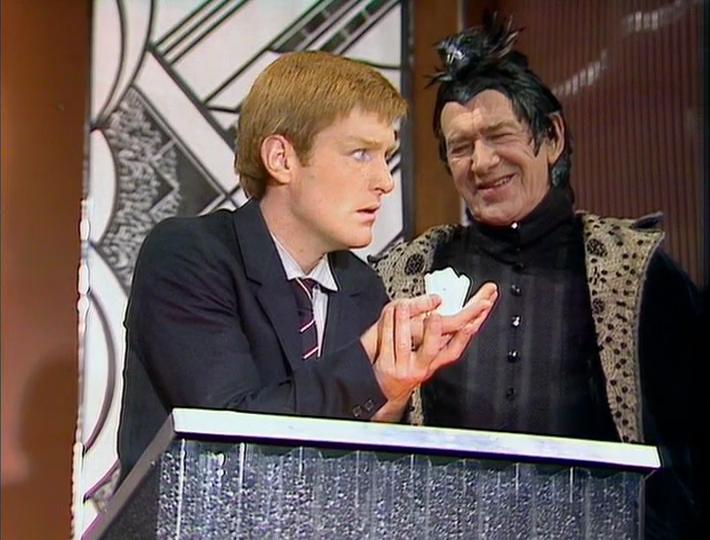
The Black Guardian manipulates Turlough (still from Season 20)
 

Audio: Gardens of the Dead, a Big Finish short trip written by Jenny T. Colgan and performed by Mark Strickson. 

4.5/5. Goodreads review also here. 

An entertaining half-hour featuring a Fifth Doctor story with Turlough, Nyssa and Tegan, from Turlough's point of view. Some thoughts -


+1 Turlough is one of the most morally ambiguous Doctor Who companions, forced and controlled by the Black Guardian to kill the Doctor, in a similar way to River Song's arc in S6 of New!Who (minus the romance, although plenty of people ship Five and Turlough, and the latter is definitely very easily read as queer-coded and might very well have developed a crush on the Doctor during his time on the TARDIS). When I first wrote this short review a few years ago, I hadn't watched anything about Vislor Turlough apart from some references and clips, but I still liked his characterization in this story. He shows anguish at the thought of killing the Doctor, tries to resist the Black Guardian's control and ends up helping to save the Doctor - and also Nyssa - from the story's alien menace instead of leaving them to die. As for now, I've already watched near all of Five's run with Turlough, and yep, I really like the complexity of his character and arc, and disagree with the apparent common dislike of this companion, to be honest - Nope, must protect Turlough and all of Five's companions at all costs xD

+1 Nyssa has a more contemplative role than a proactive one in this story, although she also saves Turlough from the alien menace of the story at an earlier part of the story.

The dynamic between Turlough and Nyssa, the least explored onscreen, is at the centre of this story
 

-1 Tegan, however, doesn't do that much in this story. Nor did the Doctor, for that matter, as it's a story more focused on Turlough and Nyssa, but ah well, it's a shame when Tegan (female companions in general) is underused in the stories, because she's everything (and having to do it in stiletto heels 24/7, no less, because the costume designers be hating her 😬).

+1 Typical Whovian anti-violence themes: The TARDIS team (mainly Nyssa and Turlough) save the day first with a water bottle and then with a garden hose from the TARDIS, which is pretty epic xD 👌

-1 I didn't quite like how Strickson mimicked Tegan's voice, and there's only so many times I can hear references to Tegan's 'annoying Australian shouting' without being rather annoyed about it myself 😒 (no one disrespects Tegan in this house xD). And although there's no outright sexist content in the dialogue, I can also see this linked too easily to sexist and simplistic stereotypes, such as 'assertive woman who likes to keep in control of her life'='annoying woman who shouts and complains about things'. Usually opposed to the idea of the 'nicer, sweeter, and usually more passive and dumb woman' - I guess some people may associate this with Nyssa in contrast to Tegan, although she's anything but passive or stupid. 

 +1 As well as including Turlough's reflections on his thraldom with the Black Guardian and his times with the TARDIS team, the theme of the story is contemplative and melancholy, focusing on the people the TARDIS team has lost in their lives, and it was a lovely nostalgic touch to the action of the story.

The Classic Who Season 20 TARDIS team